


Chinese Masterpieces
Important Song / Yuan / Ming Dynasty Ge, & Jun Kiln Wares
If you're interested in purchasing any piece on this site or
For All Enquiries, Please Contact
AGENT : Venizelos G. Gavrilakis, President, VENIS STUDIOS
Venizelos@chinesemasterpieces.com tel:+971 50 683 5877
Southern Song / Yuan Dynasty Ge Kiln Ge Ware Pair of Very Rare
Octagonal Bottle Vases
This exceptional pair of octagonal Ge ware vases represents one of the rarest forms of Fine Art ceramics ever documented. Characterized by a wheat-colored hue and delicately thin pottery, these vases exhibit meticulous craftsmanship. Notably, Ge ware is distinguished by its iron foot, observable on the foot ring, resulting from the use of light brown clay with a high iron content, which darkens upon firing. The surface crackle pattern is described as resembling iron wire interwoven with golden threads. The Ge kiln, often referred to as the elder brother's kiln, operated during the Southern Song Dynasty and into the Yuan Dynasty. These vases are highly regarded as rare artifacts likely produced in the Southern Song Dynasty, attributable to an earlier, less refined firing process that resulted in thicker glaze application due to evolving production techniques. Each vase measures approximately 8 3/4 inches in height, underscoring their significance in the history of Chinese ceramics. ppirs
(click image to enlarge)
Contact me for the Price


Southern Song / Yuan Dynasty Ge Kiln Ge Ware Rare
Large Vase With Handles
This exceptional Fine Art Ge Vase represents some of the most esteemed examples of Ge wares ever recorded. The Chinese have historically characterized the finest Ge wares by their wheat-like coloration, complemented by a distinctive purple rim, where the glaze thins, imparting a subtle hint of purple at the mouth. Furthermore, these pieces are noted for their iron foot, which is prominently visible on the foot ring, a result of the use of a light brown clay featuring a high iron content that transforms into a dark brown hue after firing. The crackle pattern is often described as resembling iron wire entwined with golden thread, adding a unique aesthetic appeal. The Ge Kiln, recognized as the elder brother's kiln, flourished during the Southern Song and Yuan Dynasties. This particular vase is likely classified as tribute ware due to its remarkable quality, beauty, and substantial size, measuring approximately 14 inches in height. ppjrs
(click image to enlarge)
Contact me for the Price



Exceptional S. Song/Yuan Dynasty Ge Kiln Ge Ware: Large Vessel Featuring Unique Eel's Blood Red Crackle and Three Rams' Head Handles
S. Song/Yuan Dynasty Ge Kiln Ge ware large vase featuring three ram's head handles, characterized by a color reminiscent of wheat, a purple mouth, and an iron foot. The piece showcases iron wire decoration and rare eels blood red thread crackle. The Ge Kiln, often referred to as the elder brother's kiln during the Southern Song and Yuan Dynasties, is renowned for its craftsmanship. Given its exceptional quality, aesthetic appeal, and substantial dimensions—approximately 13 3/8 inches in height—this vase is likely to have served as tribute ware. ppjrs
(click image to enlarge)
Contact me for the Price


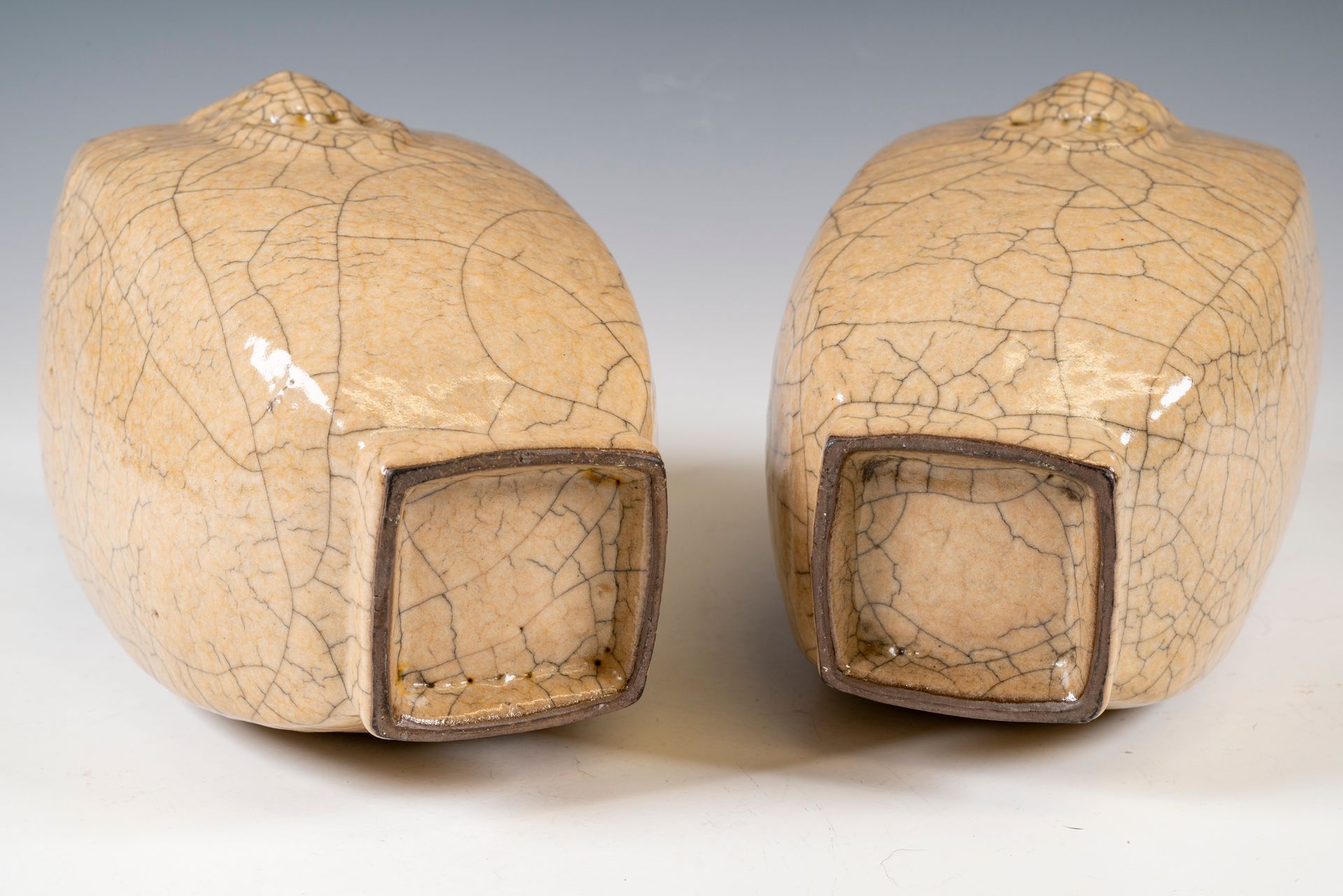
S. Song / Yuan Dynasty Ge Kiln Ge Ware: A Pair of Remarkably Rare Curved Square Vases, Adorned with Tiger Mask and Ring Handles
This exceptional pair of Fine Art Curved Square Bottle Ge ware Vases represents some of the rarest examples of Ge ware documented to date. Exhibiting a wheat-like hue, these vases are delicately constructed, featuring distinctive Tiger Mask handles with ring accents. It is noted that Ge ware displays an iron foot, evident on the base ring, attributable to the use of a light brownish clay characterized by high iron content, which darkens to a deep brown during the firing process. The surface crackle is described as resembling iron wire interwoven with golden thread. The Ge Kiln, recognized as the predecessor of subsequent kiln types, flourished during the Southern Song through the Yuan Dynasties. These vases, likely produced in the early Southern Song Dynasty, reflect the idiosyncrasies of period production, marked by less refined firing techniques and thicker glaze application, indicative of the developing craftsmanship of the era. Each vase measures approximately 9 ½ inches in height. ppirs
(click image to enlarge)
Contact me for the Price


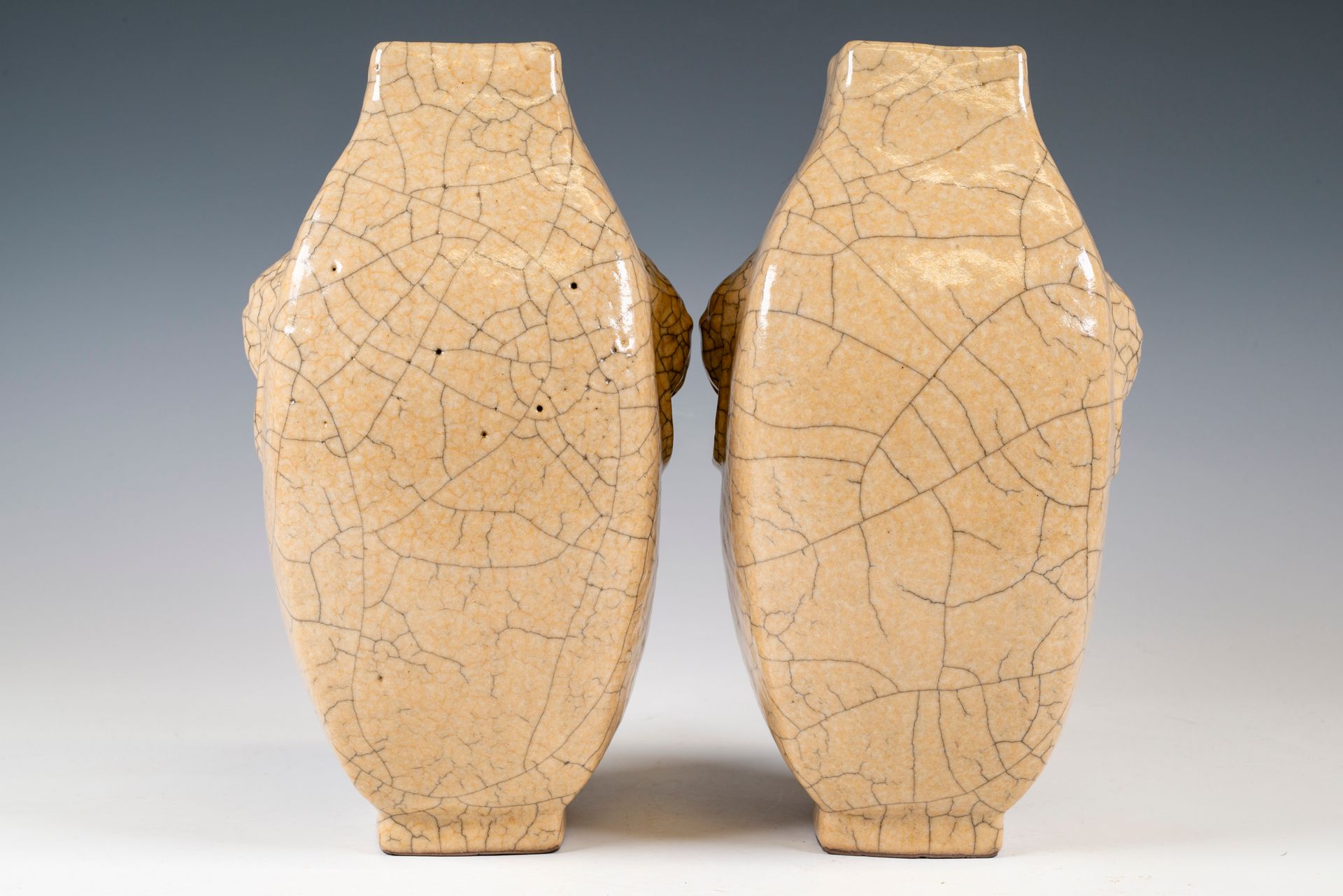
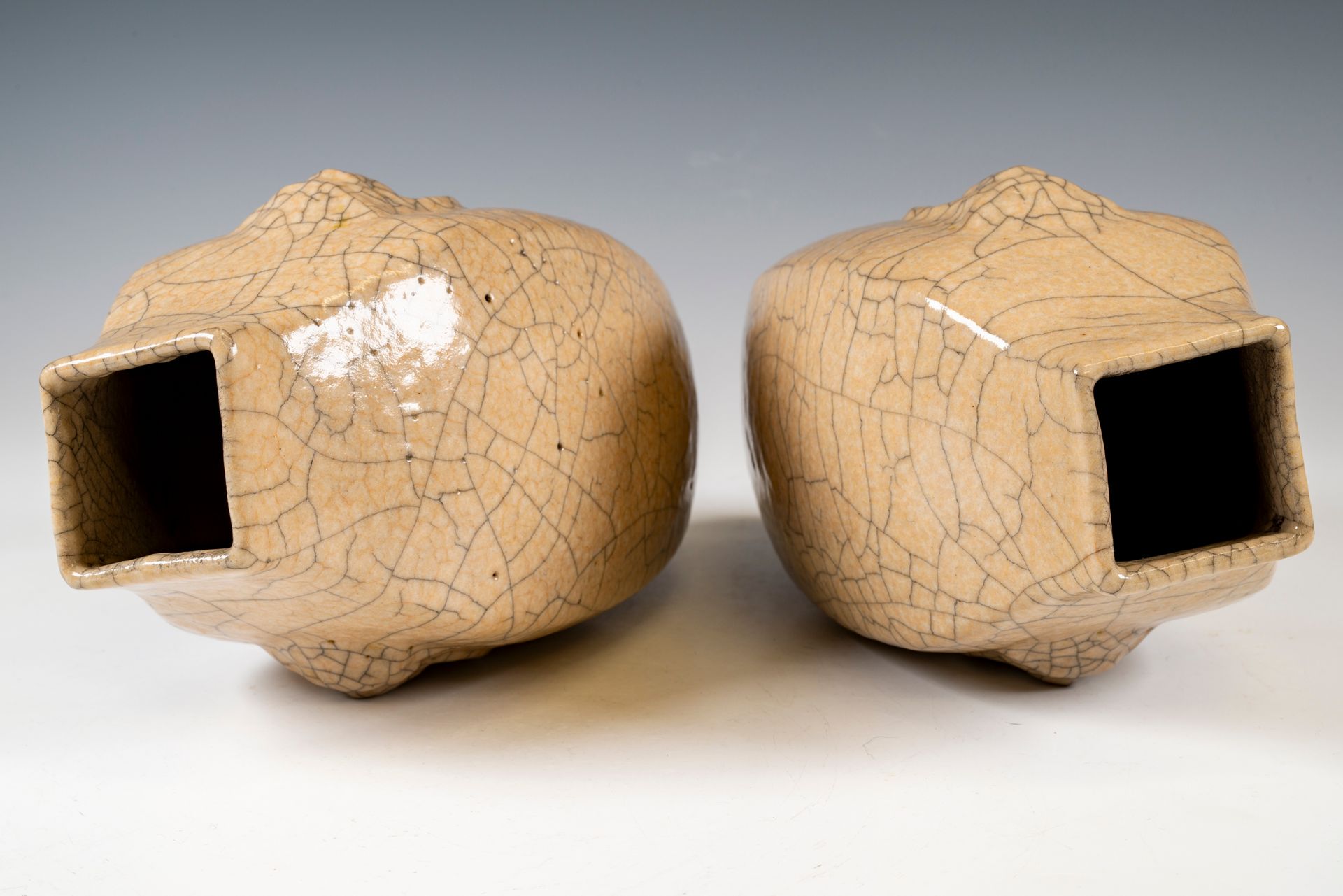
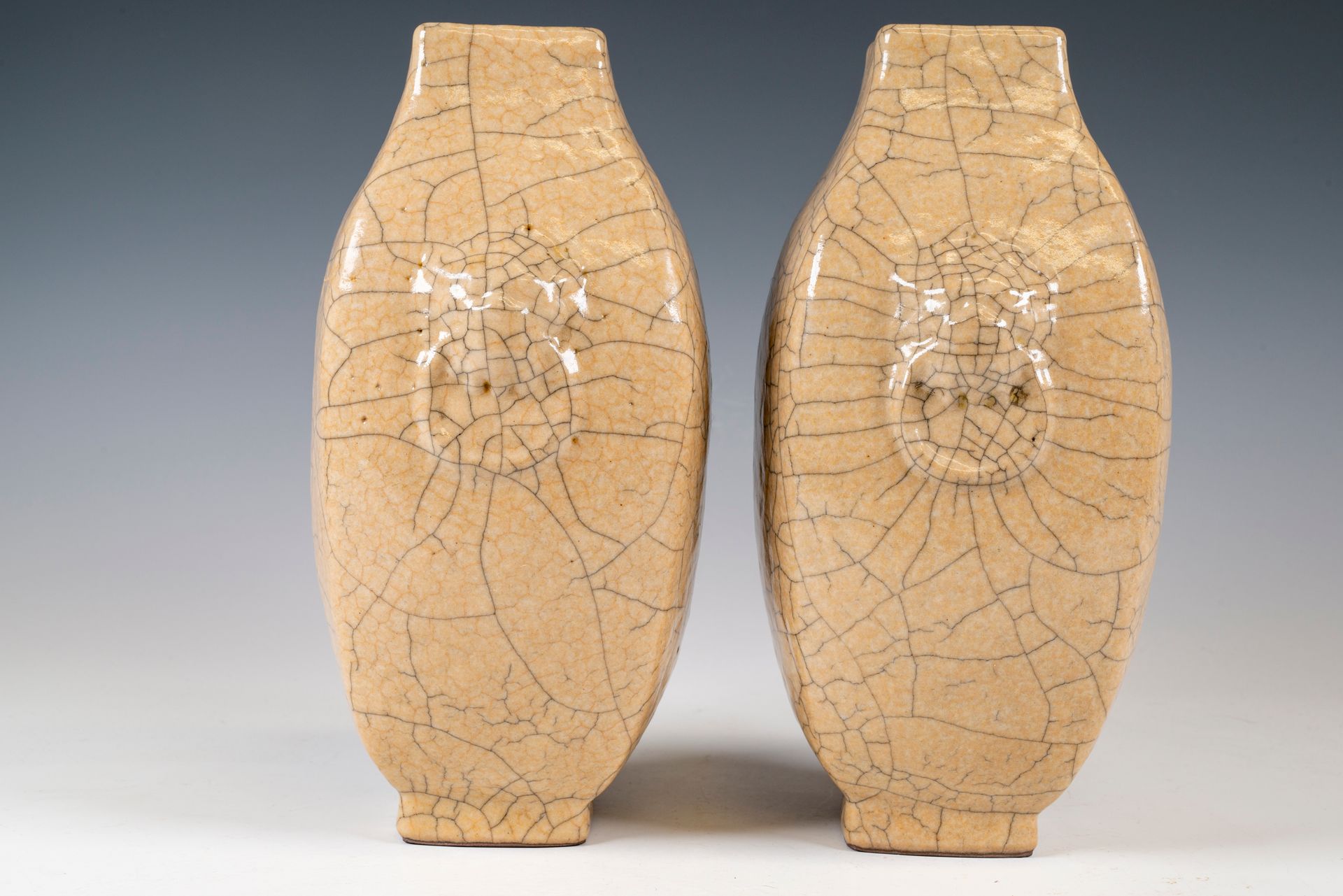
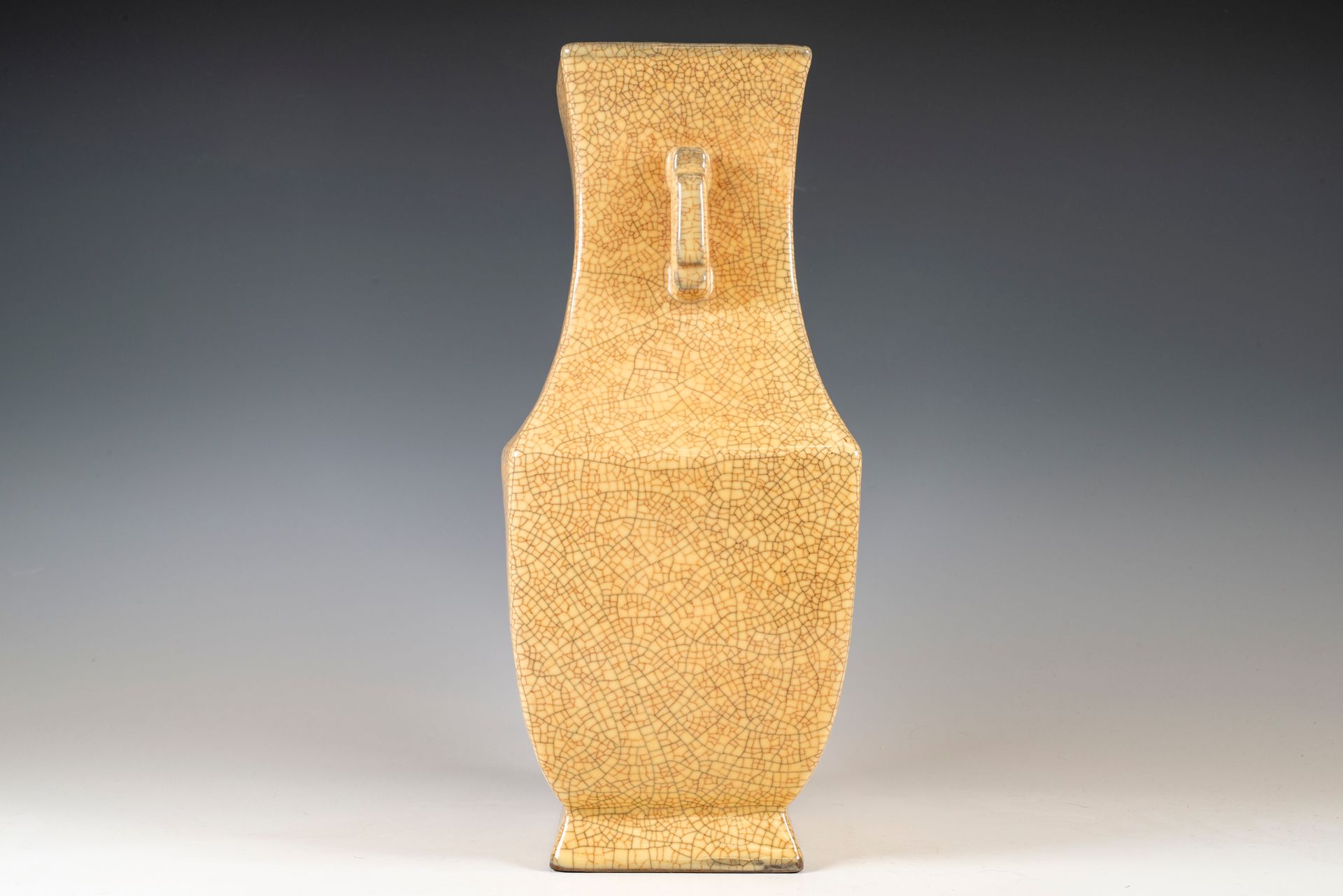
Rare Ge Ware Octagonal Hu-form Vase with Tube Ears Featuring Eel's Blood Red Crackle from the Southern Song and Yuan Dynasties
**Ge Kiln Large Octagonal Hu-Form Vase** This exquisite octagonal hu-form vase, crafted during the Song and Yuan Dynasties, exemplifies the craftsmanship associated with the esteemed Ge Kiln, often referred to as the elder brother's kiln. With a color reminiscent of wheat, complemented by a purplish mouth and iron foot, the vase also features intricate details, including iron wire and the rare "eel's blood" red thread crackle. Given its exceptional quality, beauty, and substantial size, which measures approximately 13 5/8 inches in height, this vase is likely to have been produced as tribute ware, intended to reflect the highest standards of artistry and cultural significance of the period. ppjrs
(click image to enlarge)
Contact me for the Price


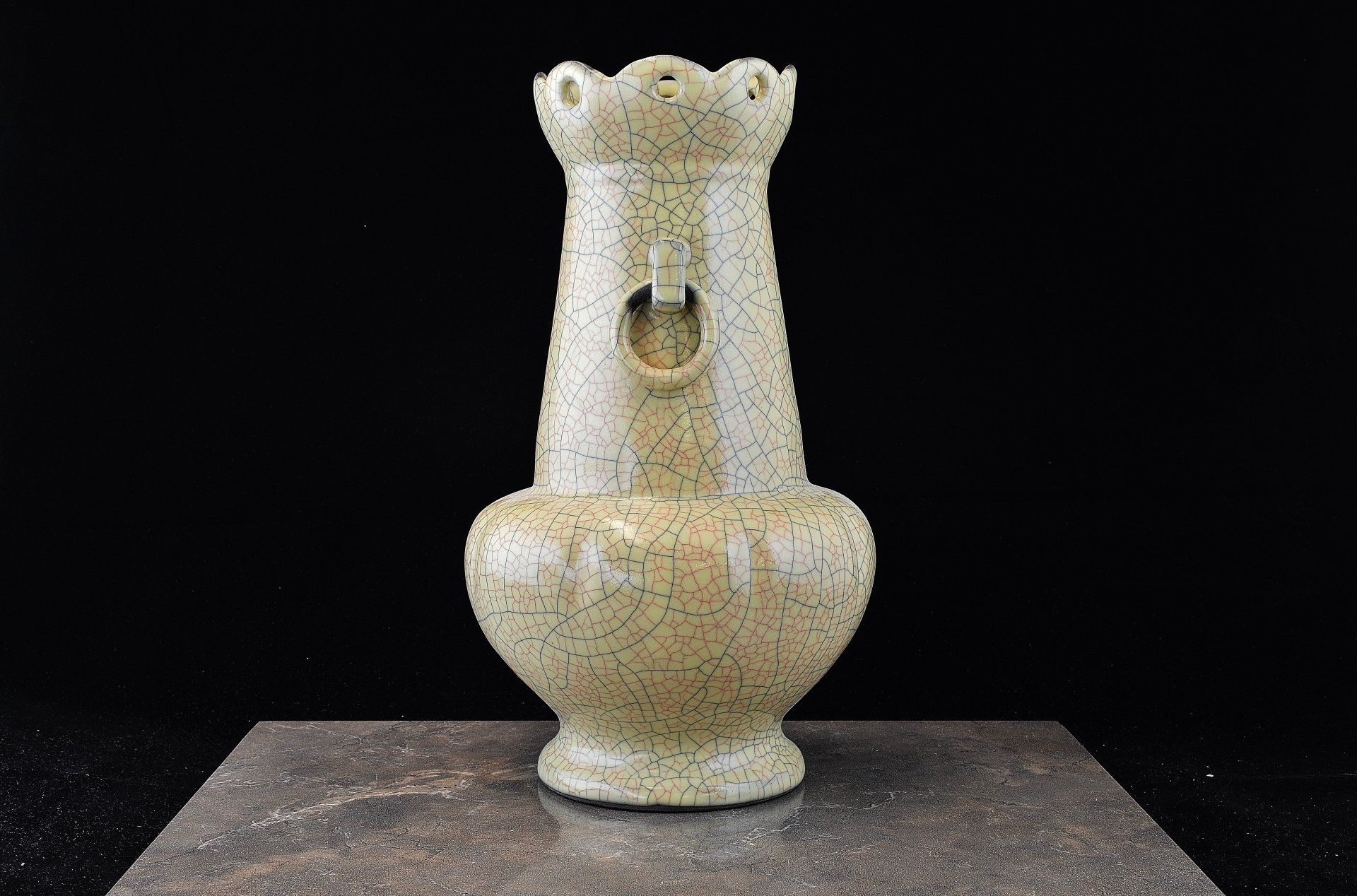
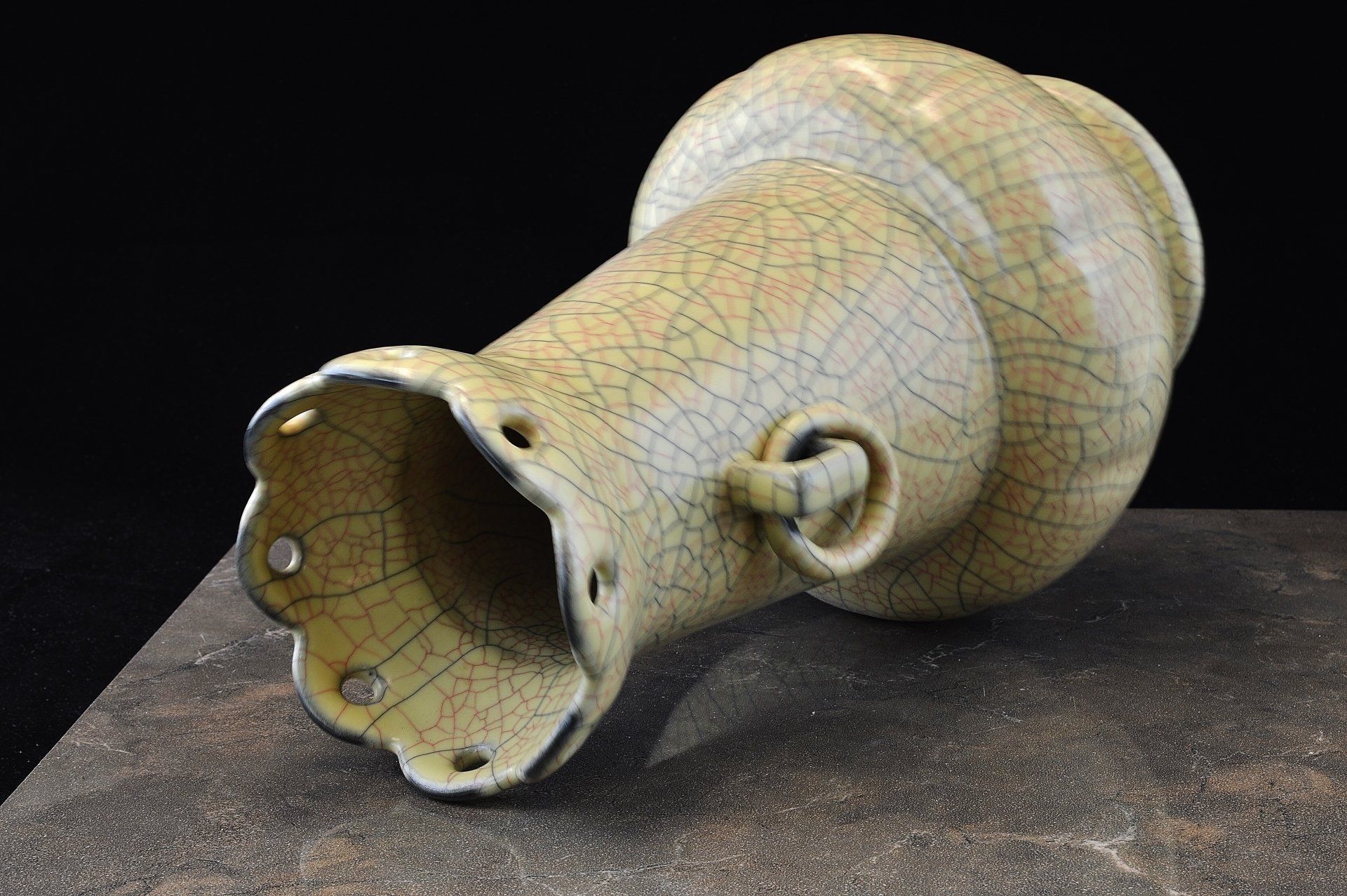
Southern Song and Yuan Dynasties Ge Kiln Ge Ware: Large Vase Featuring Rare Eel's Blood Red Crackle Finish and Loose Ring Handles
Ge Kiln Large Vase from the Southern Song/Yuan Dynasties. This exceptional Ge ware vase, distinguished by its loose ring handles and a mouth resembling that of a fortress, exemplifies the artistry of the Ge Kiln, which is often regarded as the elder brother among kilns during the Southern Song and Yuan Dynasties. The vase features a color reminiscent of wheat, accentuated by a purple mouth and an iron foot. Additionally, the presence of iron wire and the rare eel's blood red thread crackle further enhances its uniqueness. Due to its remarkable craftsmanship and impressive dimensions, approximately 13 3/4 inches in height, this vase is likely classified as tribute ware, reflecting its intended significance and aesthetic value. ppjrs
(click image to enlarge)
Contact me for the Price




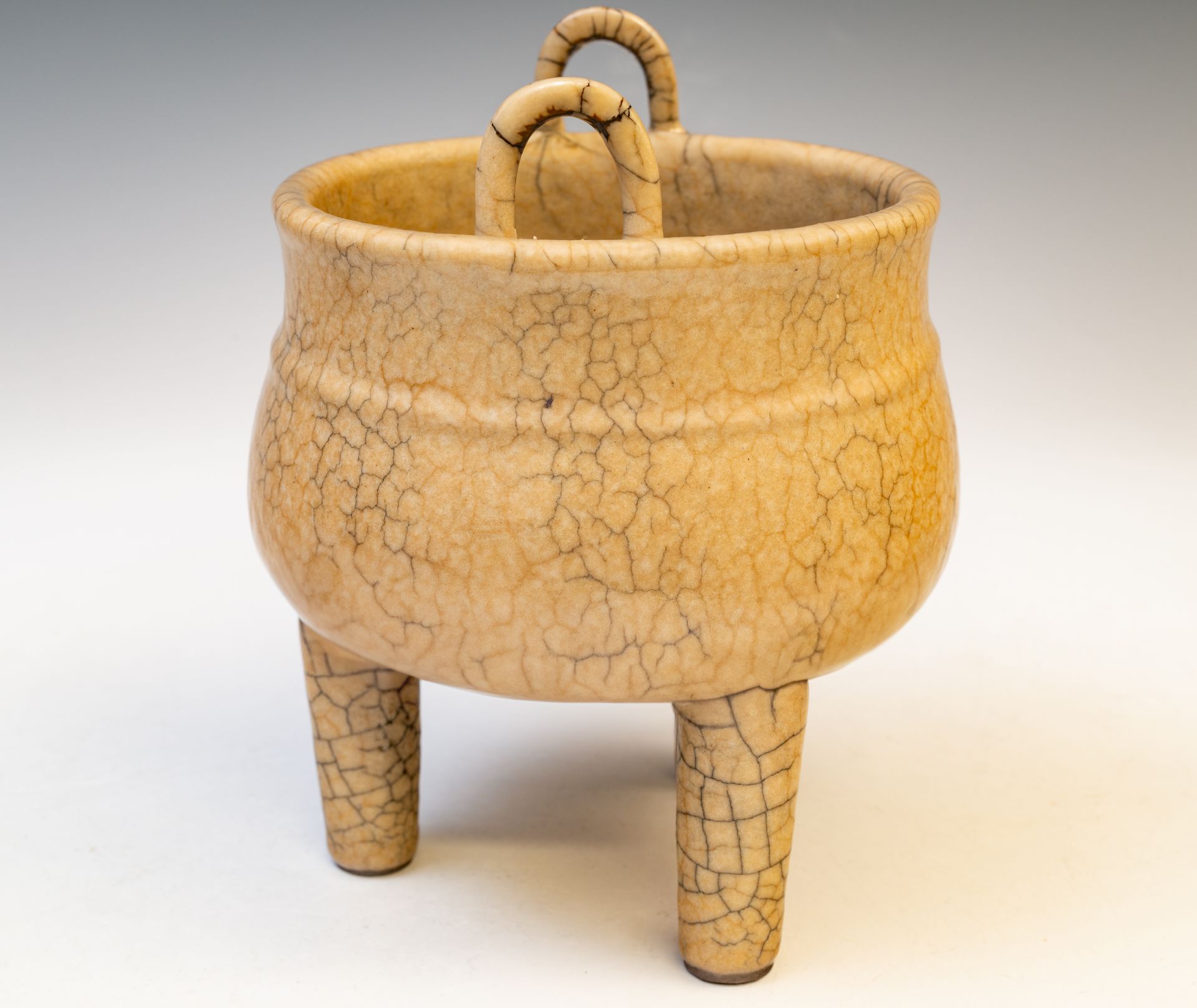
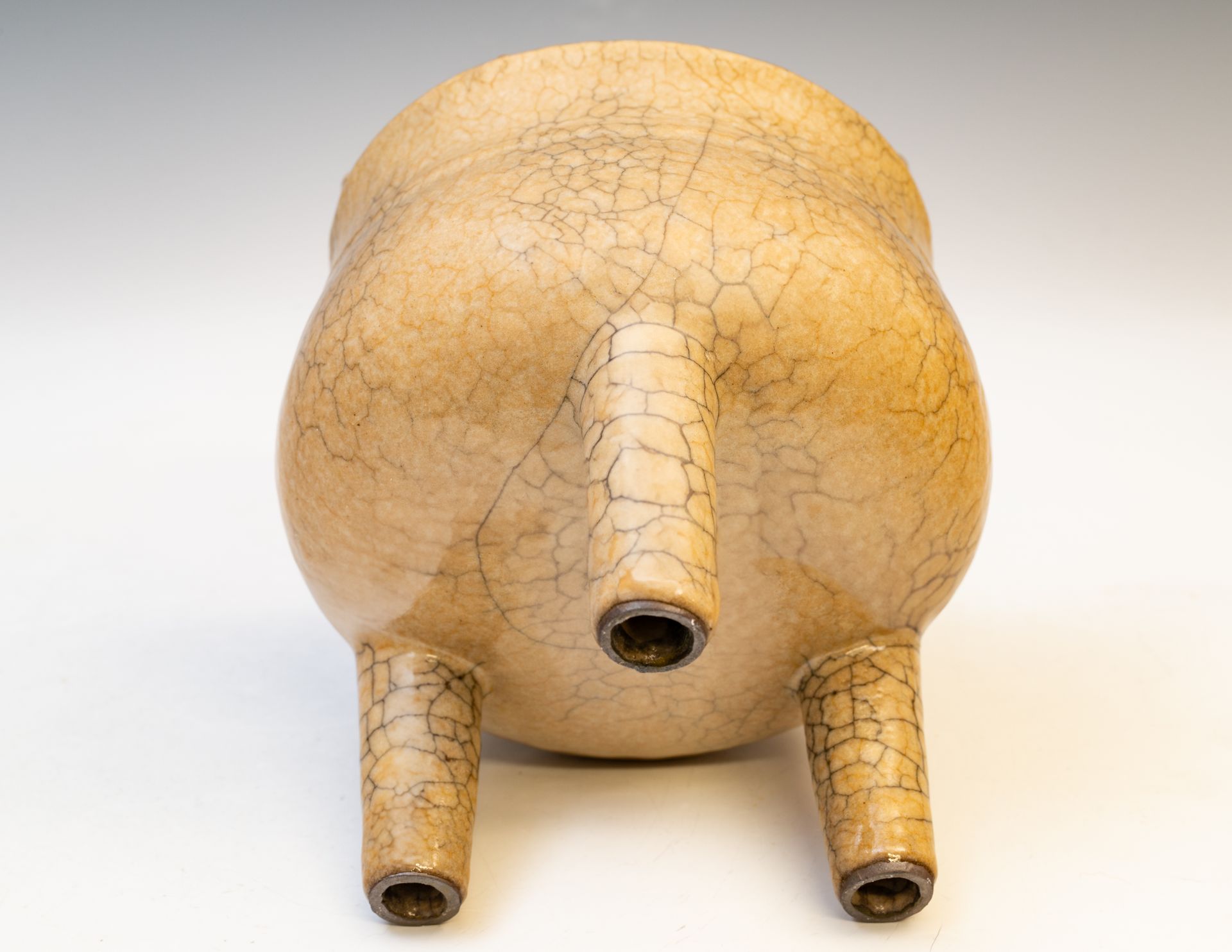
Song Dynasty Ge Kiln Burner: Ge Ware with Ding Form and Handles
This Ge Kiln ding-shaped burner with handles, originating from the Song or Yuan Dynasty, is likely produced in the early Southern Song period. The piece exhibits inconsistencies in the firing process, resulting in a thicker glaze, indicative of the techniques still being refined during that era. It features an iron foot and possesses a color reminiscent of wheat. The Ge Kiln is historically recognized as a predecessor in ceramic production during the Southern Song Dynasty and into the Yuan Dynasty. The burner stands approximately 8 inches tall. ppjrs
(click image to enlarge)
Contact me for the Price


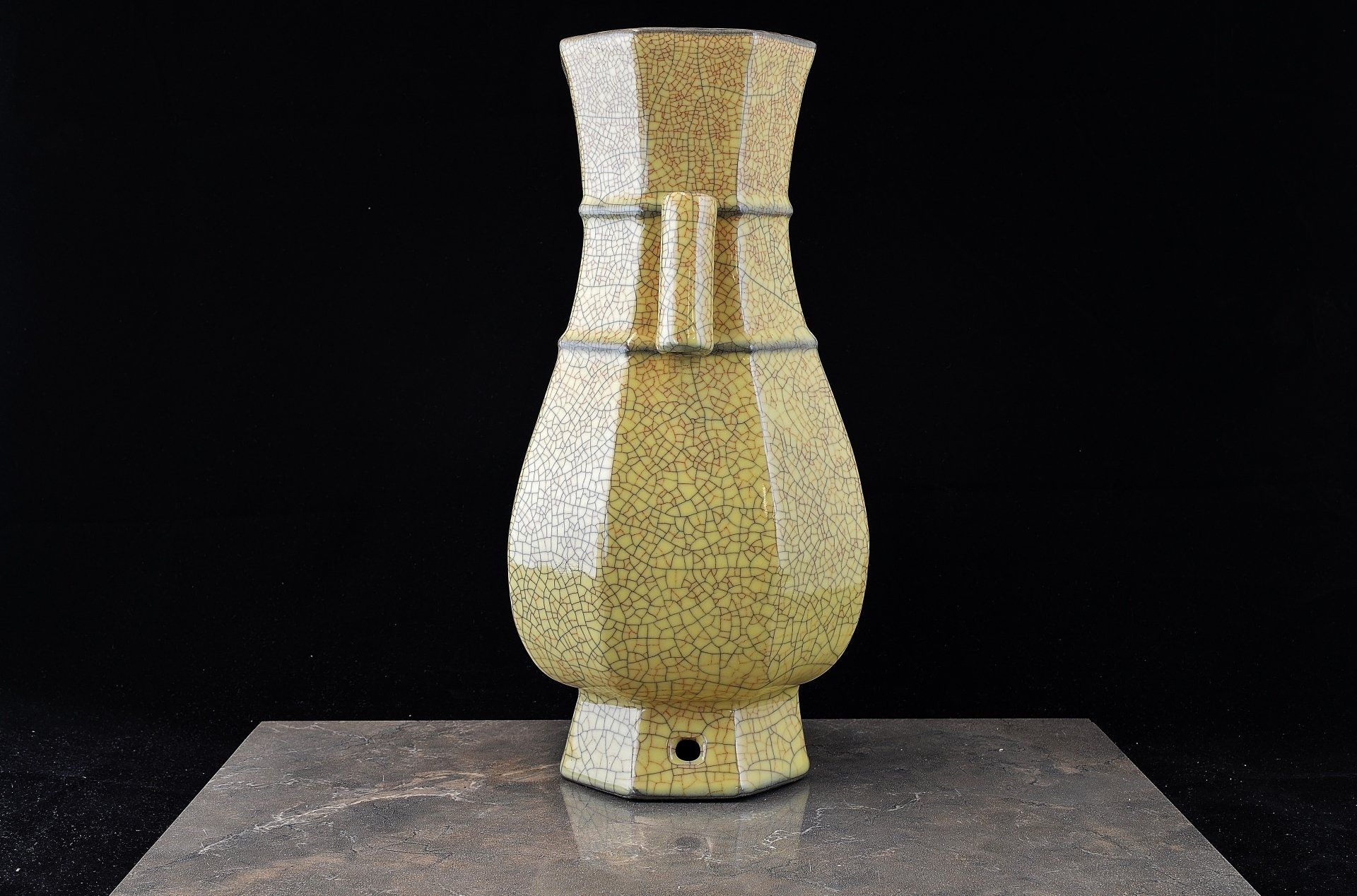
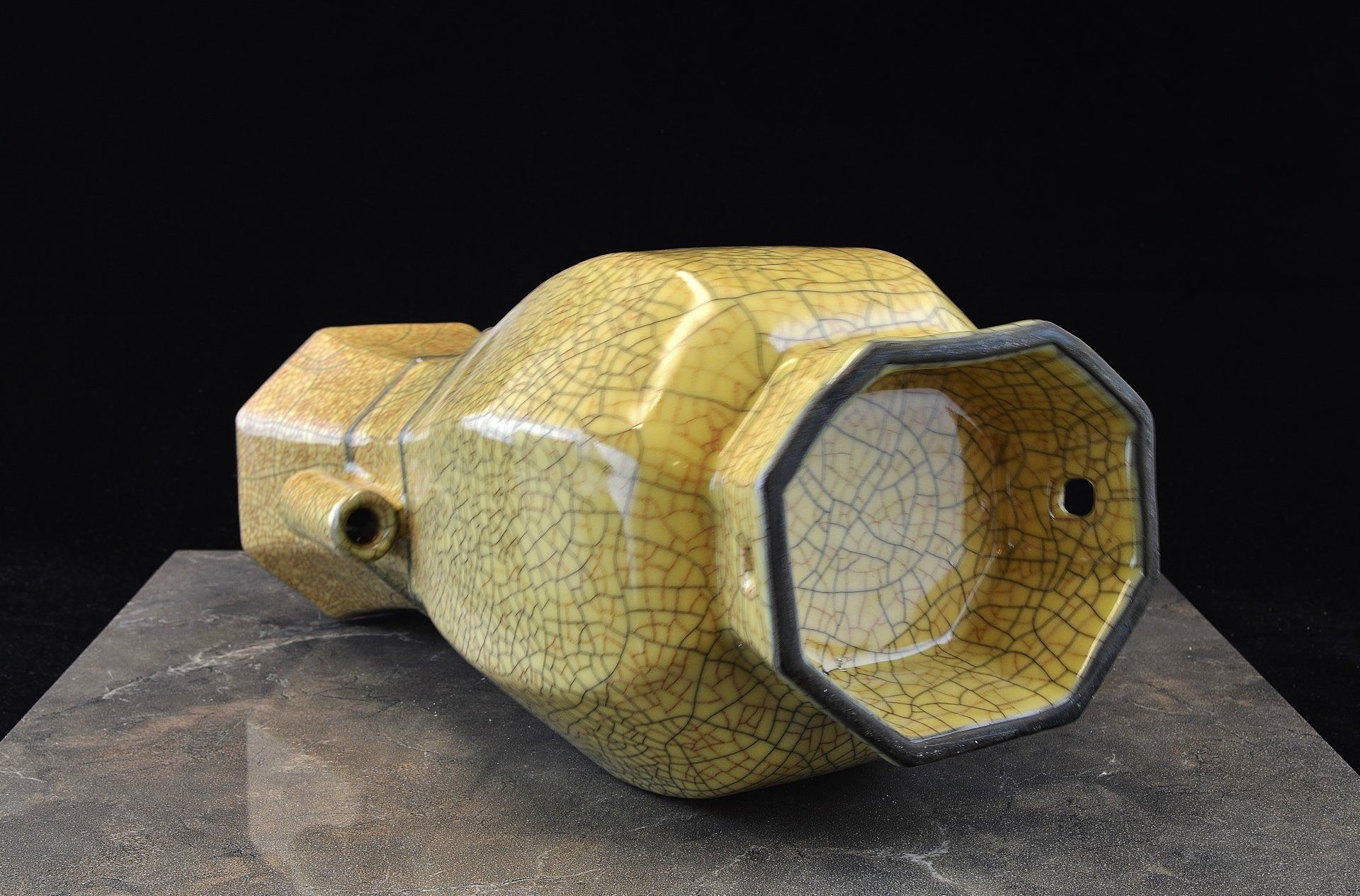
Southern Song/Yuan Dynasty Ge Kiln Ge Ware: Exceptional Large Octagonal Hu-Form Vase with Tube Ears and Golden Thread
S. Song / Yuan Dynasty Ge Kiln Ge Ware Large Octagonal Hu-Shaped Vase with Tube Ears, exhibiting golden thread iron wire crackle and a purple mouth iron foot, displaying a hue reminiscent of wheat. The Ge Kiln is recognized as the elder brother kiln, transitioning from the Southern Song to the Yuan Dynasty. This vase likely served as tribute ware, reflecting exceptional artistry and grandeur due to its considerable dimensions, measuring approximately 13 3/4 inches in height. ppjrs
(click image to enlarge)
Contact me for the Price



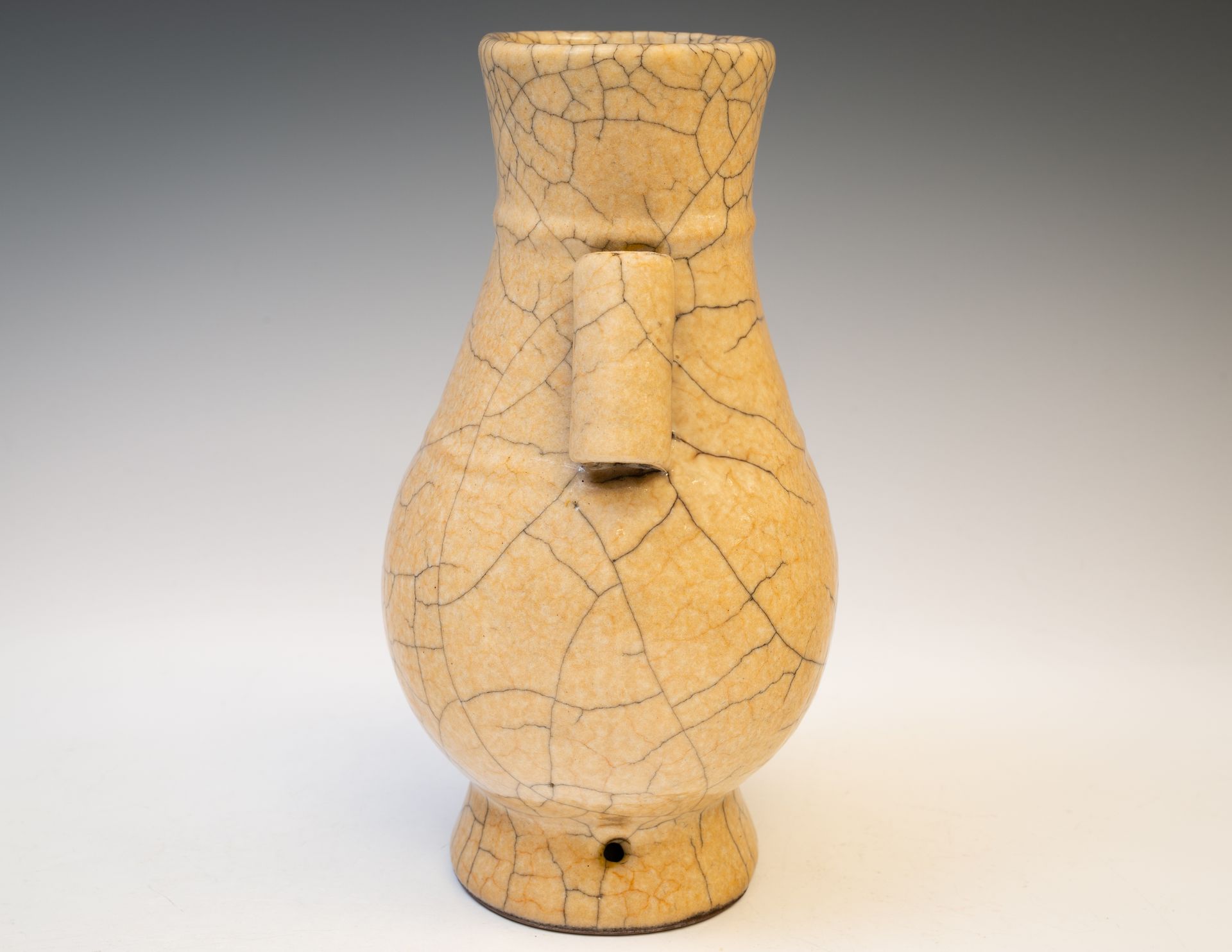
Ge Kiln Ge Ware Vase with Hu Form and Tube Handles from the Southern Song/Yuan Dynasty, Featuring an Iron Foot
Southern Song / Yuan Dynasty Ge Kiln Hu-formed Vase with Tube Handles, likely produced in the early Southern Song Dynasty, exhibiting an imperfect firing process that resulted in a thicker glaze due to incomplete control over the techniques at the time. The vase features an iron foot and a coloration reminiscent of wheat. The Ge Kiln is regarded as the predecessor to other kilns during the transitional period from the Southern Song to the Yuan Dynasties. The approximate height of the vase is 8 1/2 inches. ppjrs
(click image to enlarge)
Contact me for the Price



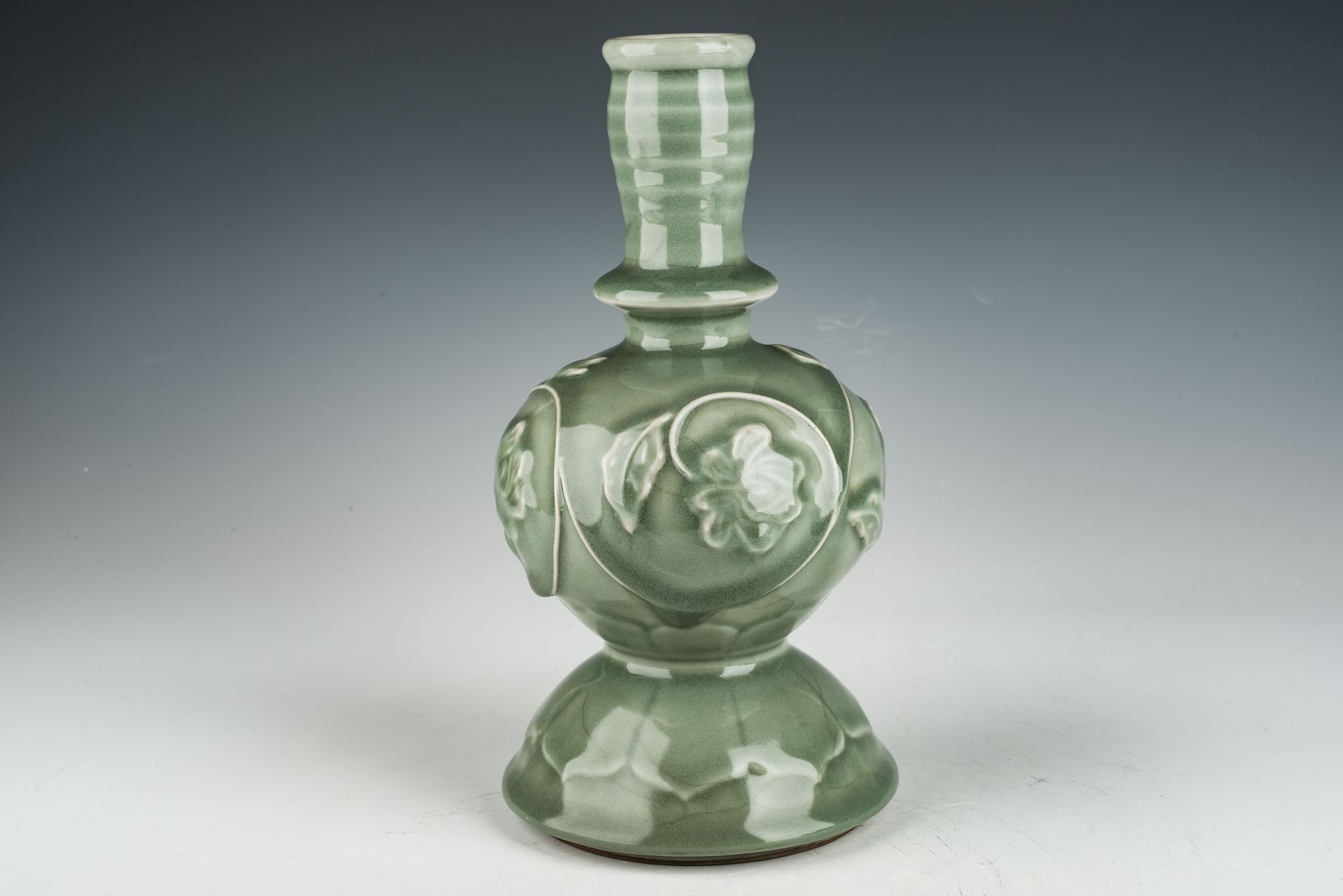
Southern Song/Yuan Dynasty Ge Kiln Vase with Mythical Animal Handles: Purple Rim and Golden Thread Accents
Song/Yuan Dynasty Ge Kiln Vase with Mythical Animal Handles, featuring a purple mouth, golden thread, iron wire crackle, and iron foot, exhibits a color reminiscent of wheat. The Ge Kiln is recognized as a premier kiln during the Southern Song to Yuan Dynasties. When illuminated with a flashlight, the characteristic purple mouth reveals a subtle shade of purple due to the glaze's thin application. The vase stands at approximately 8 3/8 inches in height. ppjrs
(click image to enlarge)
Contact me for the Price

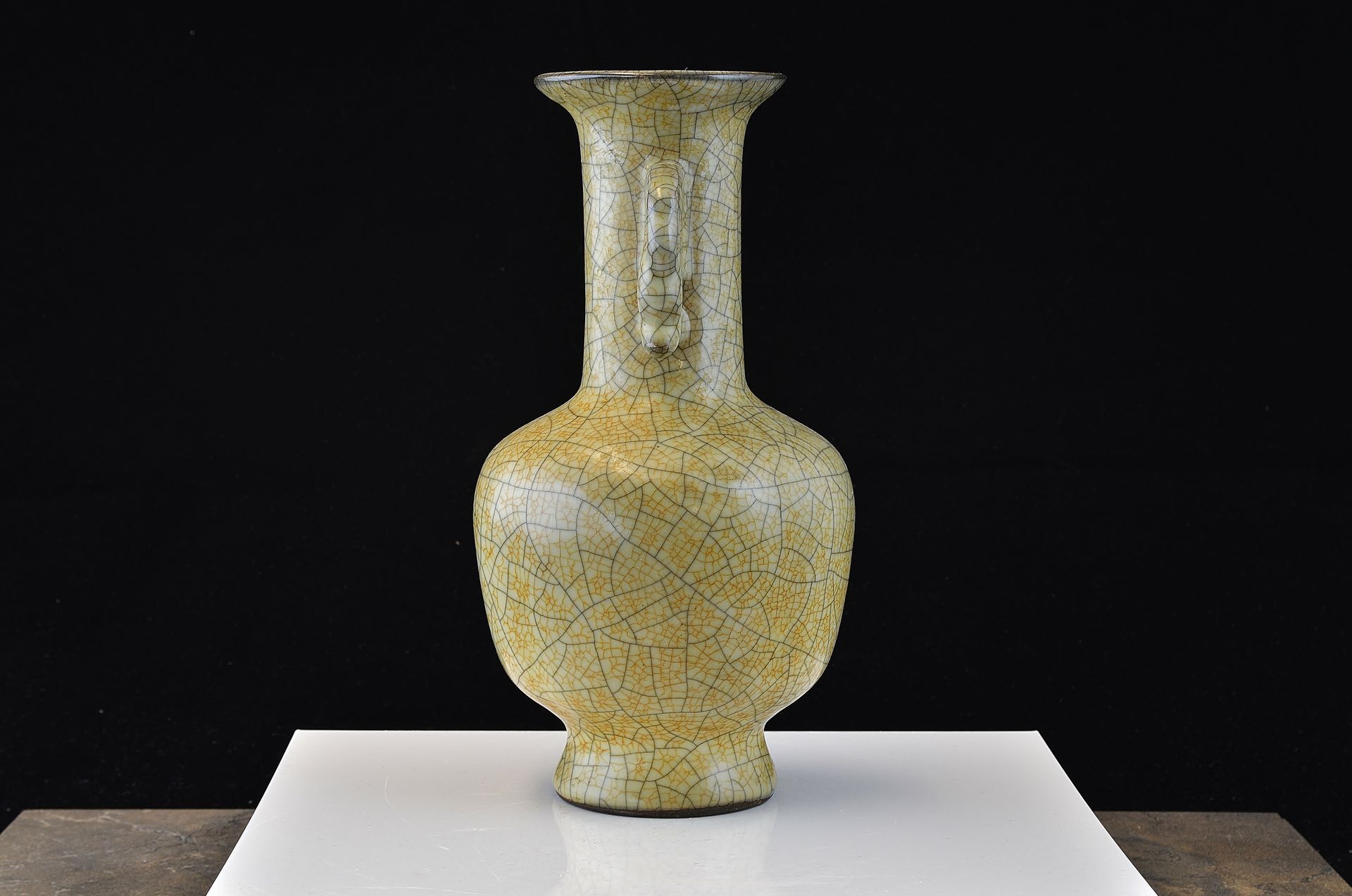


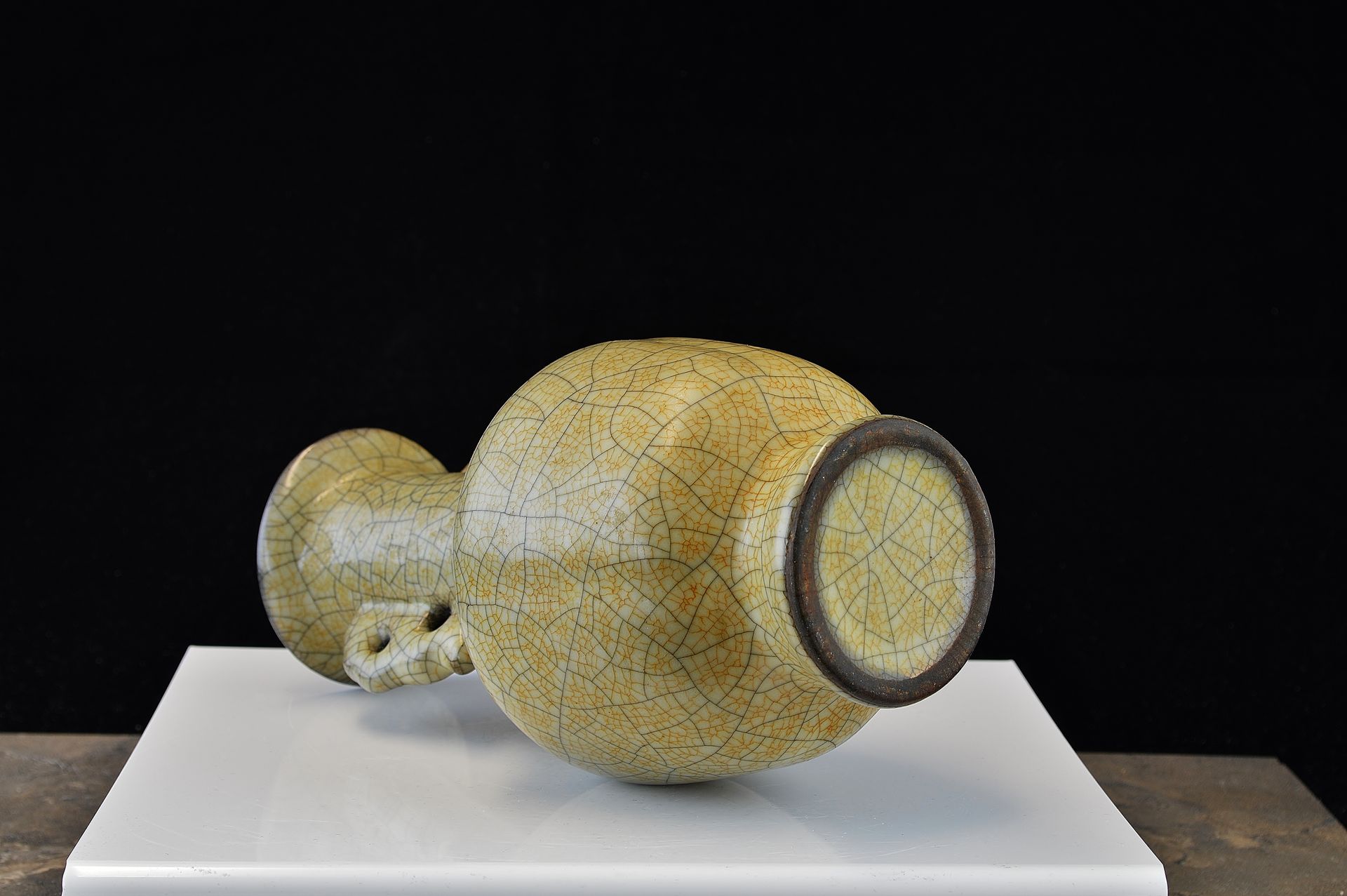
Southern Song and Yuan Dynasties: Hexagonal Ge Kiln Vase with Ring Handles, Purple Mouth, and Golden Thread Detailing
Song/Yuan Dynasty Ge Kiln Hexagonal Vase with Ring Handles. This remarkable Ge ware vase features a distinctive hexagonal shape, adorned with ring handles, and exhibits a striking purple mouth enhanced by golden thread and iron wire crackle detail. The iron foot complements the overall design, and the coloration closely resembles that of wheat. The Ge Kiln is historically recognized as the elder brother of kilns during the Southern Song and into the Yuan Dynasties. When illuminated with a flashlight, the glaze thins at the purple mouth, revealing a subtle hint of purple. The vase stands approximately 9 3/4 inches tall. ppjrs
(click image to enlarge)
Contact me for the Price


Southern Song and Yuan Dynasty Ge Kiln Ge Ware Vase: Square Hu Form with Tube Handles and Iron Foot
Southern Song/Yuan Dynasty Ge Kiln Square Hu Vase with Tube Handles. This exquisite square hu vase, featuring tube handles, is attributed to the early Southern Song Dynasty. The firing technique employed during this period demonstrates some lack of precision, resulting in a thicker glaze. This is indicative of the evolving ceramics process, which had not yet been fully mastered. The vase rests upon an iron foot and exhibits a color reminiscent of wheat. The Ge Kiln, often referred to as the elder brother's kiln, played a significant role in ceramics production during the Southern Song and Yuan Dynasties. The vase stands approximately 9 1/4 inches tall. ppjrs
(click image to enlarge)
Contact me for the Price
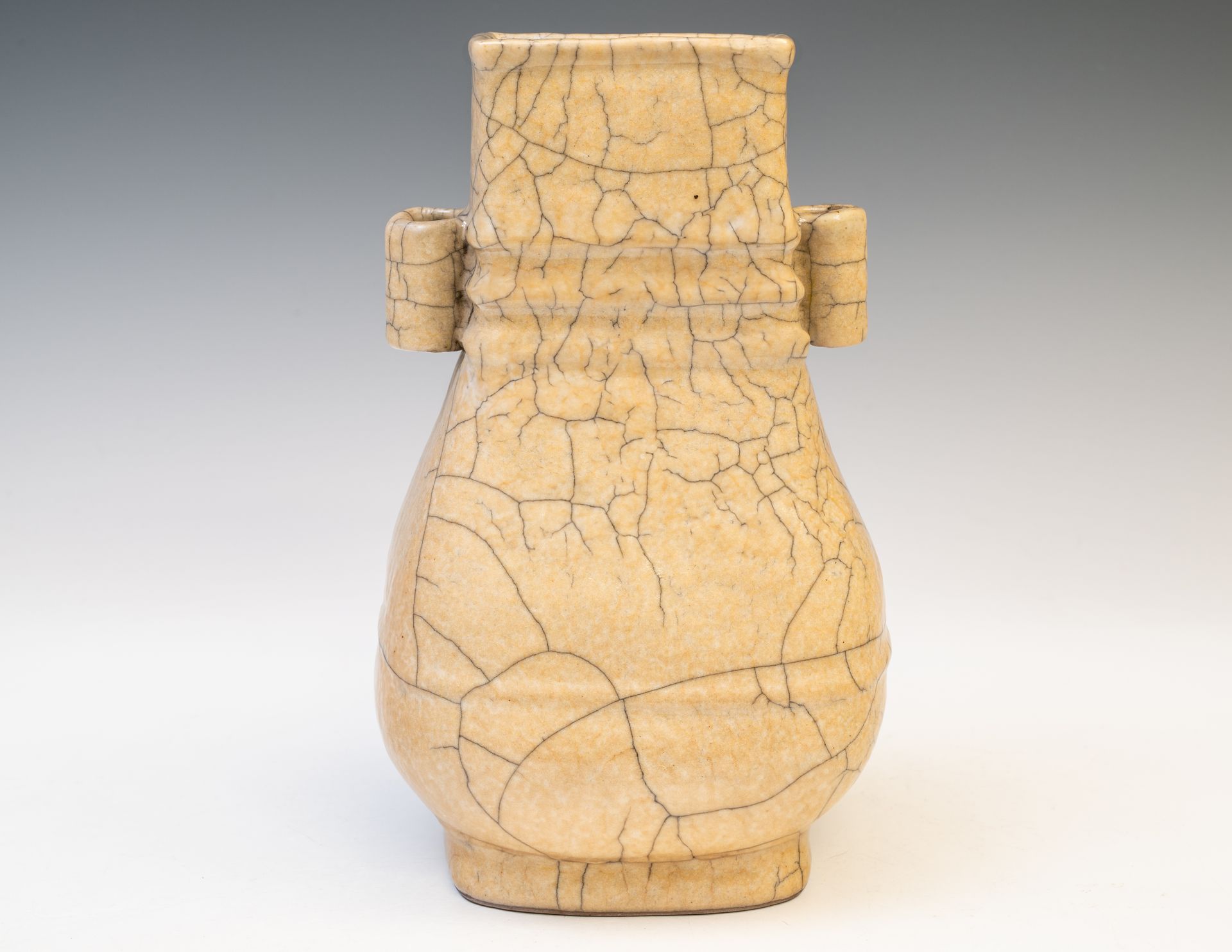


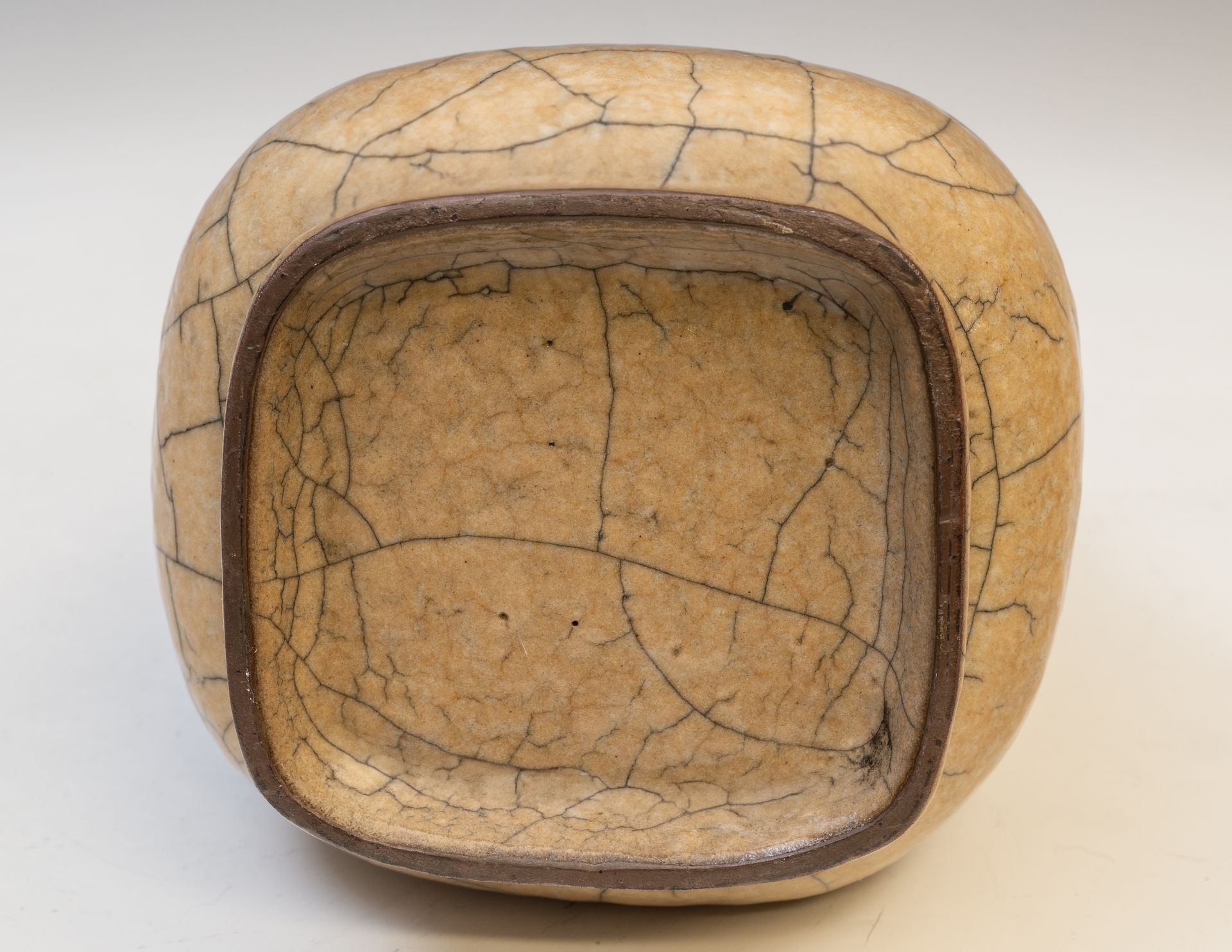
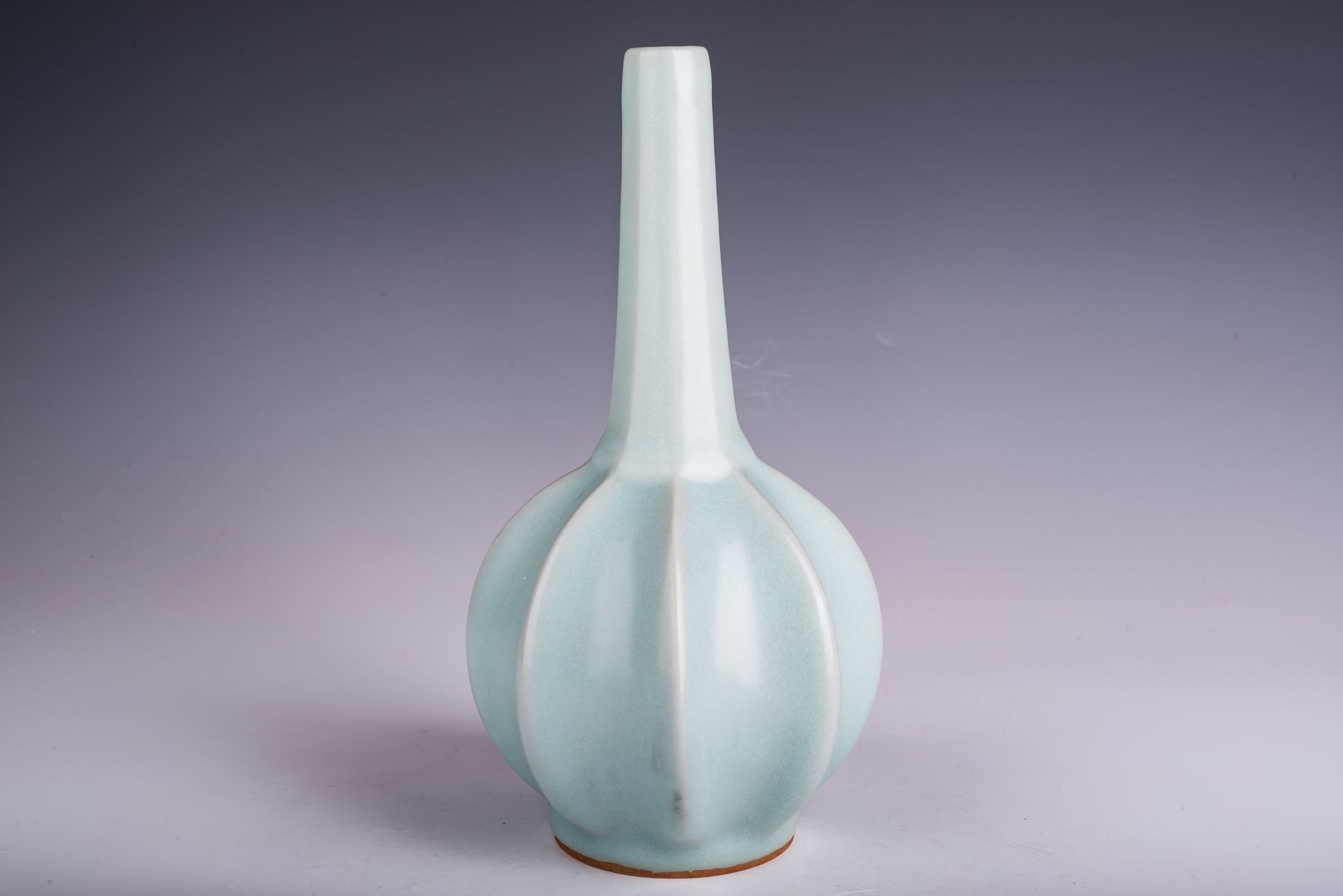
Southern Song and Yuan Dynasty Ge Kiln Ge Ware Lobed Meiping Vase Featuring Purple Rim and Golden Thread Accents
Song/Yuan Dynasty Ge Kiln Meiping Form Vase, featuring a lobed design, exquisite purple mouth, golden-thread cracked glaze, and an iron foot with a color reminiscent of wheat. The Ge Kiln is renowned as a preeminent kiln during the Southern Song through the Yuan Dynasties. The purple hue of the mouth becomes visible under flashlight illumination, where the glaze is notably thin, revealing a delicate tinge of purple. The vase stands approximately 9 3/4 inches in height. ppjrs
(click image to enlarge)
Contact me for the Price


Southern Song / Yuan Dynasty Ge Kiln Ge Ware Trumpet Horn Form Vase With Faint eel's Blood Thread and Iron Wire
S. Song/Yuan Dynasty Ge Kiln Ge Ware Trumpet Horn Form Vase. This exquisite piece features a subtle iron wire crackle reminiscent of eels' blood threads and is complemented by an iron foot. Its coloration is akin to that of wheat, enhancing its visual appeal. The Ge Kiln, recognized as the elder brother of kilns during the Southern Song to Yuan Dynasties, is renowned for its exceptional craftsmanship. This vase stands approximately 10 inches tall. ppjrs
(click image to enlarge)
Contact me for the Price

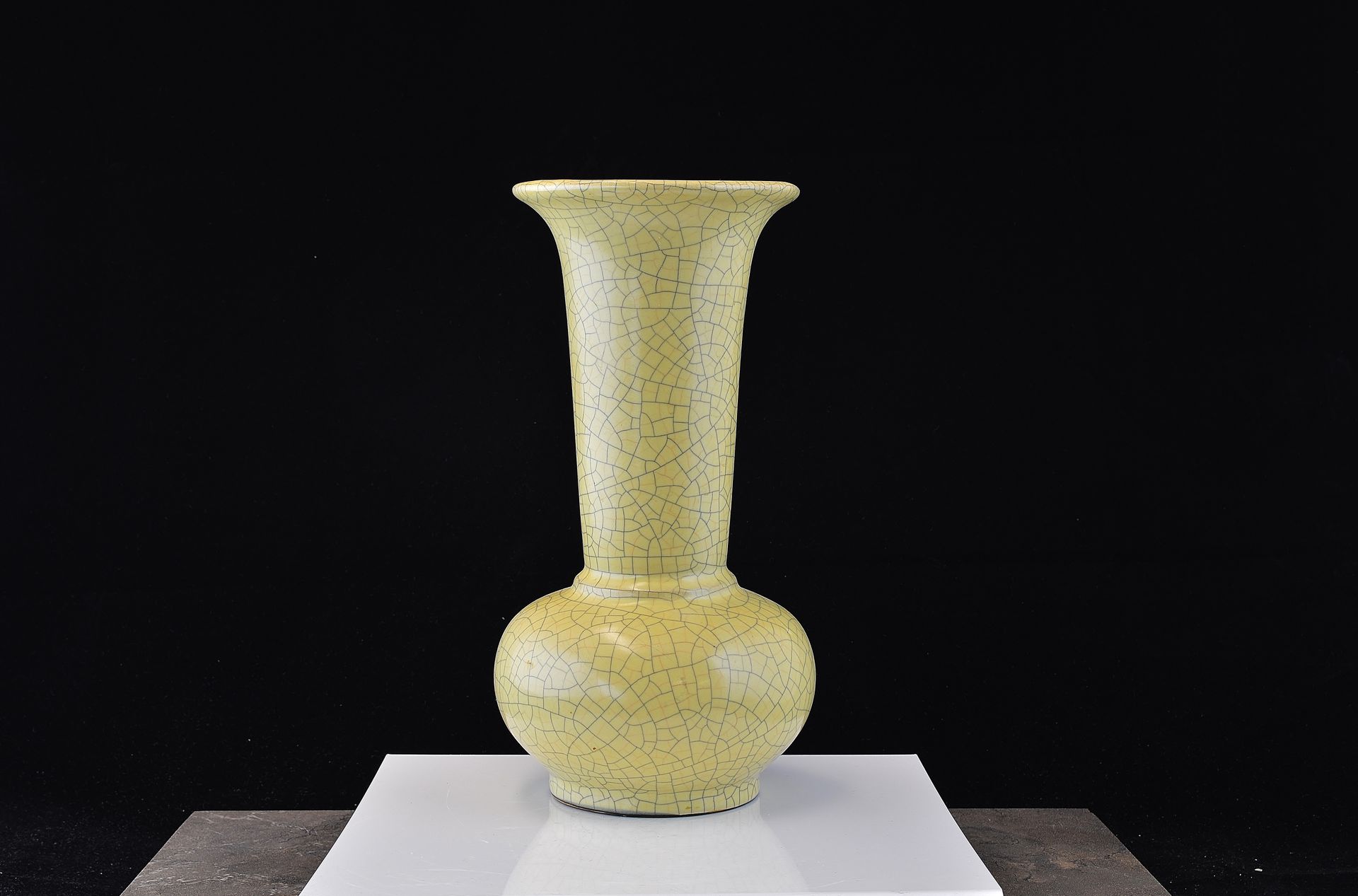


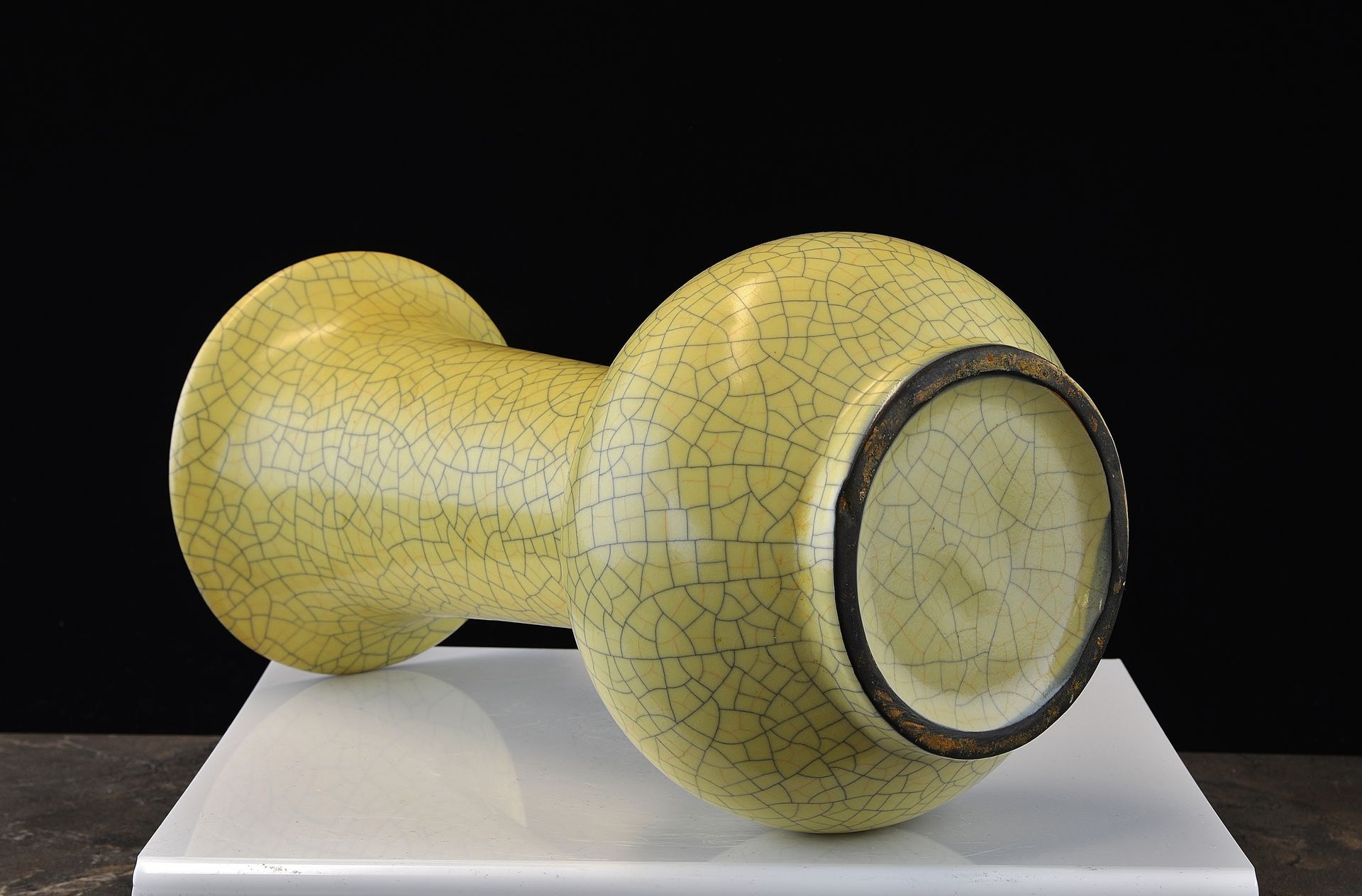
Southern Song/Yuan Dynasty Ge Kiln Hexagonal Arrow Vase Featuring Subtle Eel's Blood Thread and Iron Wire Inlay
S. Song/Yuan Dynasty Ge Kiln Ge Ware Hexagonal Arrow Vase exhibiting subtle eel's blood thread crackling and an iron foot, with a coloration reminiscent of wheat. The Ge Kiln, recognized as a premier kiln from the Southern Song through the Yuan Dynasties, stands approximately 10 inches in height. ppjrs
(click image to enlarge)
Contact me for the Price

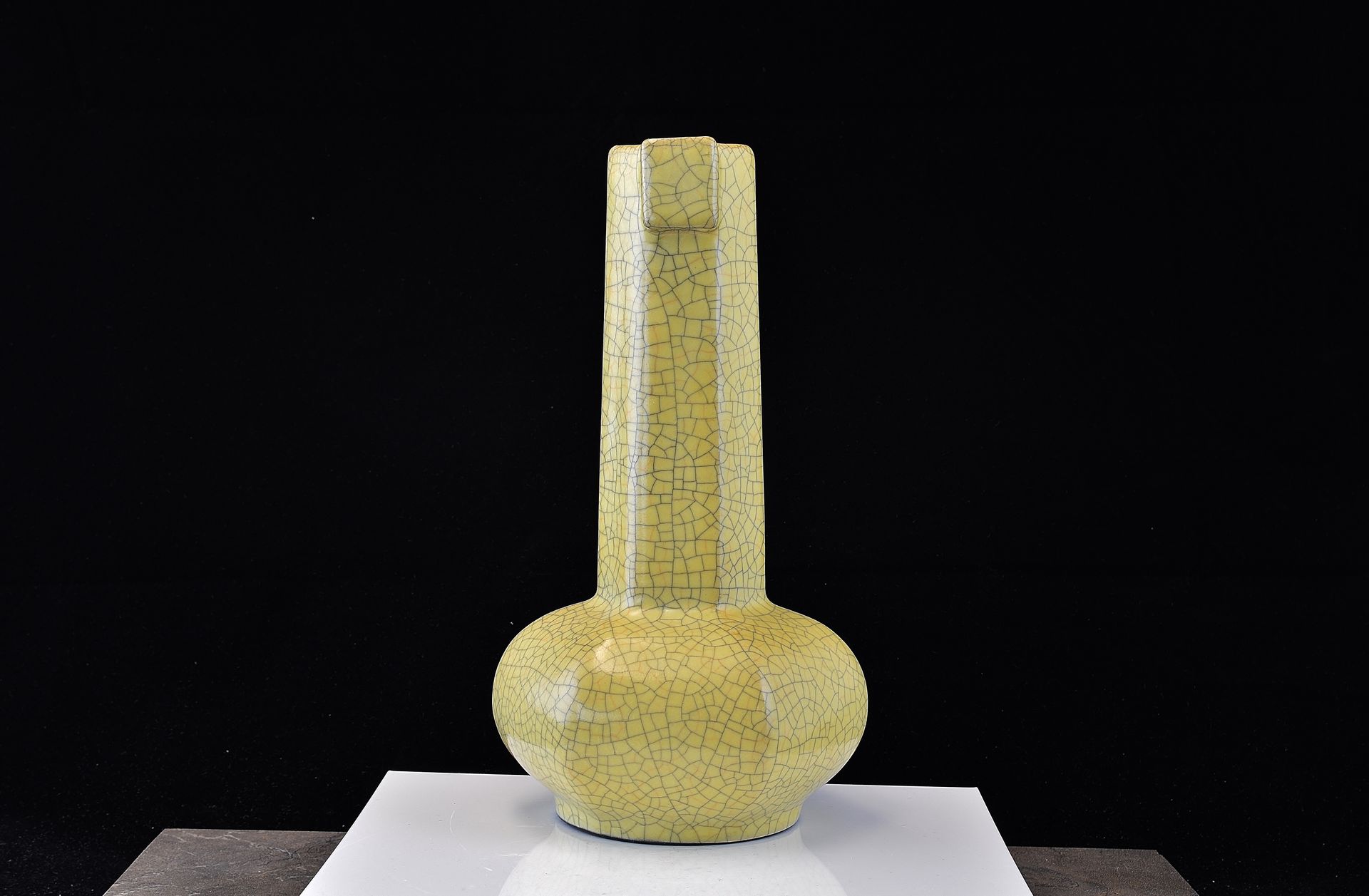


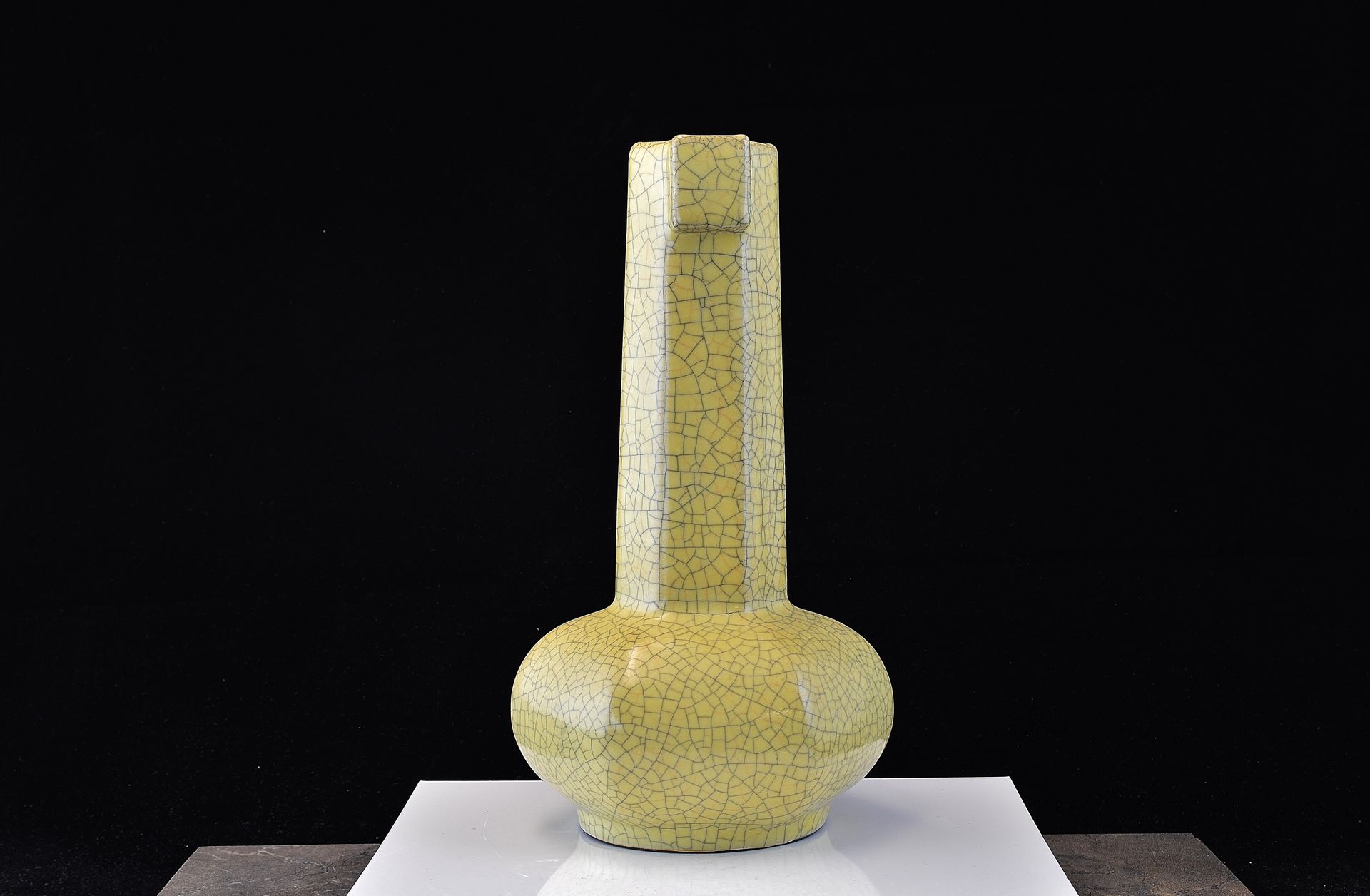

Southern Song to Yuan Dynasty Ge Kiln Ge Ware Octagonal Hu-Form Vase with Tube Handles and Iron Foot
Southern Song / Yuan Dynasty Ge Kiln Octagonal Hu-Formed Vase with Tube Handles, likely produced in the early Southern Song period. The firing process of this piece displays inconsistencies; the glaze is notably thicker due to the kiln's operational limitations at that time. It features an iron foot and a color reminiscent of wheat. The Ge Kiln, often regarded as the "elder brother's kiln," is historically significant during the transition from the Southern Song to the Yuan Dynasties. This vase stands approximately 7 1/2 inches tall. ppjrs
(click image to enlarge)
Contact me for the Price


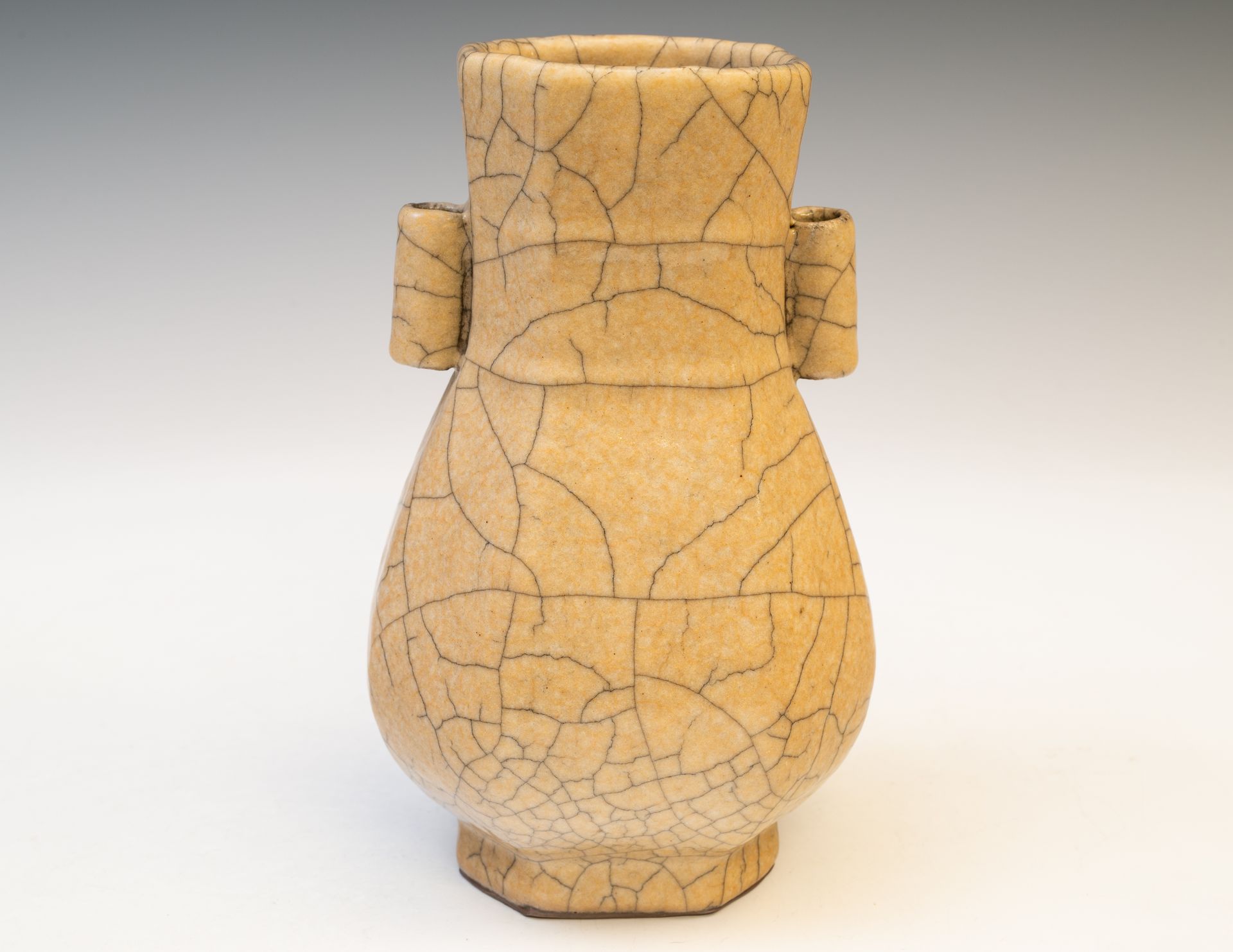

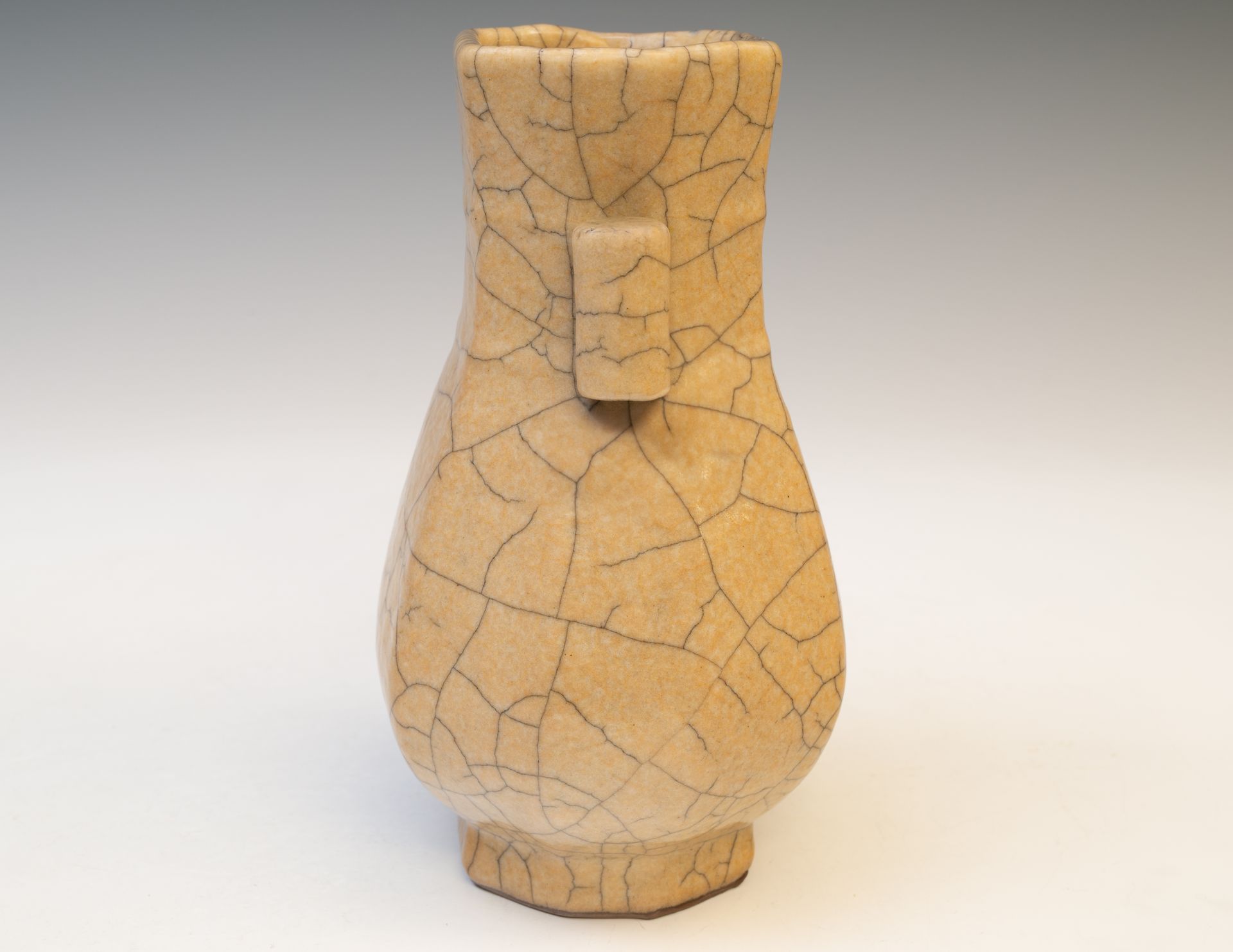

Southern Song and Yuan Dynasty Ge Kiln Ge Ware Lobed Vase with Purple Mouth and Golden Thread
Song/Yuan Dynasty Ge Kiln Ge Ware Lobed Form Vase with Purple Mouth, exhibiting golden-thread iron wire crackle and an iron foot, bears a color reminiscent of wheat. The Ge Kiln is recognized as the elder kiln dating from the Southern Song to the Yuan Dynasties. The purple mouth becomes visible under flashlight illumination, revealing a subtle purple tint in areas where the glaze is thinned. This piece stands approximately 9.5 inches tall. ppjrs
(click image to enlarge)
Contact me for the Price


Southern Song and Yuan Dynasties: Ge Kiln Ge Ware Lobed Melon-Form Vase with Pedestal, Purple Mouth, and Golden Thread Detailing
Song/Yuan Dynasty Ge Kiln Lobed Melon Form Vase on Pedestal, featuring a purple mouth, adorned with golden-threaded iron wire crackle and an iron foot. The coloration resembles that of wheat. The Ge Kiln is recognized as a distinguished elder kiln from the Southern Song through the Yuan Dynasties. When illuminated with a flashlight, the thinly glazed purple mouth reveals a subtle hint of purple. The vase measures approximately 9 7/8 inches in height. ppjrs
(click image to enlarge)
Contact me for the Price


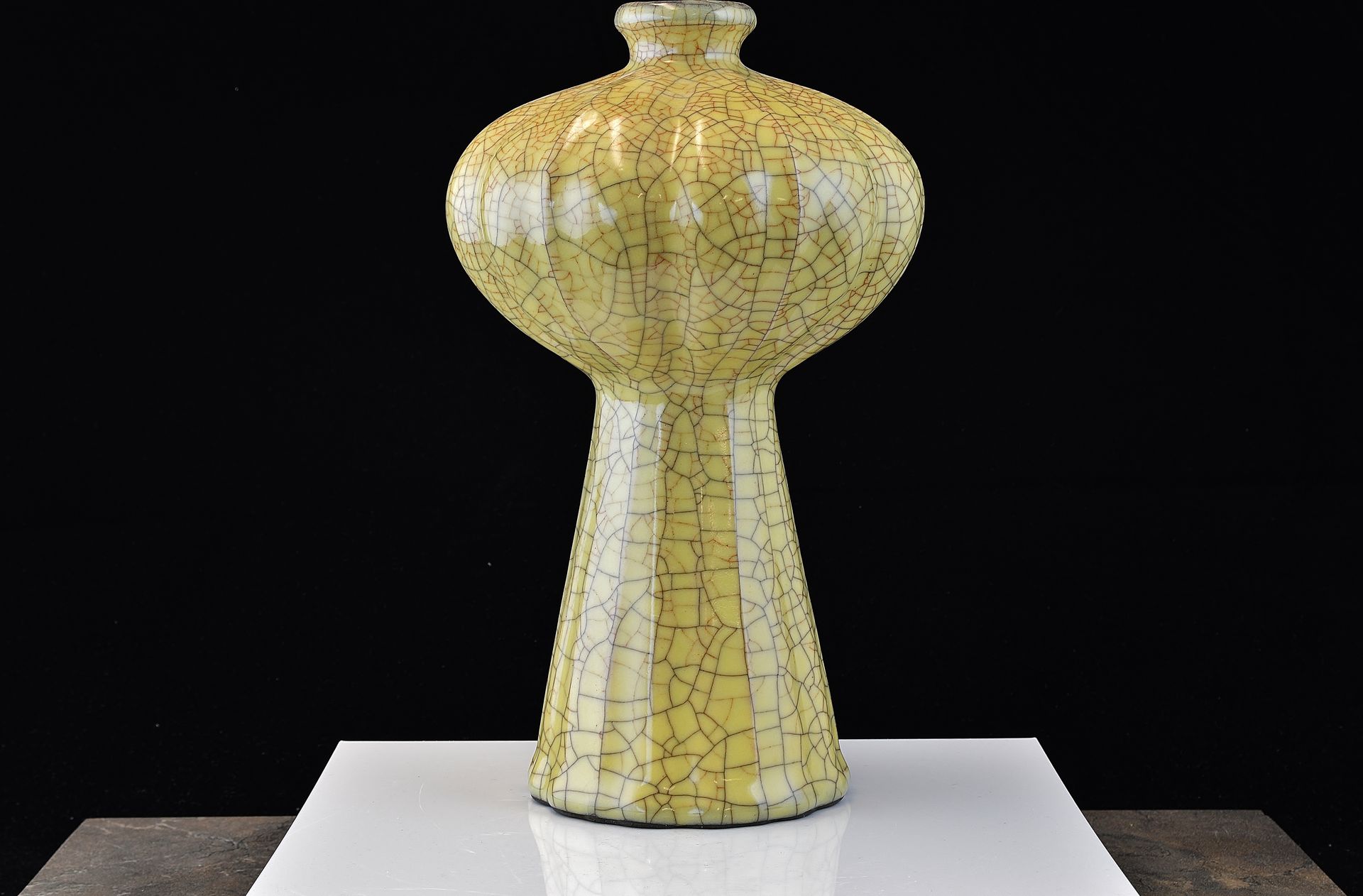

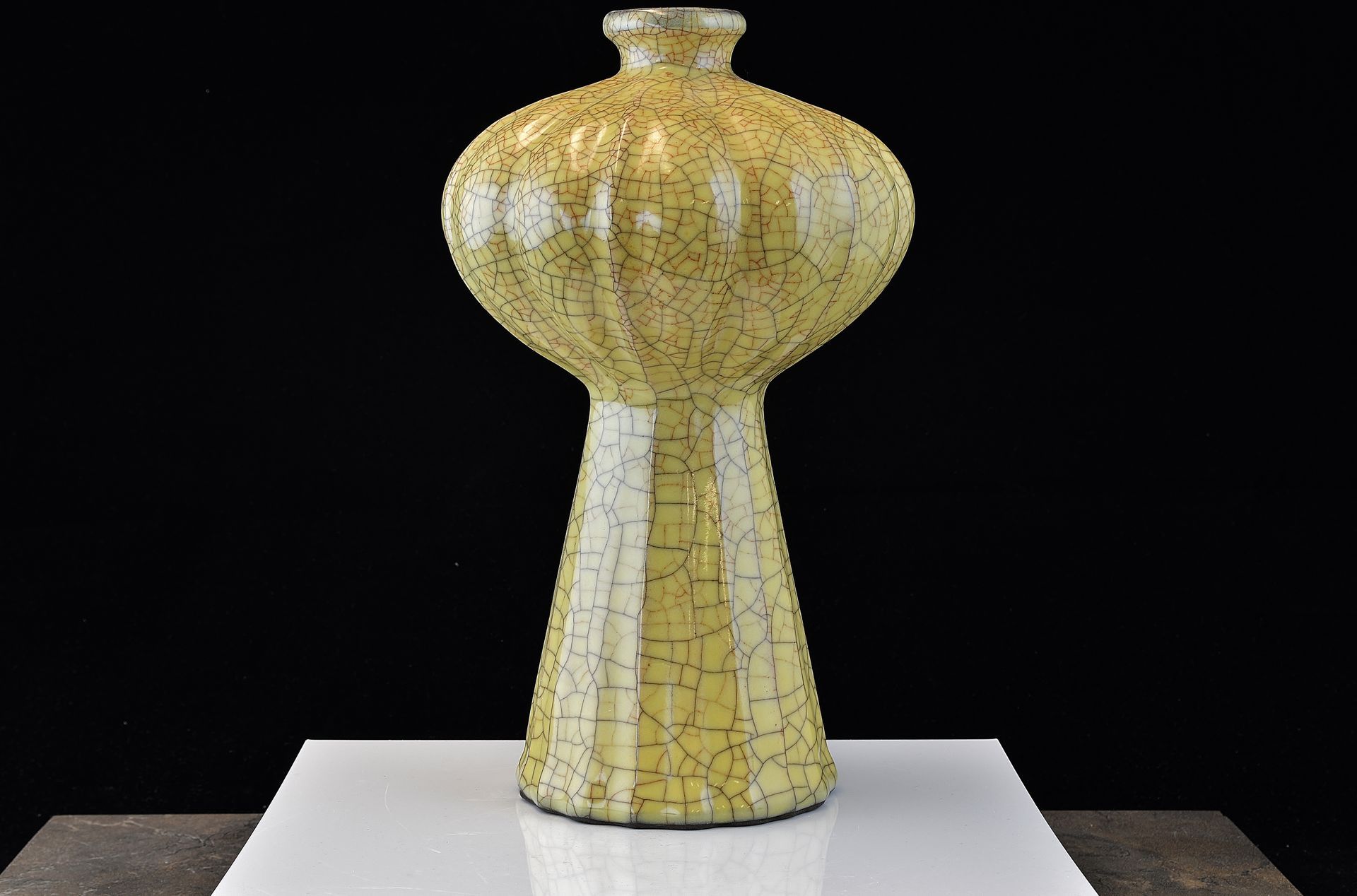

Southern Song / Yuan Dynasty Ge Kiln Ge Ware Octagonal Vase with Purple Lip and Golden Thread Design
Song/Yuan Dynasty Ge Kiln Octagonal Vase with Purple Mouth, characterized by a crackled glaze featuring golden-thread and iron wire accents, supported by an iron foot and exhibiting a hue reminiscent of wheat. The Ge Kiln is often referred to as the elder sibling of kilns from the Southern Song to the Yuan Dynasties. Upon illumination, the Purple Mouth reveals a subtle purplish tint where the glaze is thinned. This exquisite piece measures approximately 9 3/4 inches in height. ppjrs
(click image to enlarge)
Contact me for the Price


Exceptional and Highly Coveted Imperial Jun Narcissus Octagonal Bowl from the early Ming Dynasty
This exquisite piece from the early Ming Dynasty features a Jun octagonal form characterized by a purplish-blue glaze, accented with a reddish area beneath the lip on the exterior. The interior displays a delicate light blue hue, while a dark brown slip has been applied where the glaze thins, including a dark brown rim and edges. Notably, worm tracks are visible on the interior surface. The base is inscribed with three character marks. This vessel measures 9 1/8 inches in diameter. ppjrs
(click image to enlarge)
Contact me for the Price

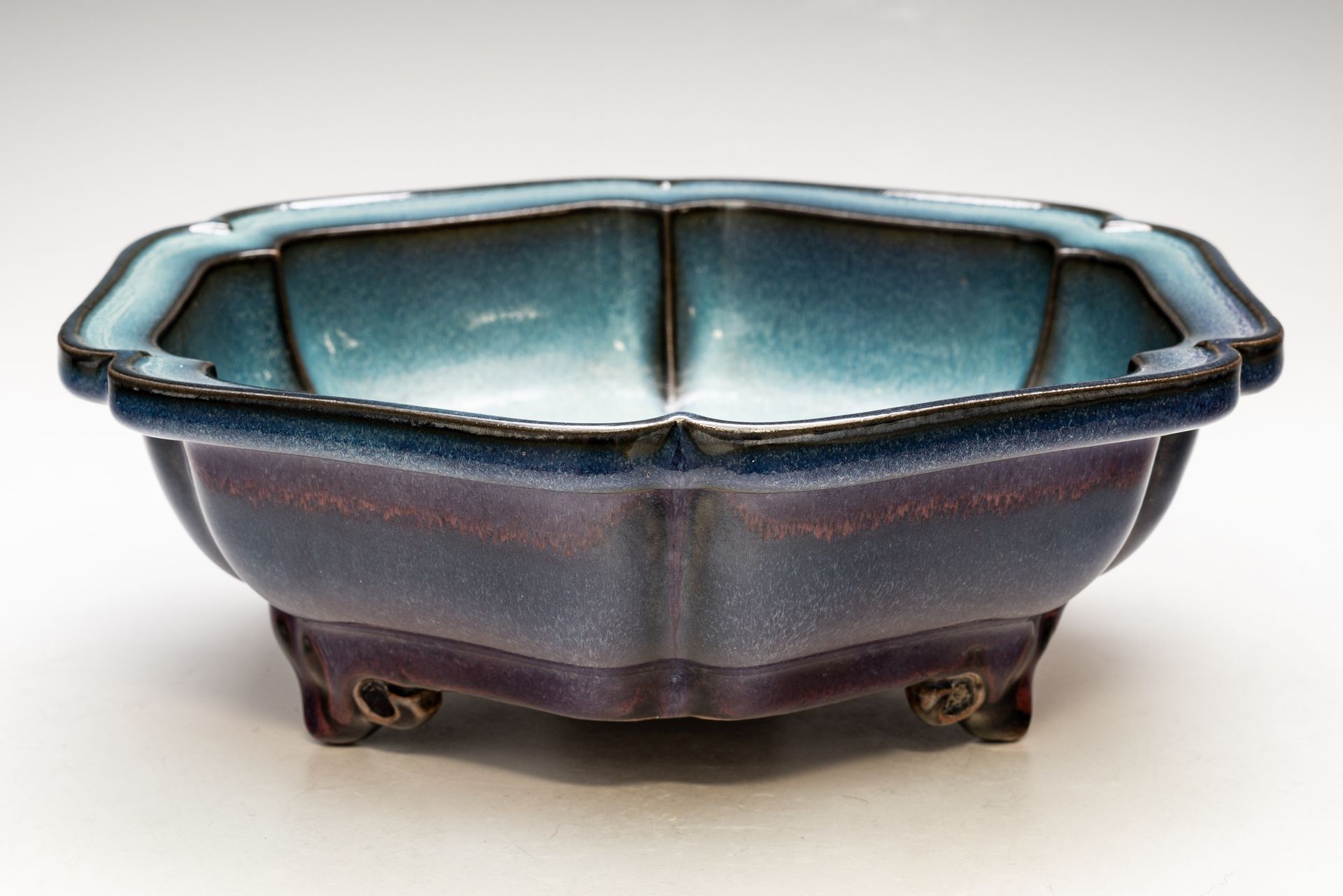


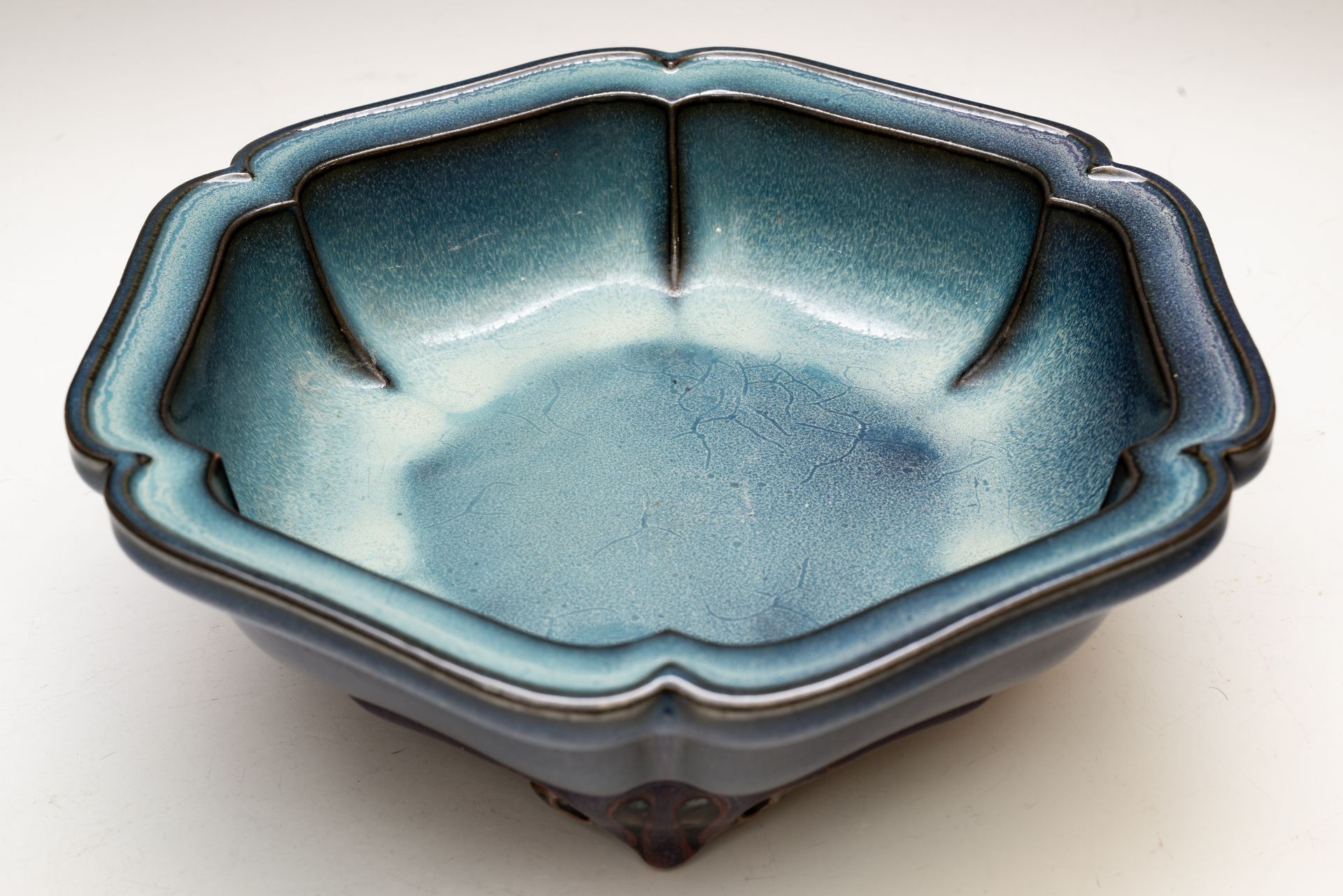
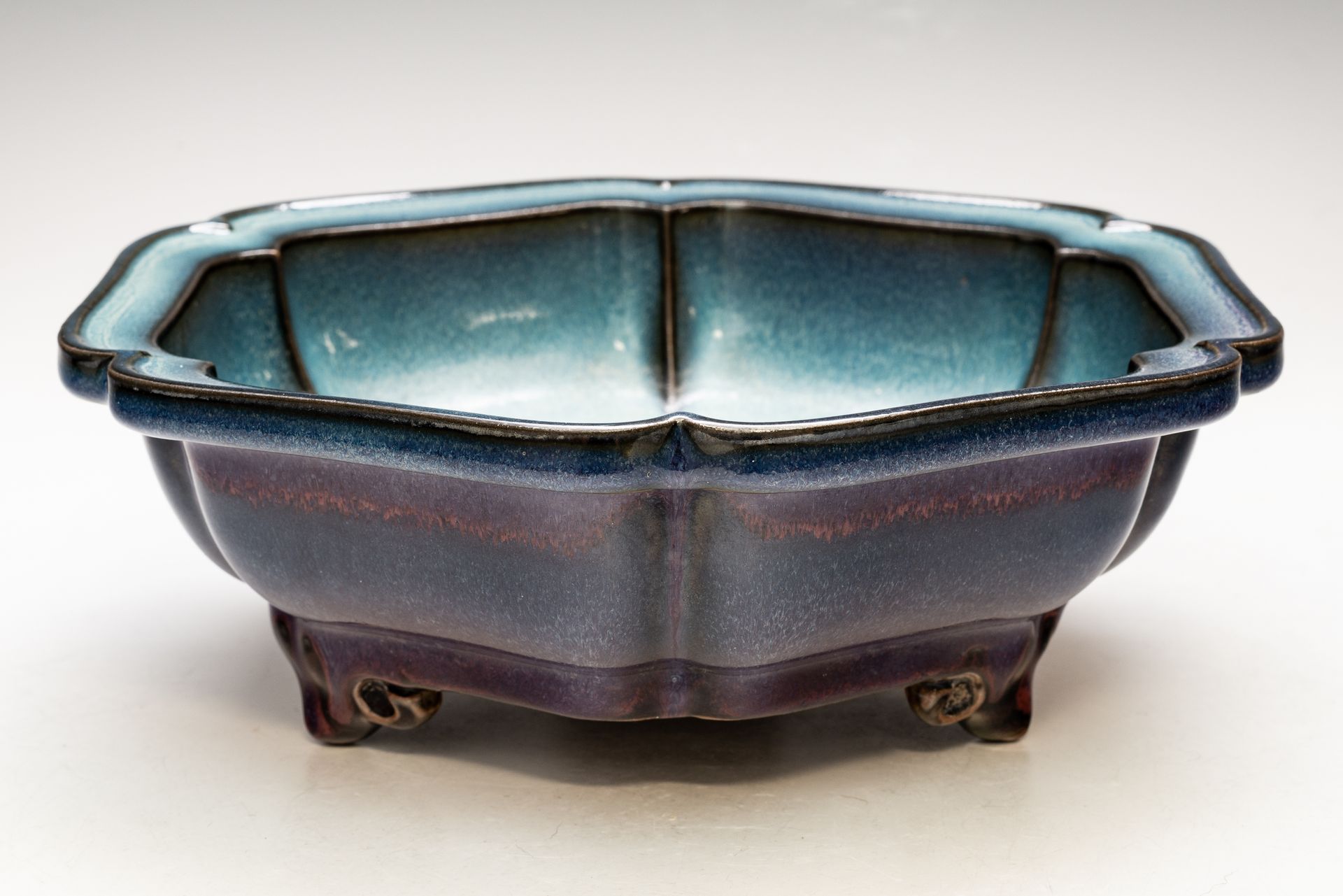


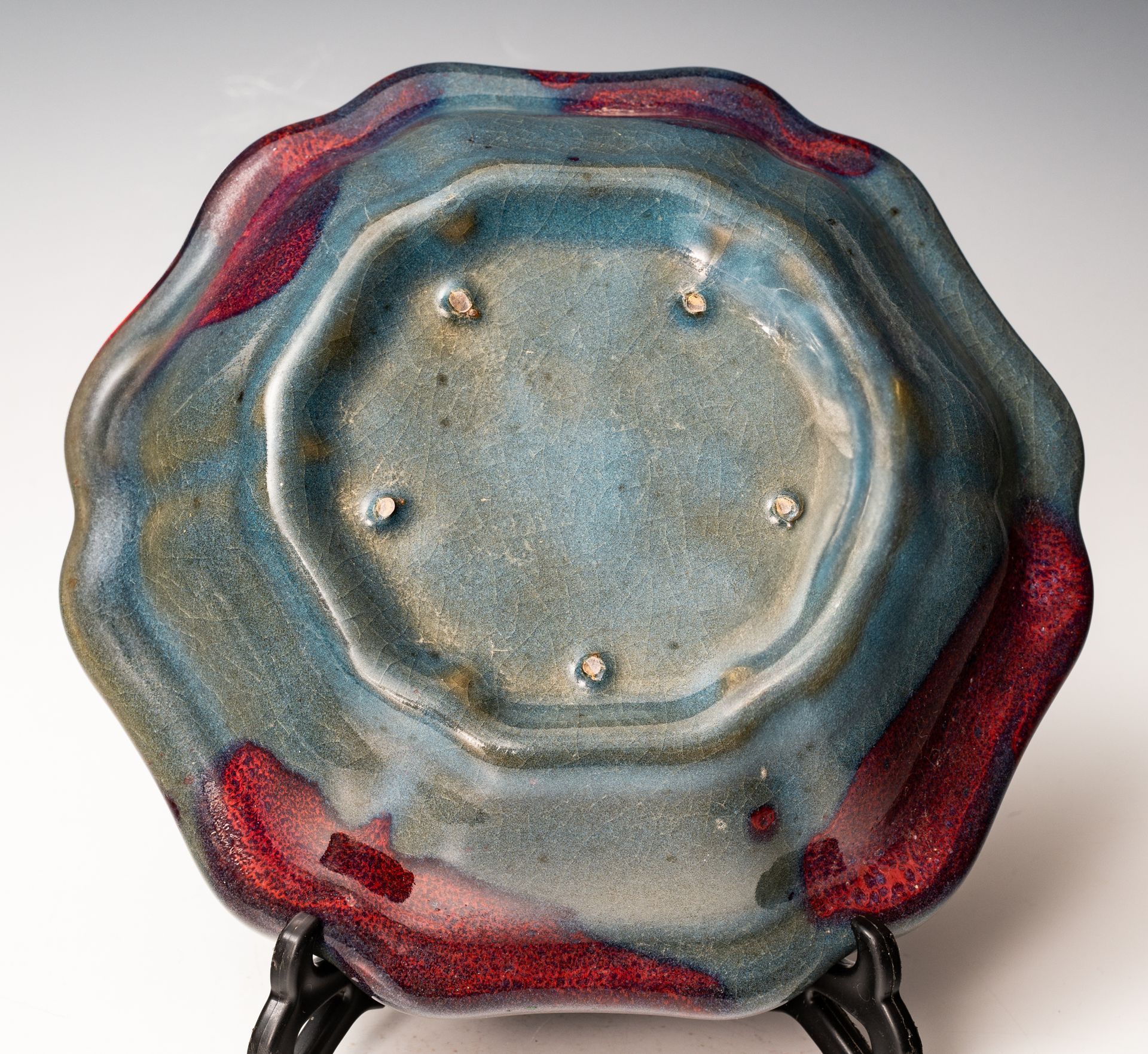
Northern Song Dynasty Jun Octagonal Brush Washer in Blue with
Reddish-Purple Accents
This remarkable octagonal brush washer from the Northern Song Dynasty features a vivid blue hue adorned with reddish-purple splashes on both the interior and exterior surfaces. Notably, a frog motif is rendered on the interior, enhancing its artistic appeal. The glaze elegantly thins, transitioning to a mushroom tone along the rim and edges. This exquisite piece measures 8 1/4 inches in diameter. ppjrs
(click image to enlarge)
Contact me for the Price


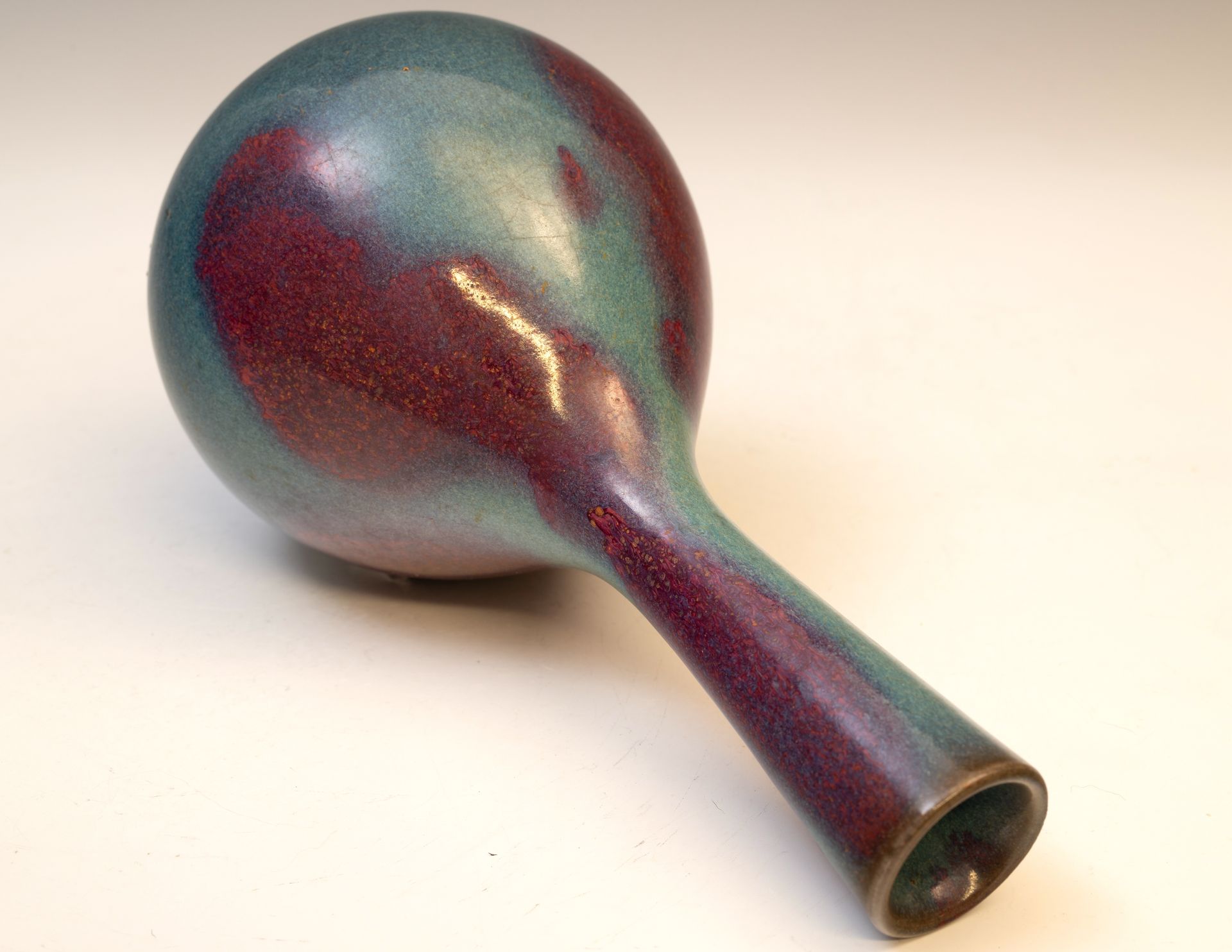
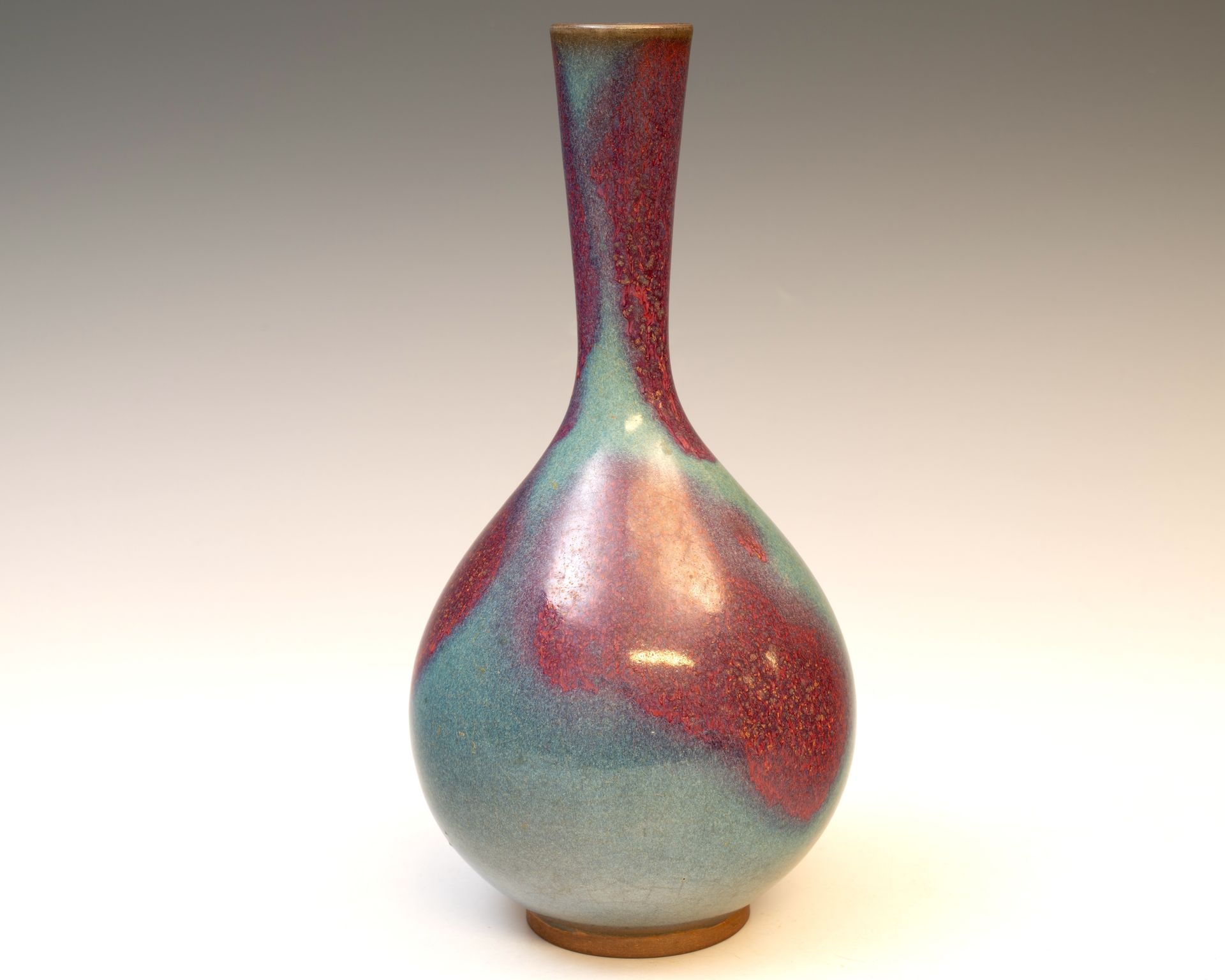
Jun Ware Pear-Shaped Long Neck Blue Vase from the Northern
Song Dynasty Jun Kiln Vase
This exquisite vase, originating from the Northern Song Dynasty and attributed to the Jun Kiln, exemplifies the artistry of Jun ware. Characterized by its pear shape and elongated neck, the vase features a captivating blue glaze interspersed with violet splashes across both the neck and the body. Additionally, fine crackling is present throughout the surface, adding to its aesthetic appeal. The vase stands at approximately 9.5 inches in height, showcasing the craftsmanship and cultural significance of this historical period. ppjrs
(click image to enlarge)
Contact me for the Price




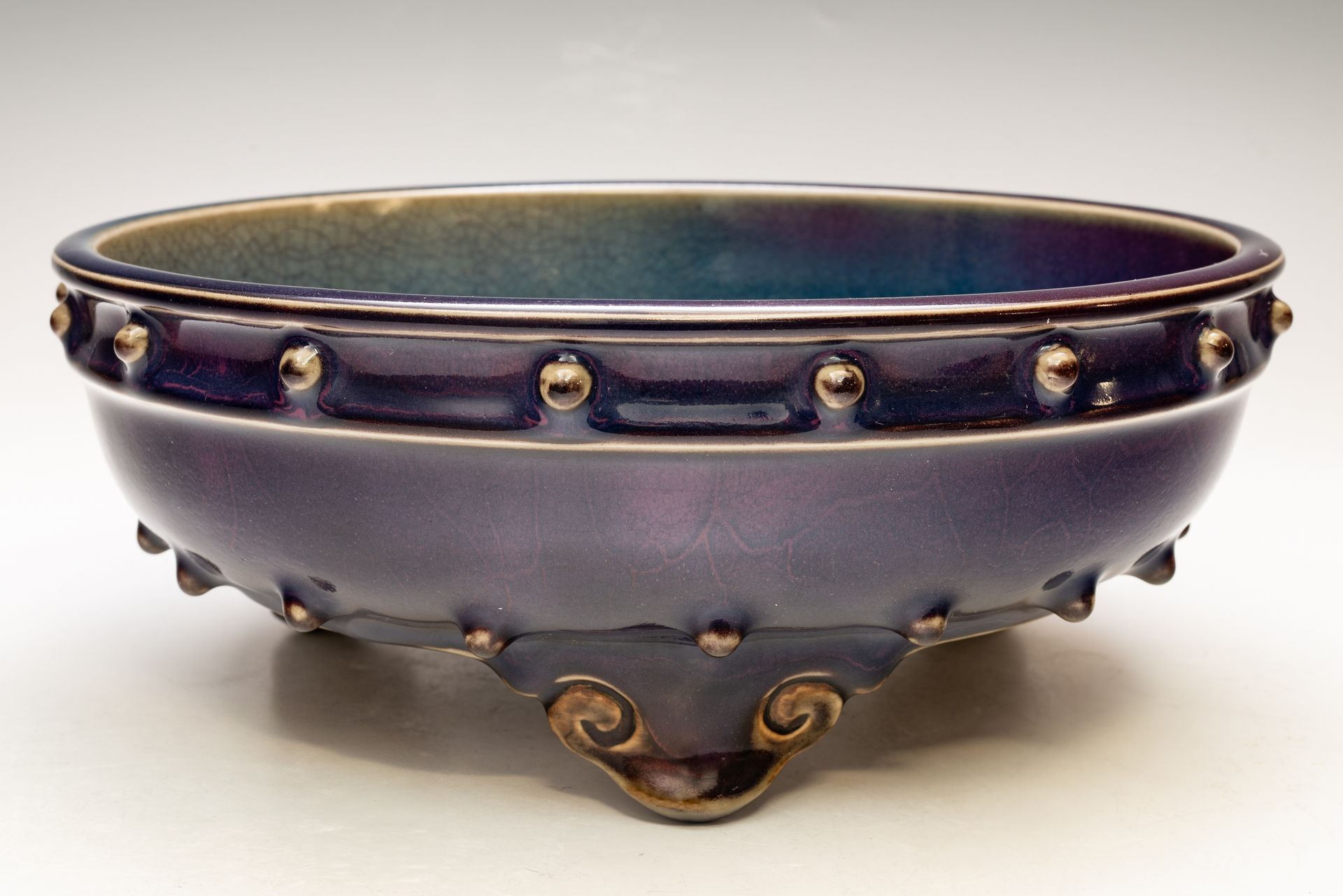
Rare and Exquisite Deep Purple-Blue Jun Narcissus Bowl from the Song Dynasty
This exquisite Narcissus bowl from the Southern Song Dynasty, crafted at the Jun kiln, features three feet and is adorned with two rows of nail studs. Its exterior exhibits a rich bluish-purple hue, while the interior presents a delicate light blue finish, complemented by an extensive array of worm tracks throughout the bowl. The base is inscribed with two character marks. The bowl measures approximately 9 3/4 inches in diameter. ppjrs
(click image to enlarge)
Contact me for the Price



Song Dynasty purple splashed Jun Bubble Bowl
Song Dynasty. This bowl is decorated on the interior with a reddish purple splash against a blue ground and with a slight purple on the outside of the rim, and thins to a mushroom tone at the edge of the rim.
Measures 5 7/8"Dia. ppjrs
(click image to enlarge)
Contact me for the Price
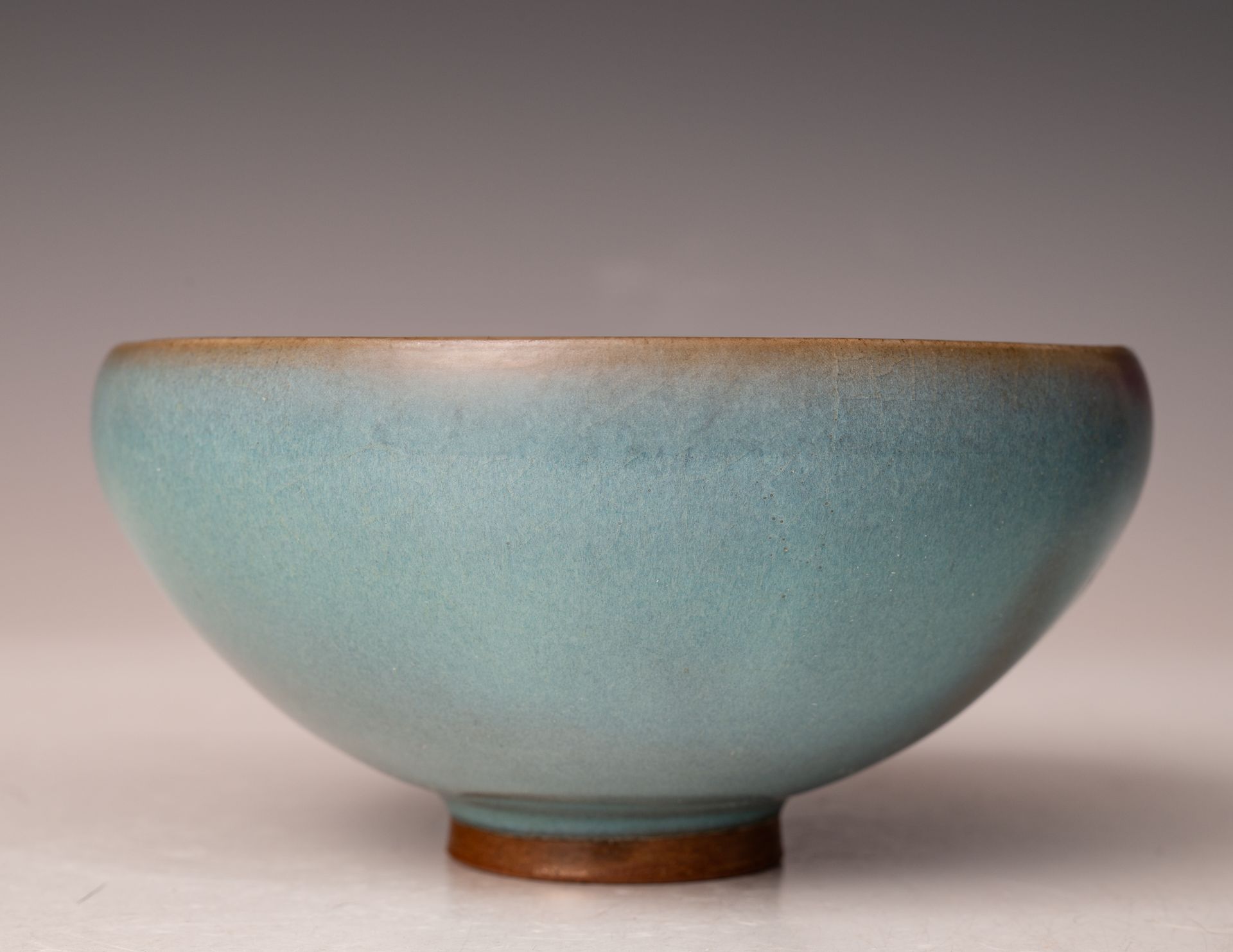


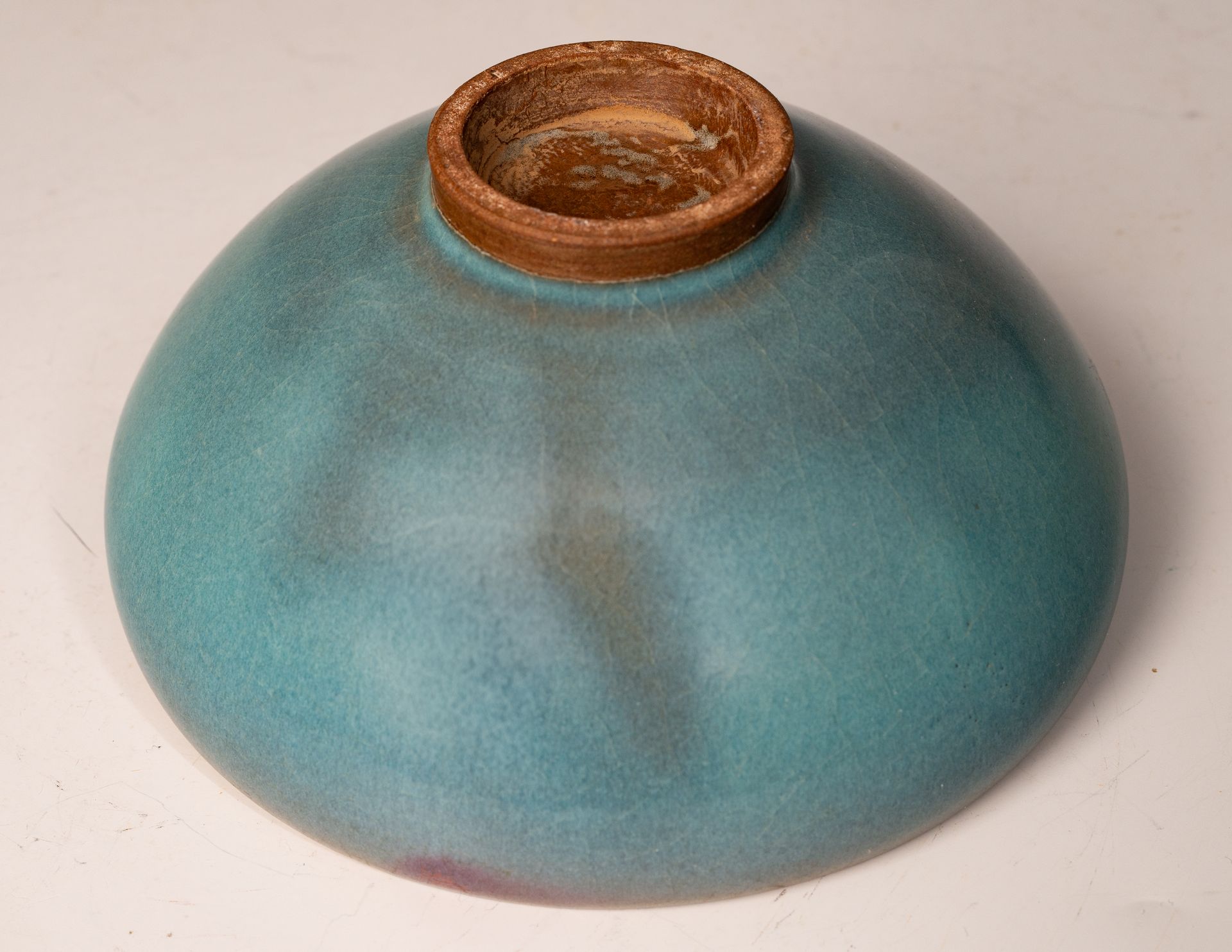


Yuan Dynasty Moonlit White Jun Nail Head Brush Washer/Bowl
with Purple Accents
Yuan Dynasty Moonlit White Jun Nail Head Brush Washer/Bowl, featuring a purplish splash within its interior and a graduated dark tone at the rim's edge. This exquisite piece measures 6.5 inches in diameter. ppjrs
(click image to enlarge)
Contact me for the Price
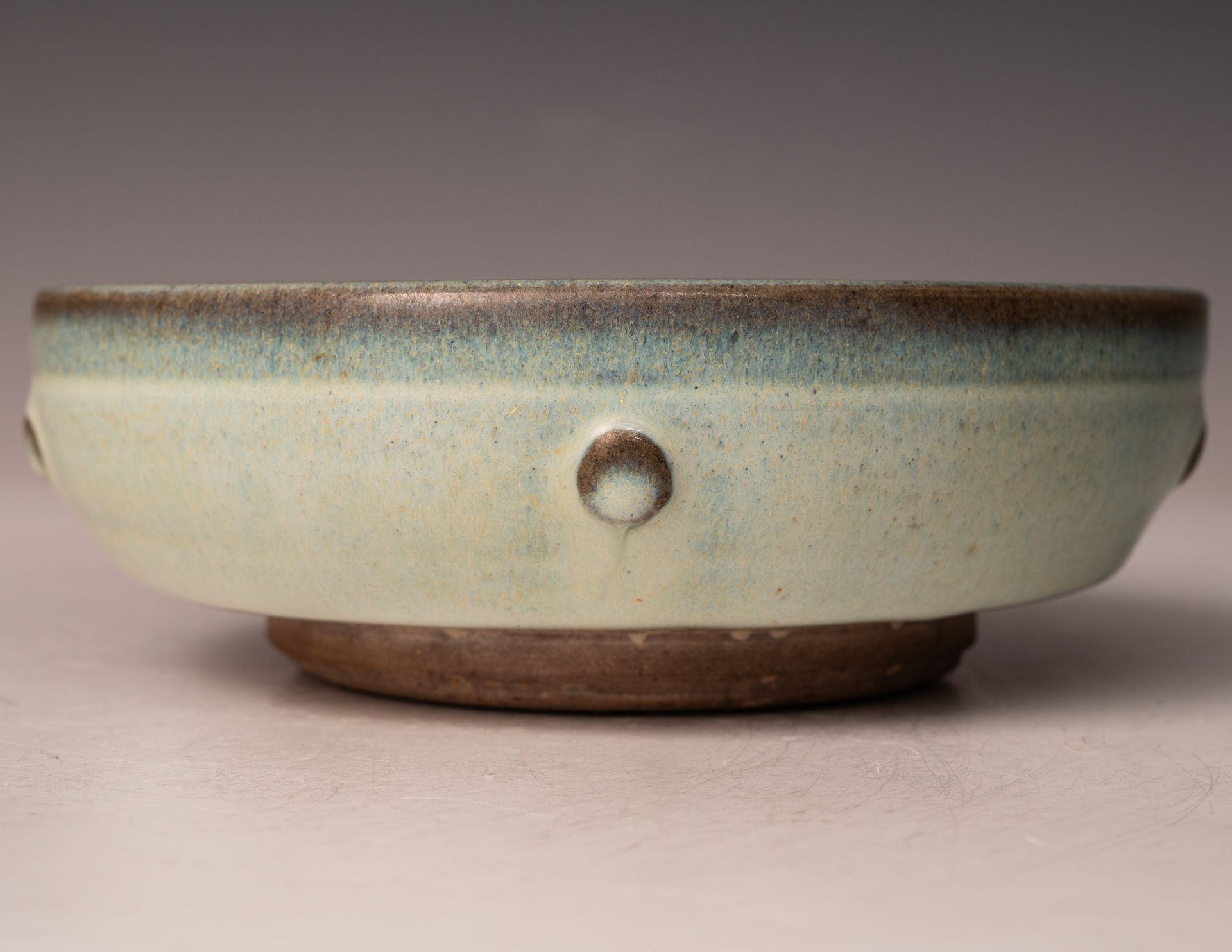


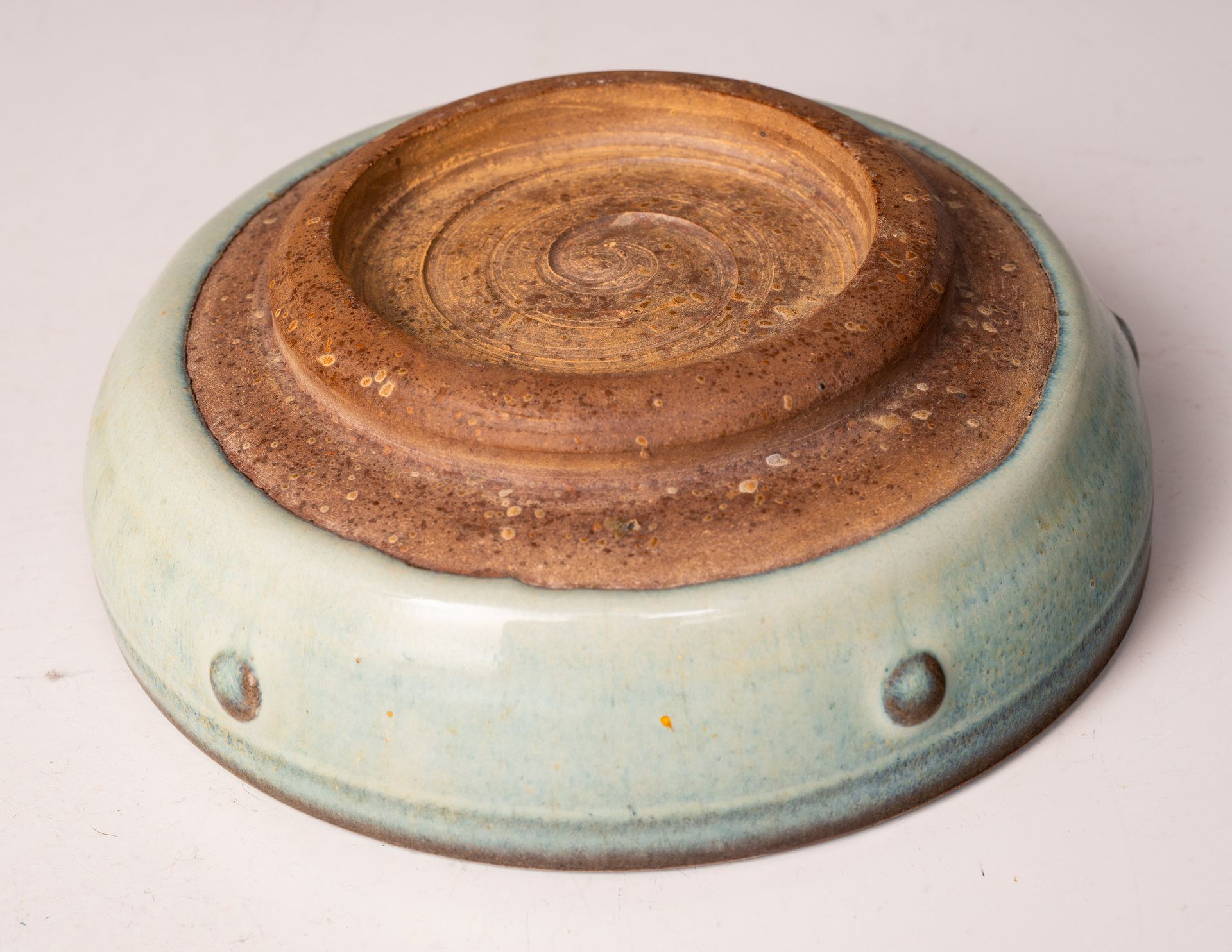
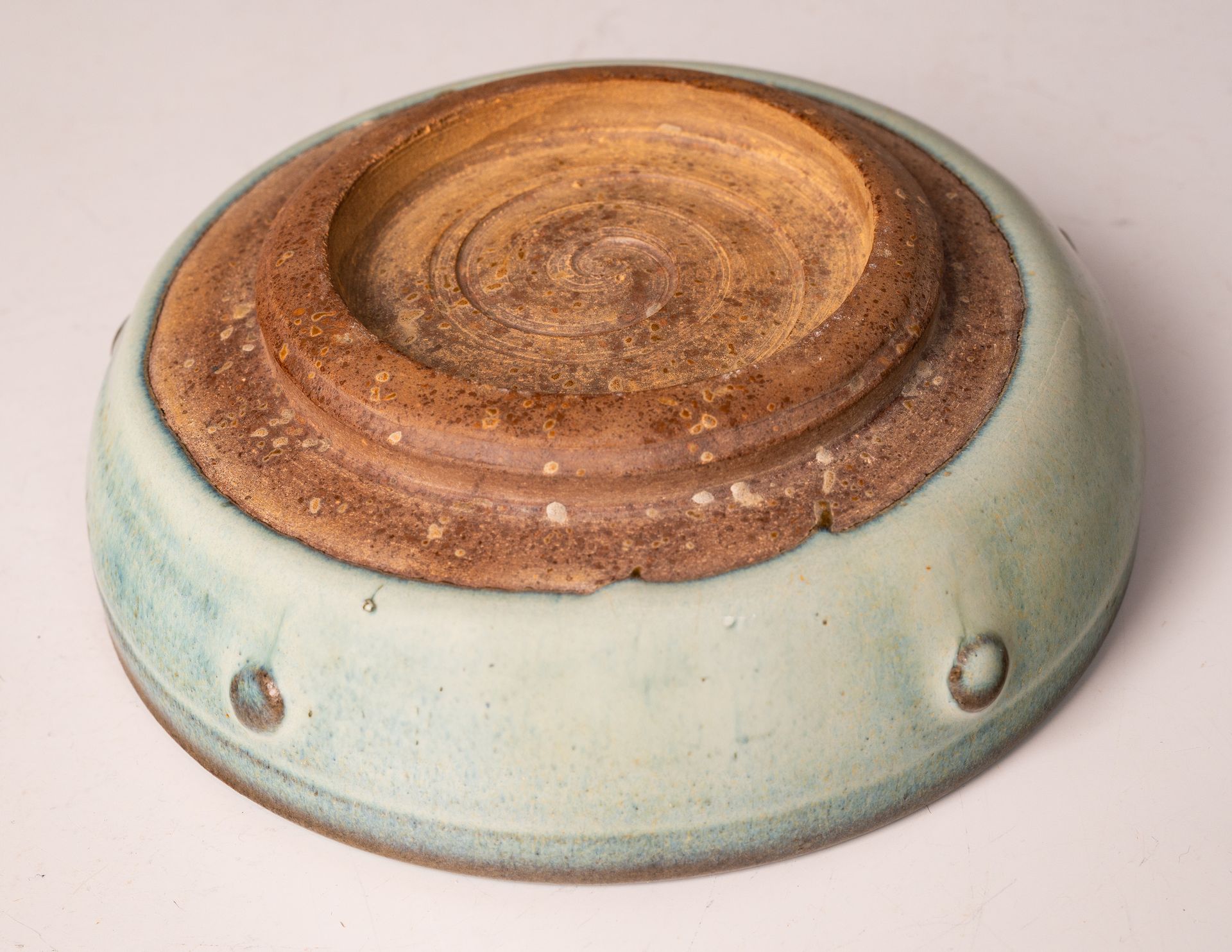


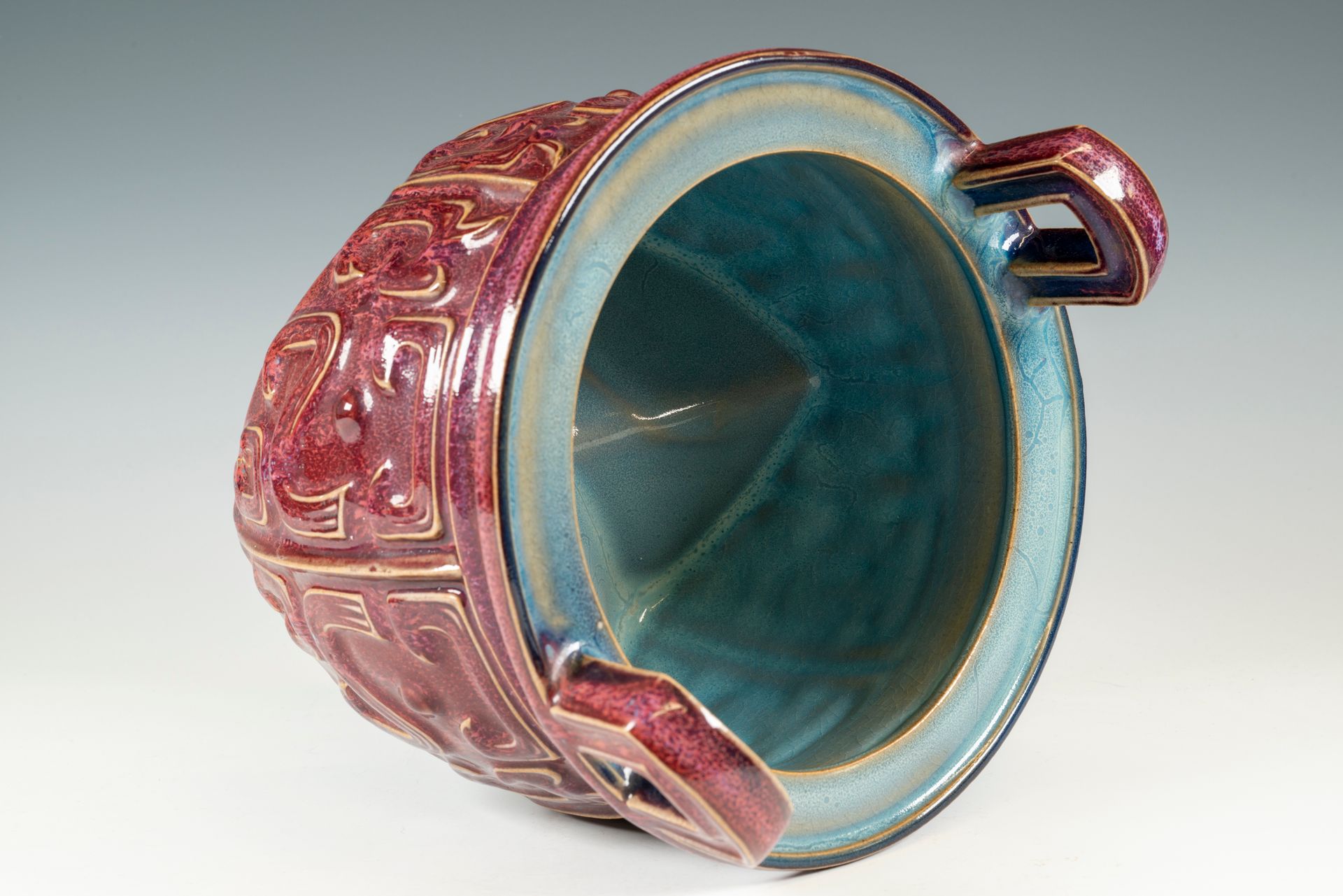
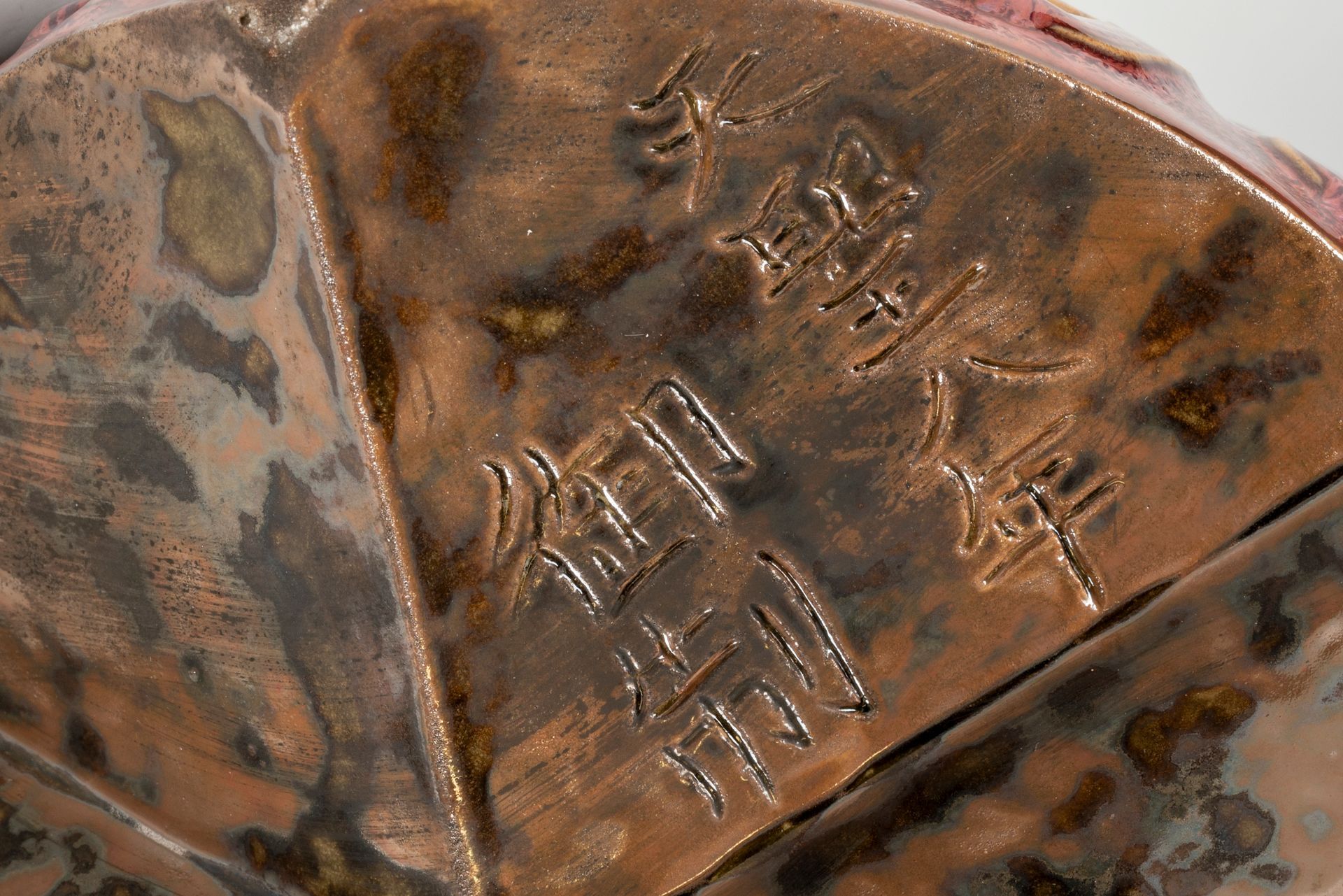
Rare Archaistic Jun Vessel from the early Ming Dynasty:
Reddish-Bluish Incense Burner
Early Ming Dynasty Rare Jun Kiln Archaistic Ding-Form Vessel with Inscription. This reddish-bluish incense burner features a robin egg blue glaze interior, exhibiting signs of age such as worm tracks, and is inscribed on the base. The vessel stands approximately 8 1/2 inches tall. ppjrs
(click image to enlarge)
Contact me for the Price





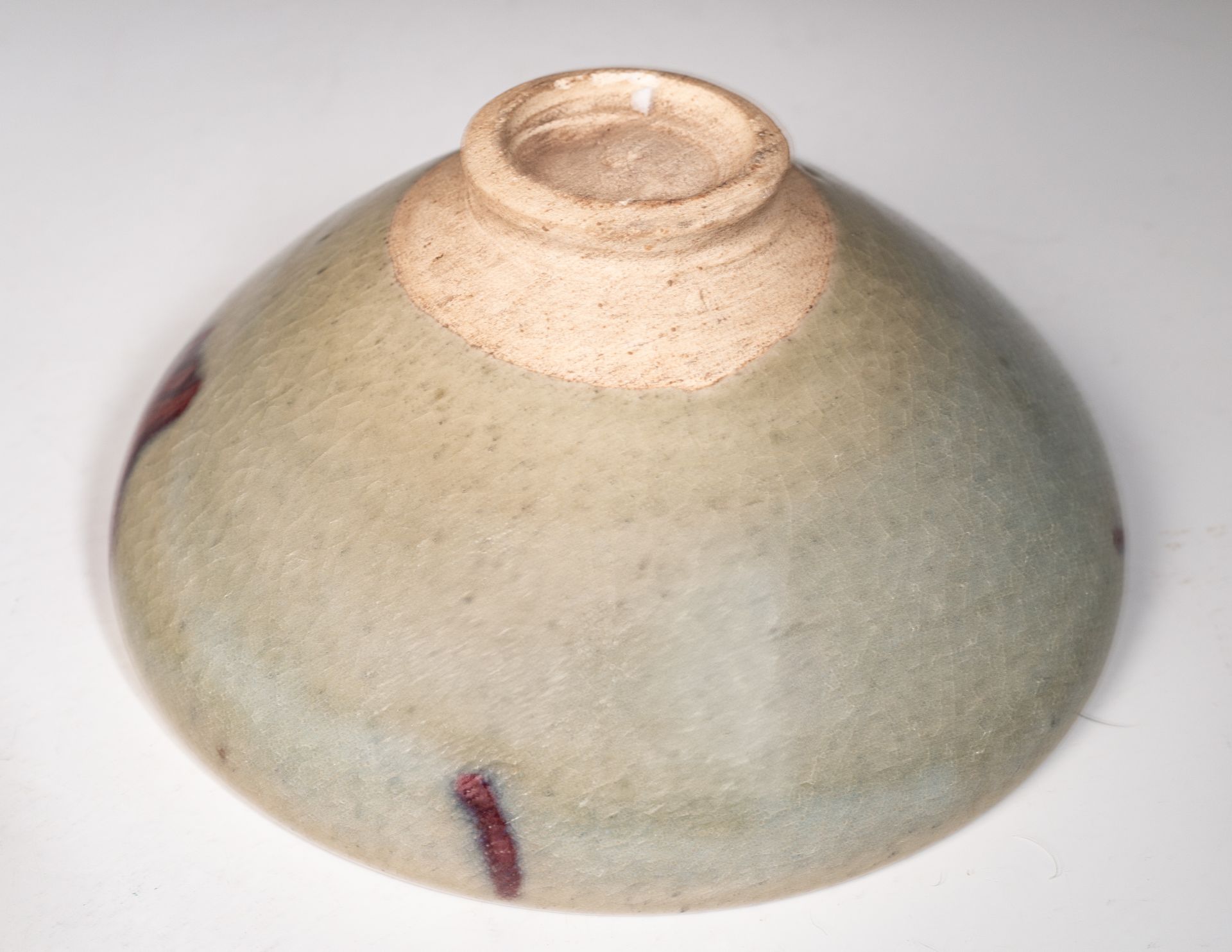
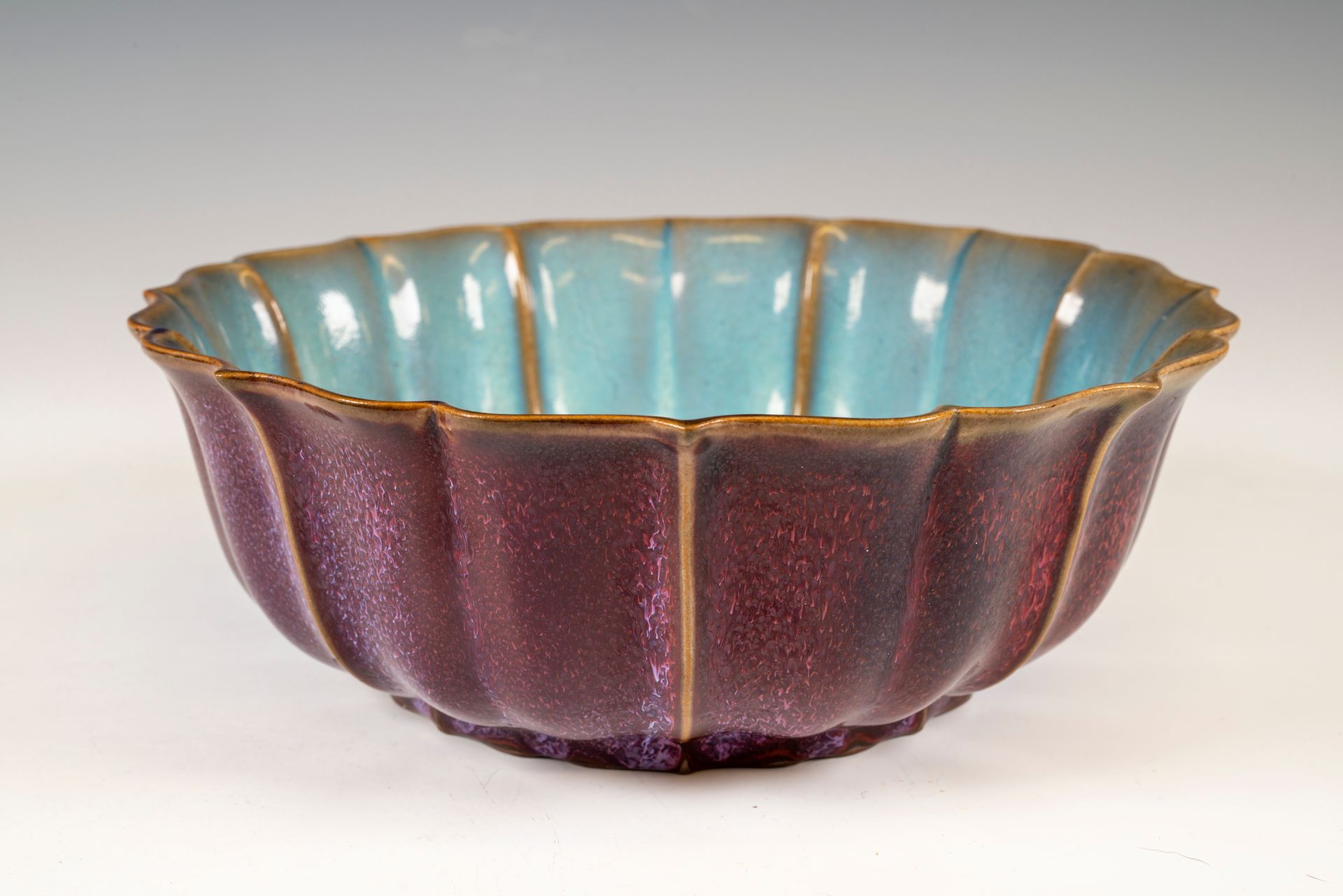
Yuan Dynasty Jun Bowl with Prominent Purple Splashes
**Yuan Dynasty** This bowl features striking decorative elements on both its interior and exterior, characterized by purple splashes set against a pale blue background, which gradually transitions to a subtle greyish-green hue at the rim. The base remains unglazed, revealing the biscuit body. The dimensions of the bowl are
7 3/4 inches in diameter. ppjrs
(click image to enlarge)
Contact me for the Price


Song Dynasty Jun Kiln Jun Ware Lobed Brush Washer
Featuring a Tadpole Design
Jun Ware Brush Washer from the Song Dynasty exhibits a brownish slip with a purplish exterior and a robin egg blue interior, showcasing a delicate thinning of the glaze. The base of the bowl features a tadpole design, accompanied by subtle and fine crackling, along with two character marks. This piece measures approximately 8 3/4 inches in diameter. ppjrs
(click image to enlarge)
Contact me for the Price




Yuan Dynasty Shallow Dish Exhibiting a White glaze with Pale
Greenish Hue and Purple Accents
(click image to enlarge)
Contact me for the Price

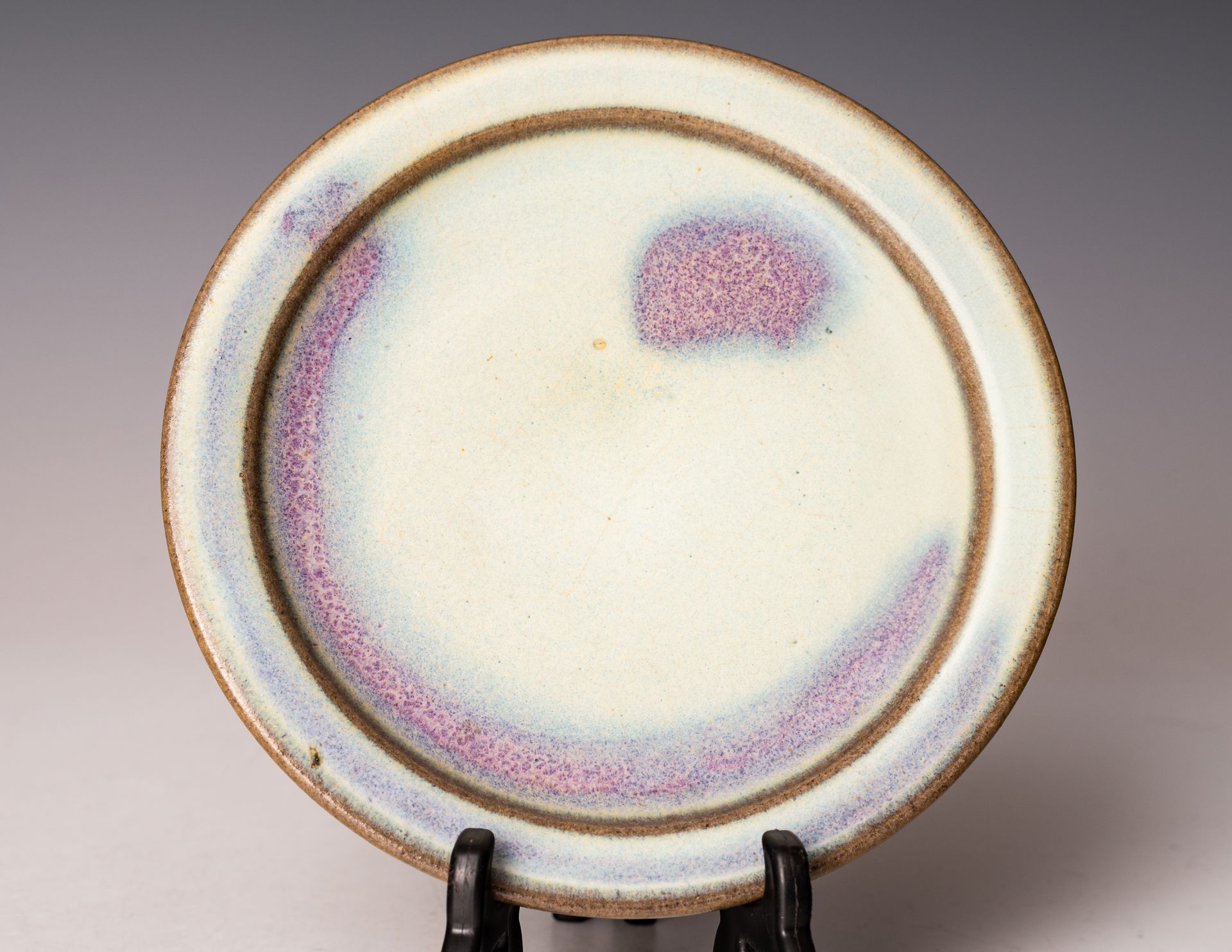


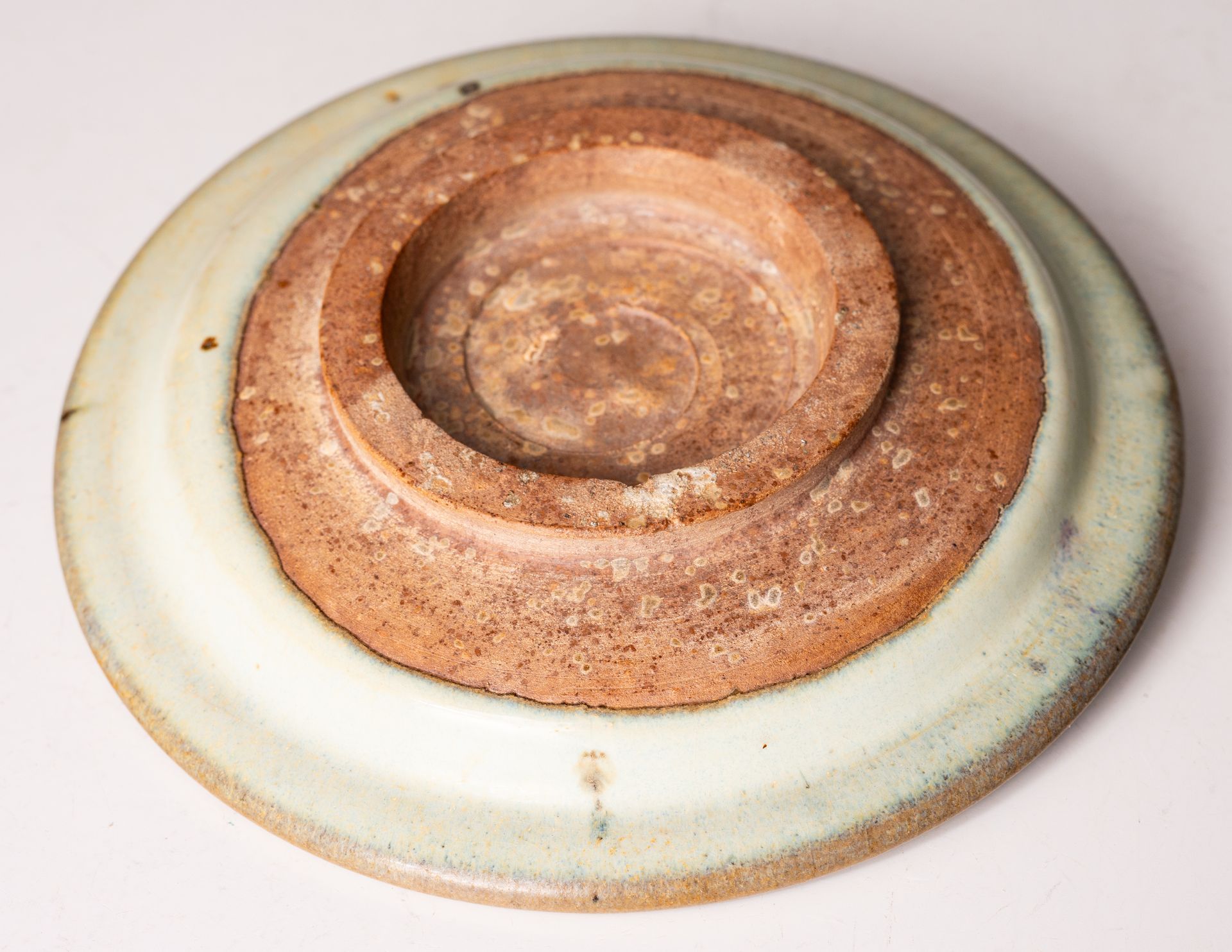
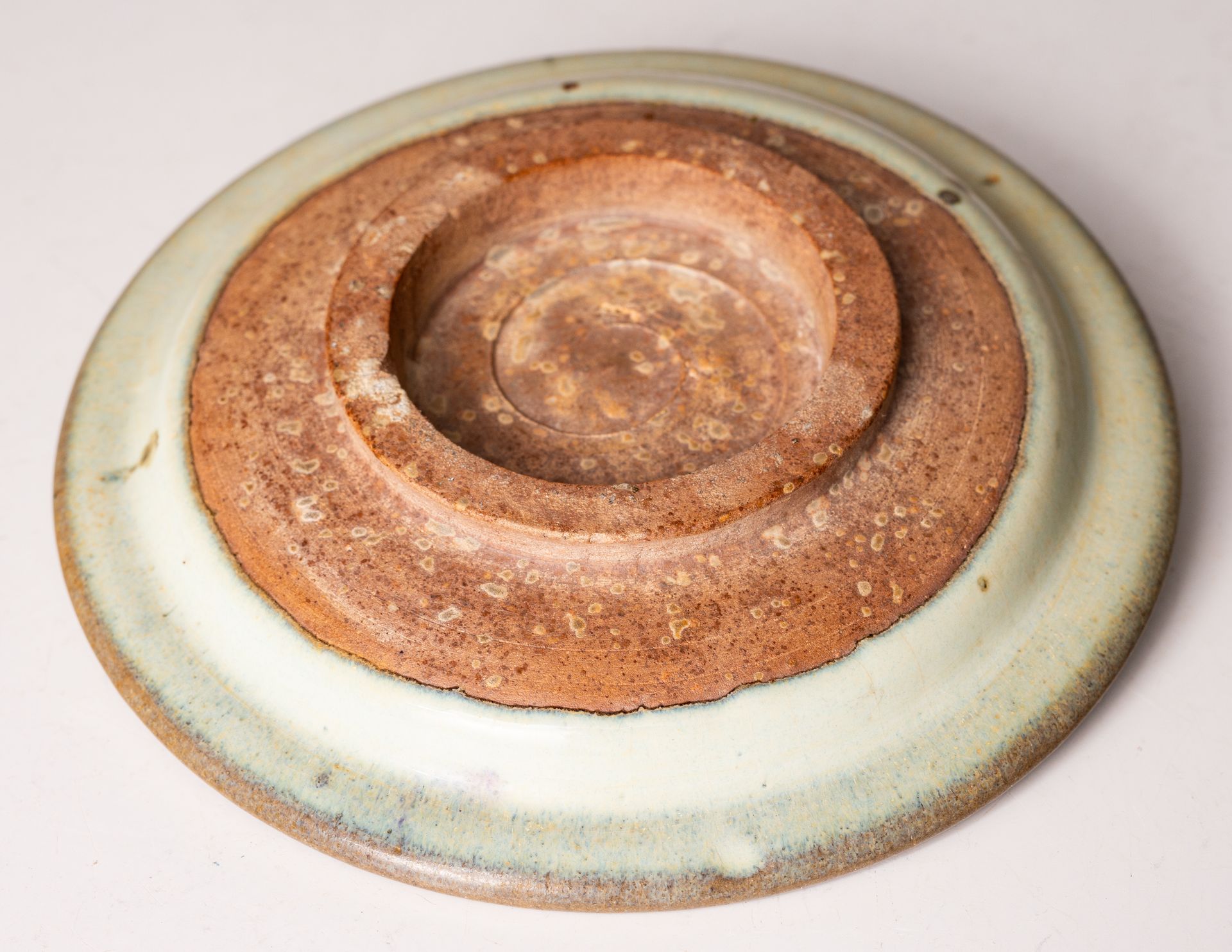

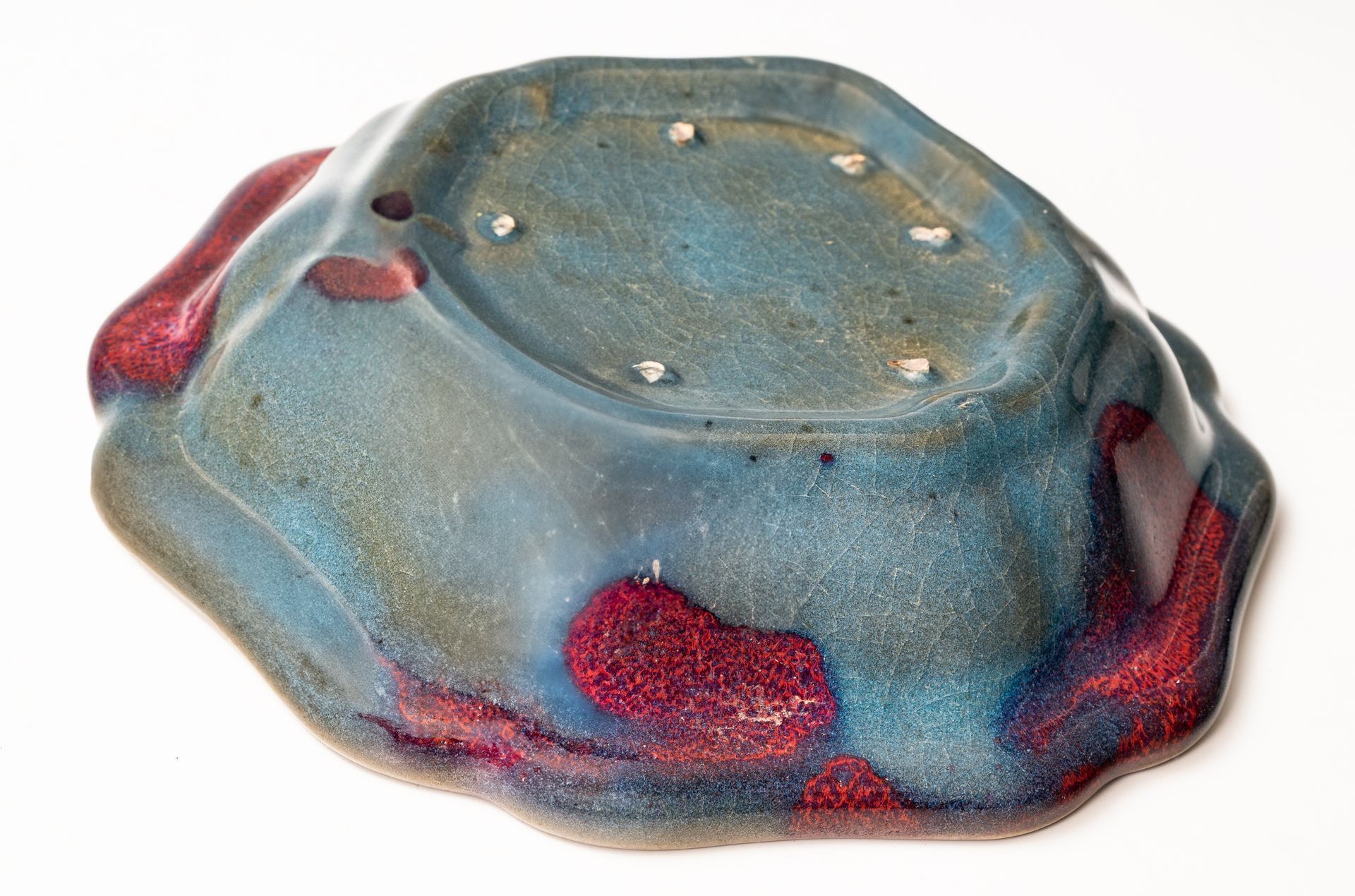
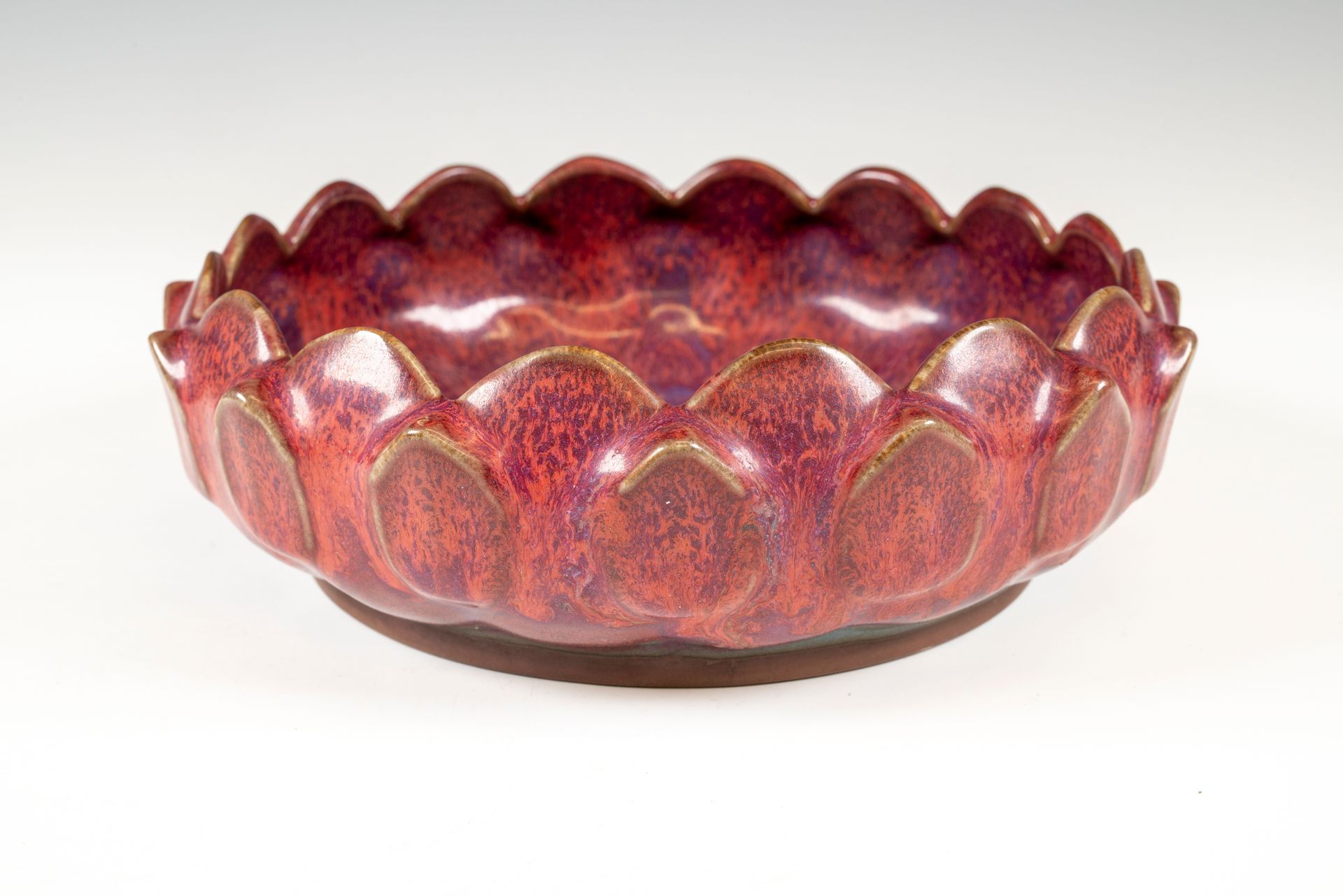
Jun Ware Brush Washer in the Form of Lotus Leaves with Reddish-Purplish Glaze from the Northern Song Dynasty Jun Kiln
The Jun ware brush washer, attributed to the Northern Song Dynasty, features a design inspired by lotus leaves. This exquisite piece is characterized by a distinctive brownish slip, with reddish and purplish undertones that exhibit a subtle hint of blue. The item measures approximately 8 inches in diameter. ppjrs
(click image to enlarge)
Contact me for the Price




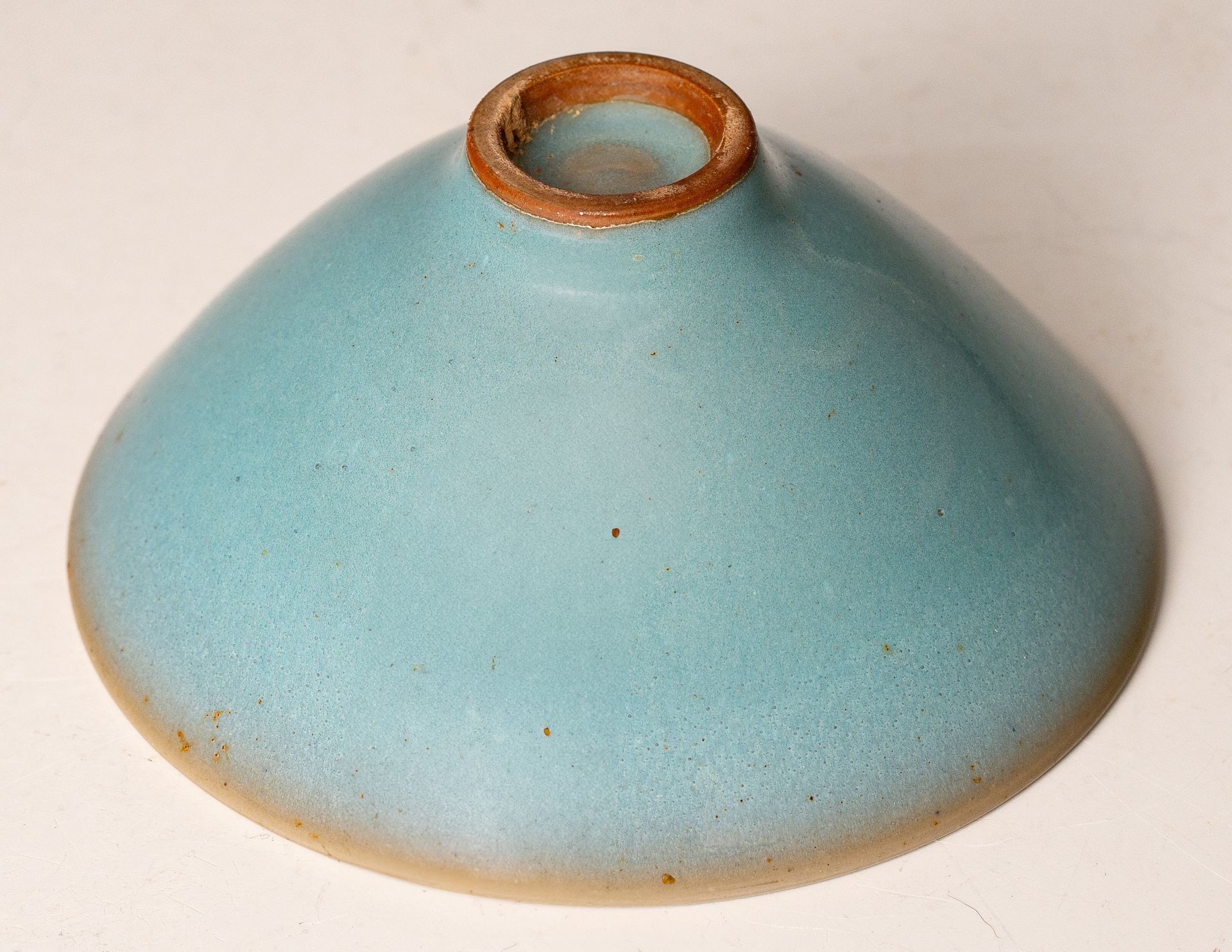
Northern Song Dynasty Jun Ware Conical Bowl in Robin Egg Blue
with Purple Accents
This Jun conical bowl from the Northern Song Dynasty features a distinctive robin egg blue glaze adorned with purple splashes both internally and externally. The glaze gradually transitions to a mushroom tone along the rim. The bowl measures 4 inches in diameter. ppjrs
(click image to enlarge)
Contact me for the Price




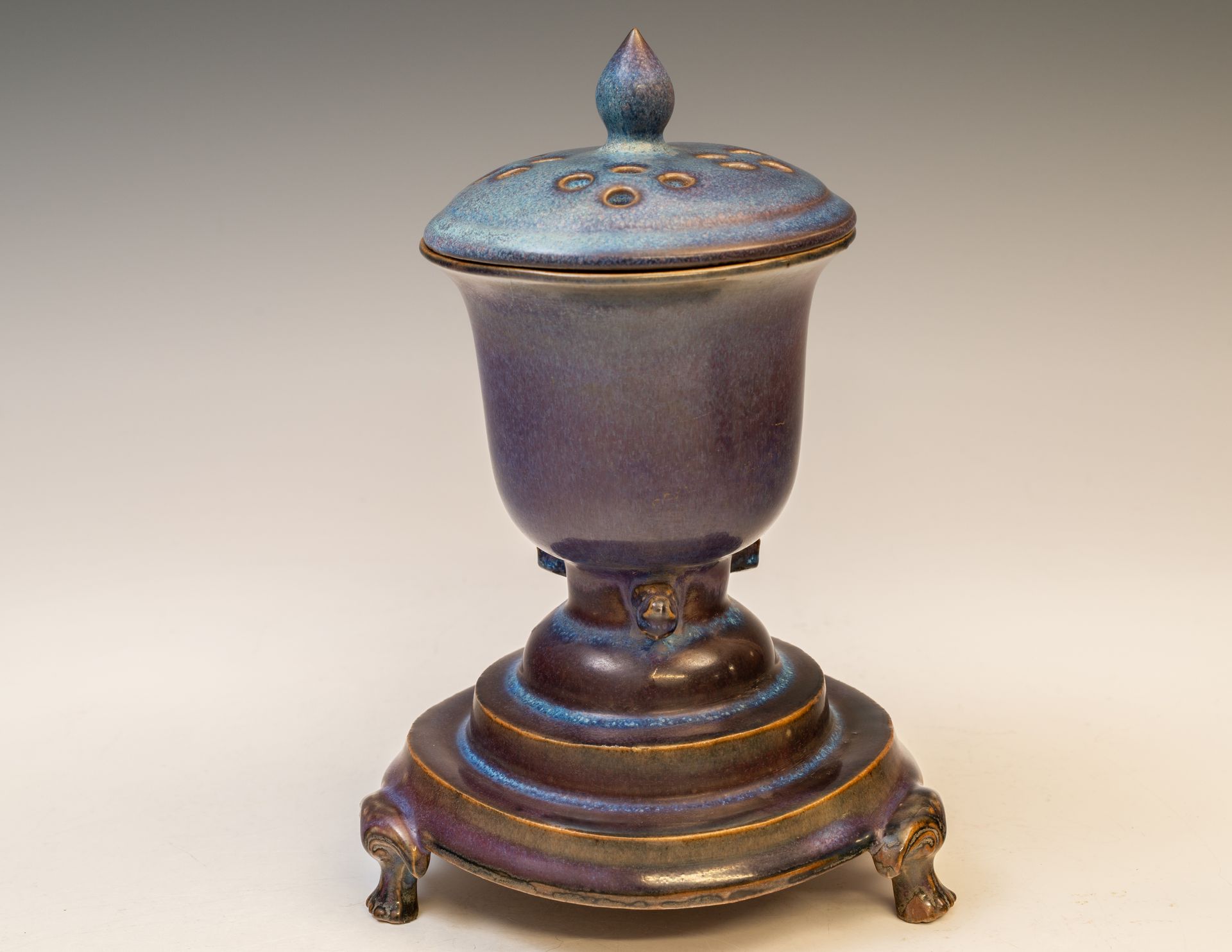
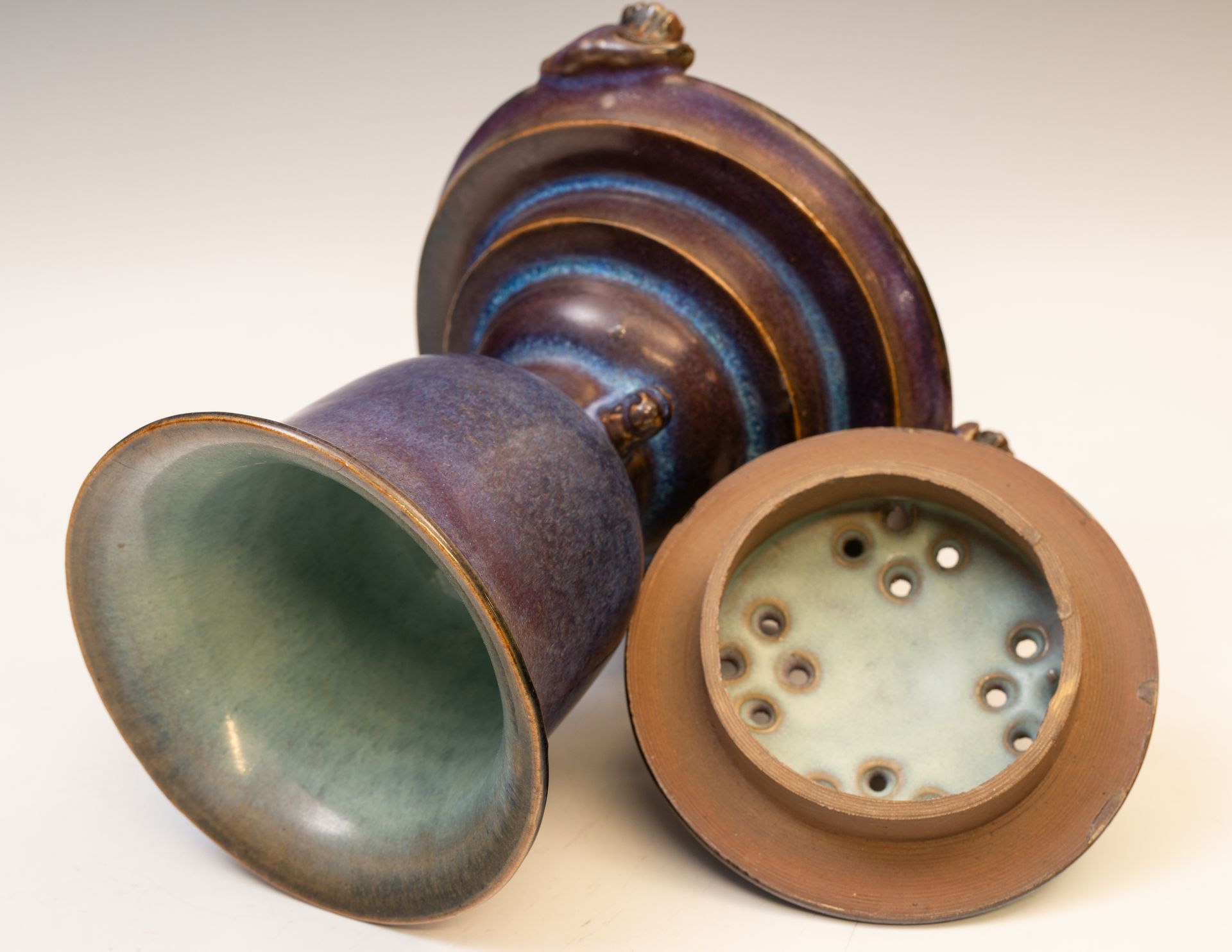
Rare Jun Ware Cup and Bluish-Purplish Incense Burner from the Northern Song Dynasty Jun Kiln
Northern Song Dynasty Jun Kiln Jun Ware Rare Cup-Form Incense Burner with Three Legs, featuring a distinctive Bluish-Purplish exterior and a Robin Egg Blue glaze interior. This impressive piece stands at approximately 8 inches in height. ppjrs
(click image to enlarge)
Contact me for the Price






Meiping Vase from the Jun Kiln of the Northern Song Dynasty
Northern Song Dynasty Jun Kiln Meiping Vase, characterized by its brownish slip and exquisite fine crackle, complemented by a splash of purple. The vase stands approximately 11 inches in height. ppjrs
(click image to enlarge)
Contact me for the Price




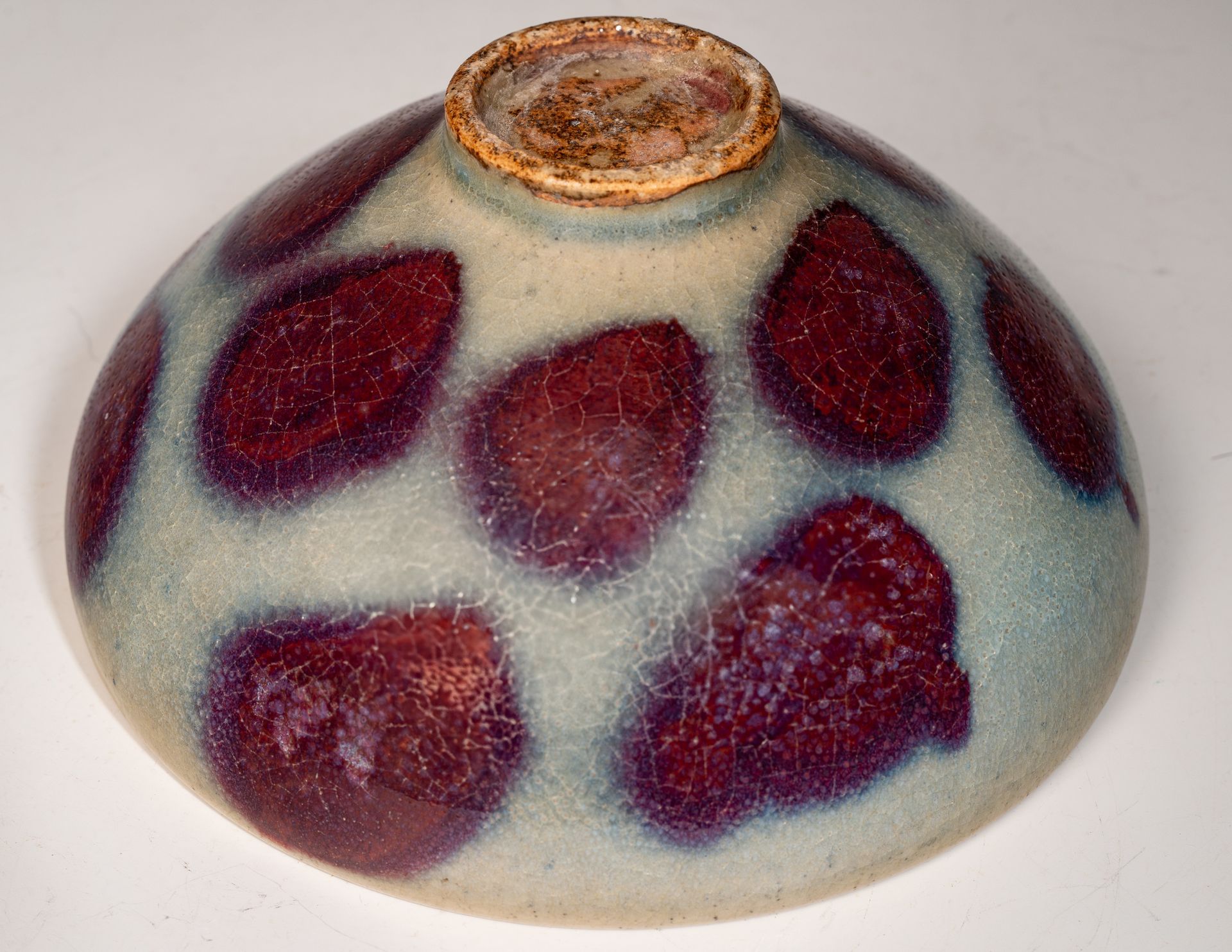
Large Jun Bowl with Purple Splashes from the Southern Song Dynasty
Southern Song Dynasty: This bowl exhibits a distinctive design, featuring ornamental purple spots on both the interior and exterior, set against a pale blue background that gradually transitions to a subtle greyish hue at the rim. The bowl measures 7 5/8 inches in diameter. ppjrs
(click image to enlarge)
Contact me for the Price




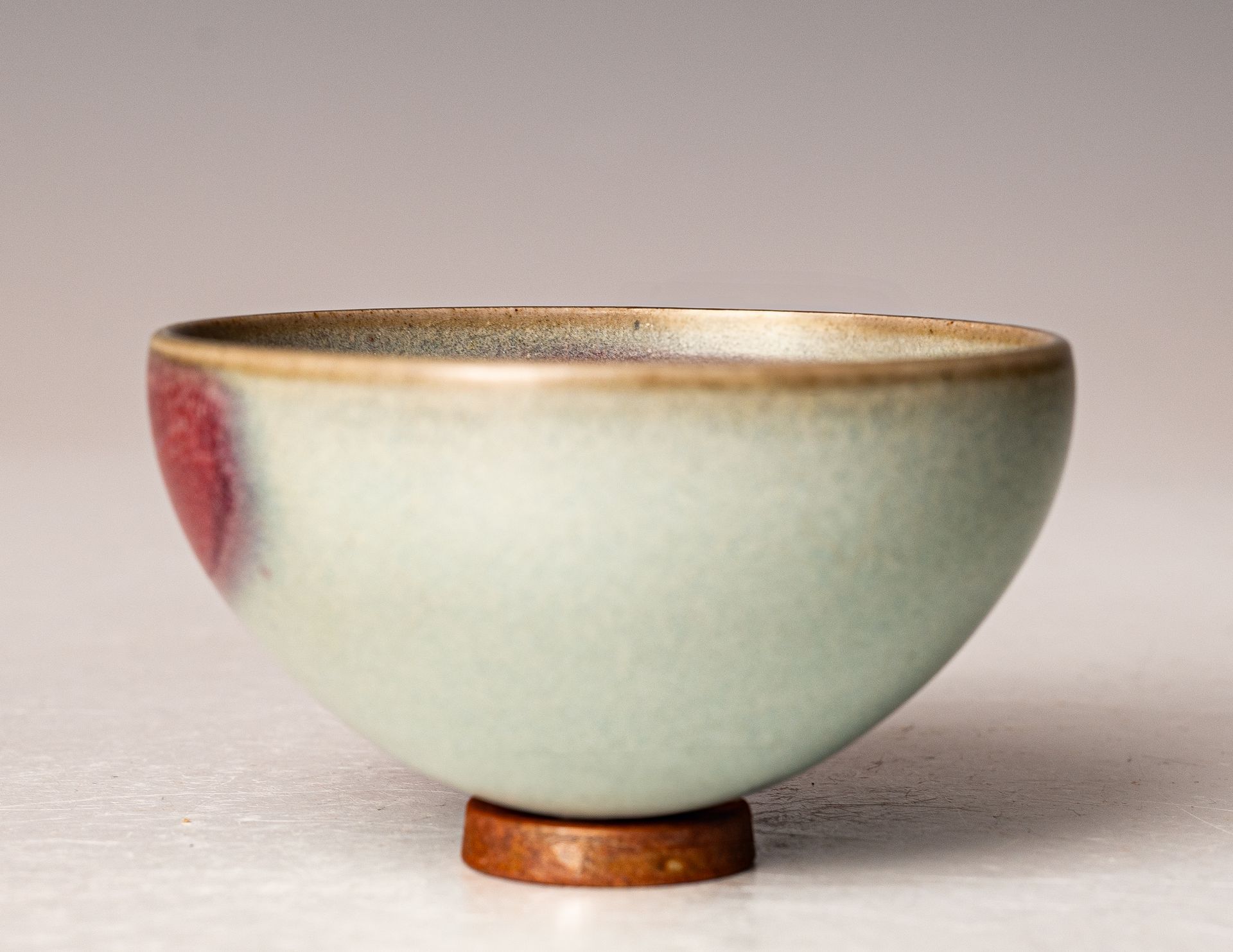
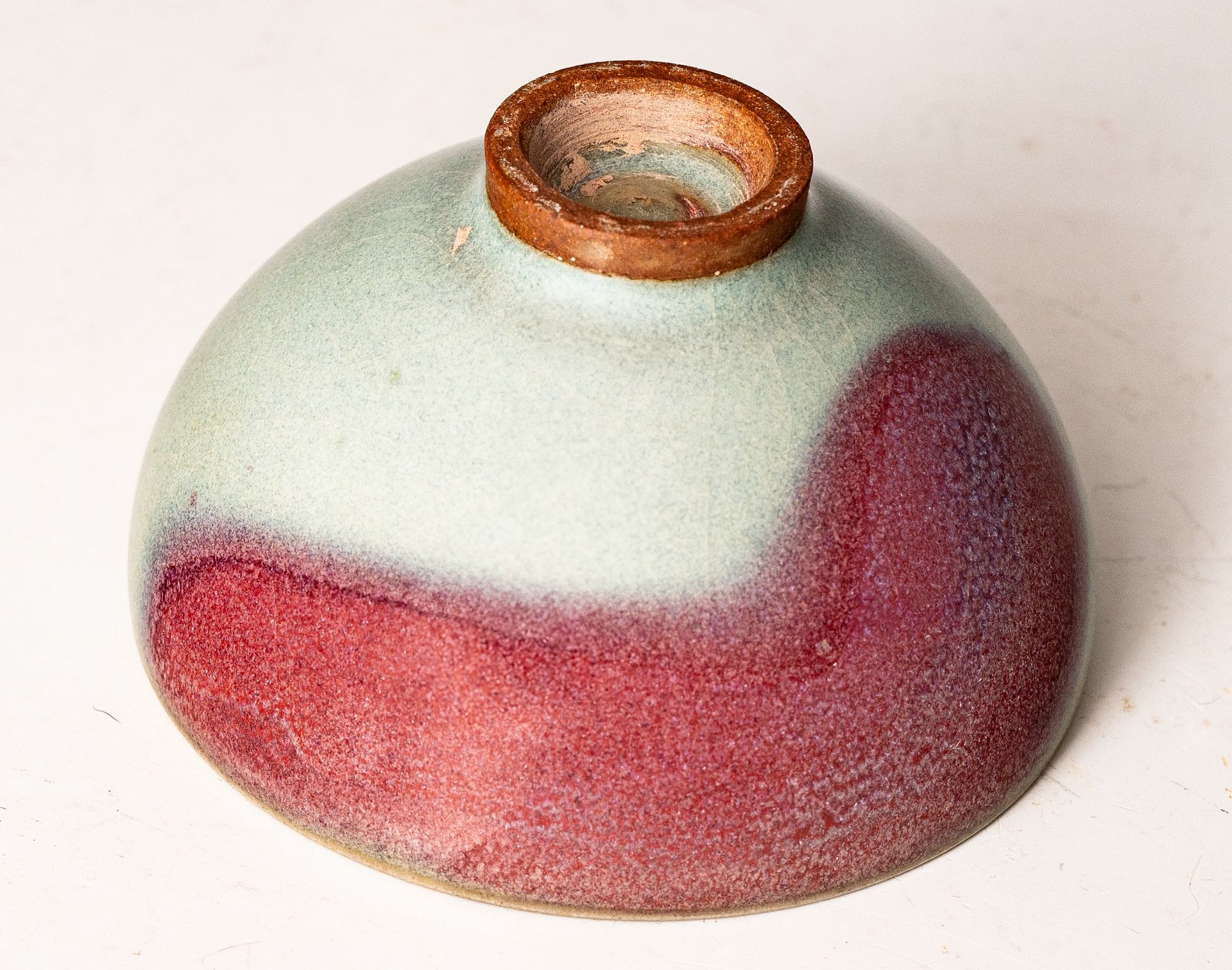
Pale Blue Jun Bubble Bowl with Reddish Accents from the
Northern Song Dynasty





Milky Pale Blue Glazed Jun Shallow Dish from the Northern Song Dynasty / Jin Dynasty
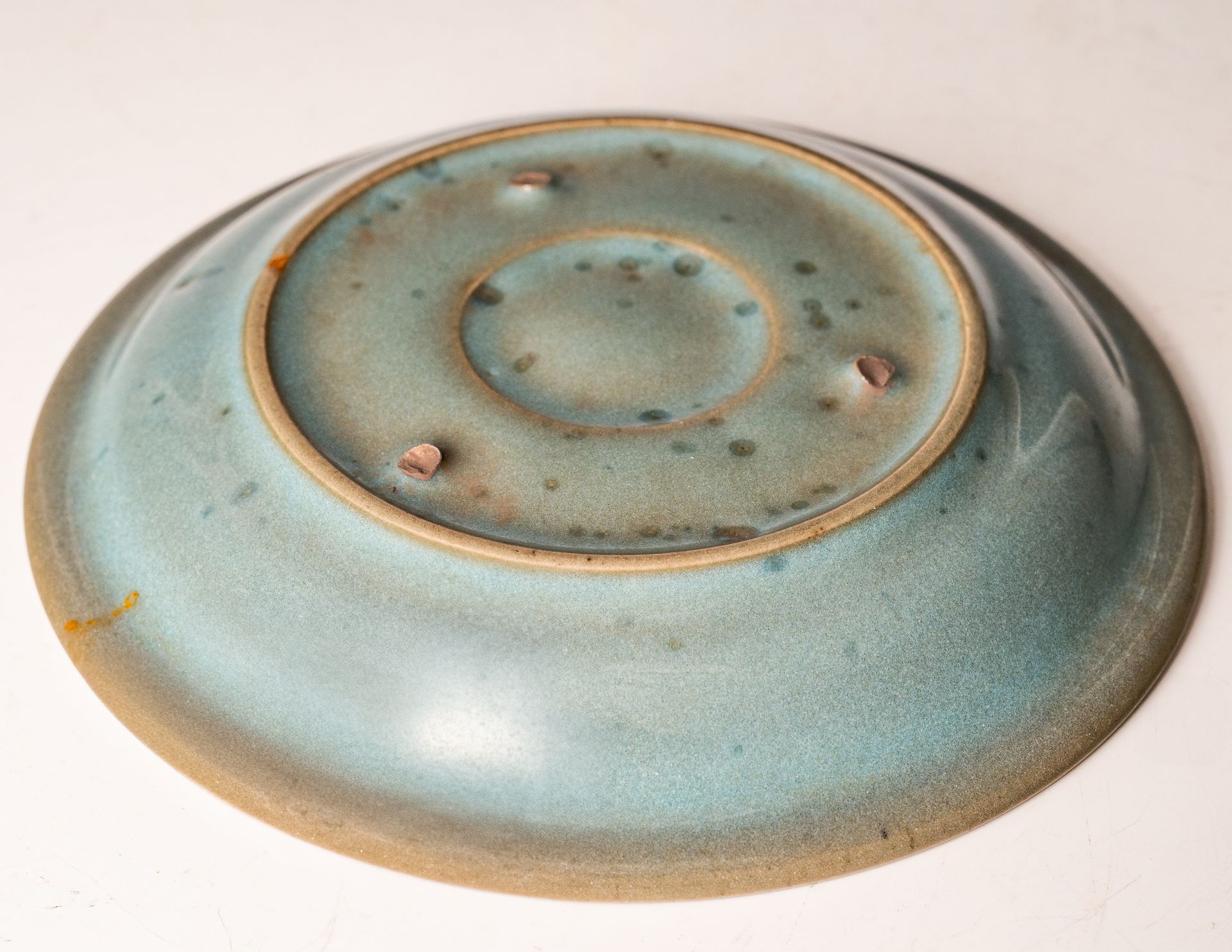
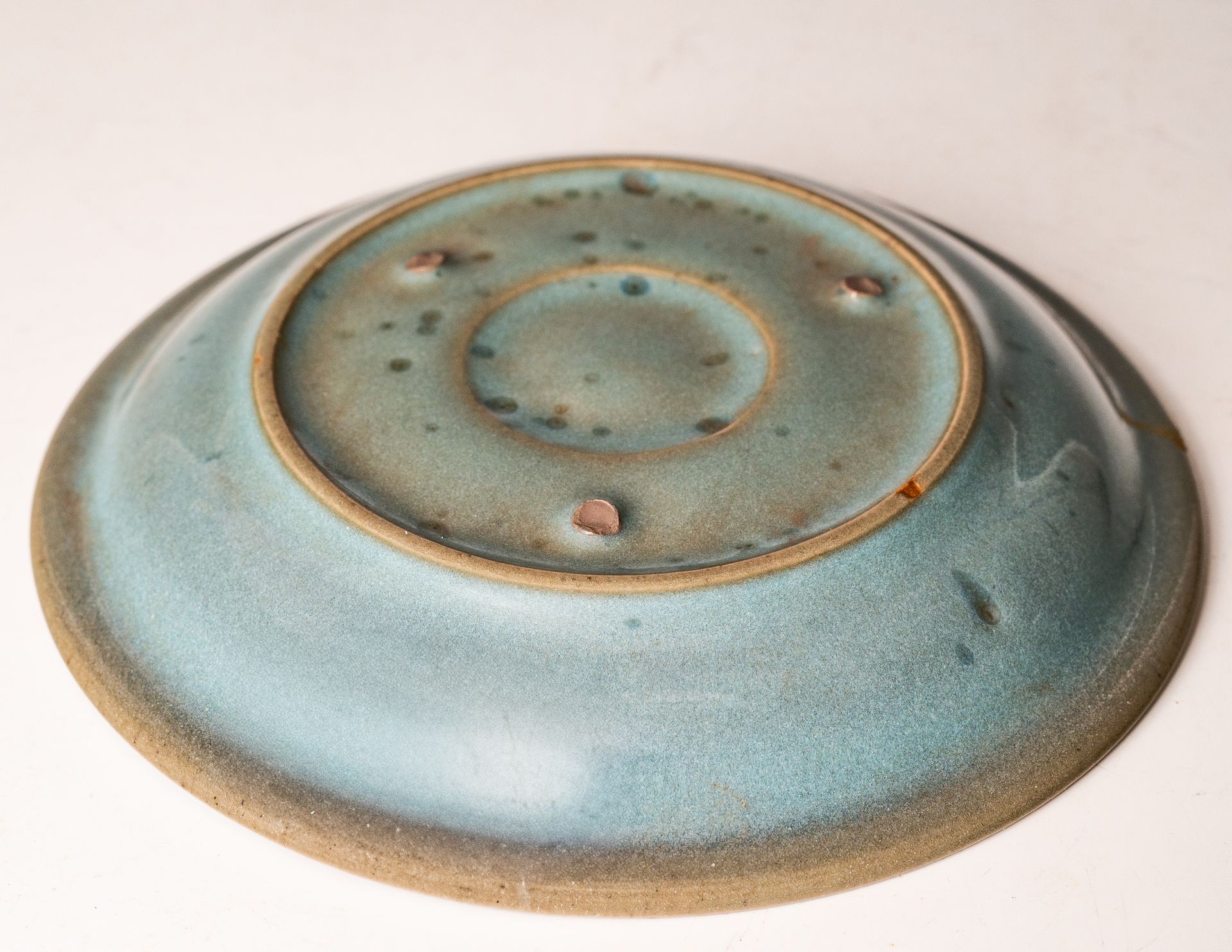
Northern Song / Jin Dynasties: This shallow Jun dish is uniformly adorned with a delicate milky pale blue glaze that gradually transitions to a mushroom tone along the rim. The base features three distinct spur marks. The dish has a diameter of 7 inches. ppjrs
(click image to enlarge)
Contact me for the Price


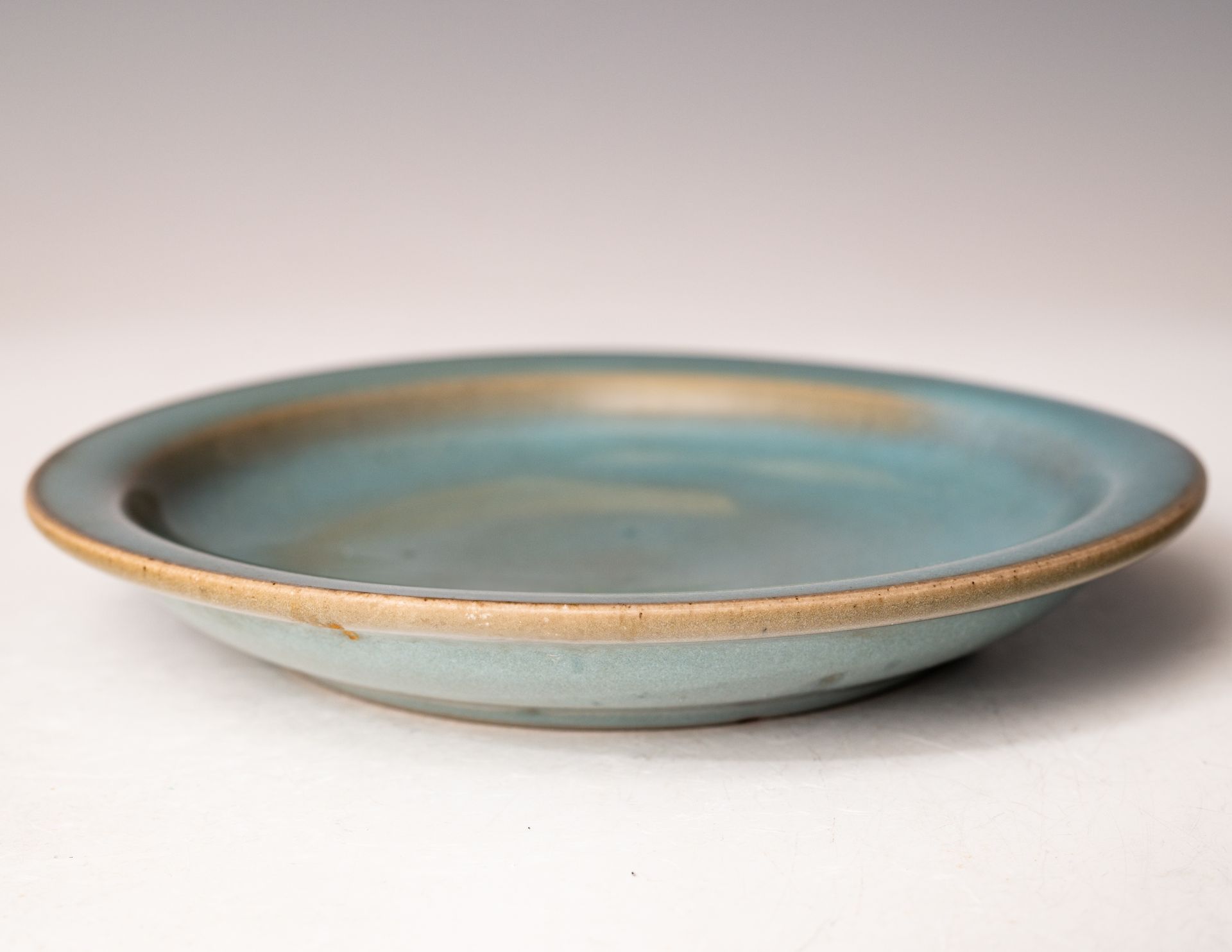



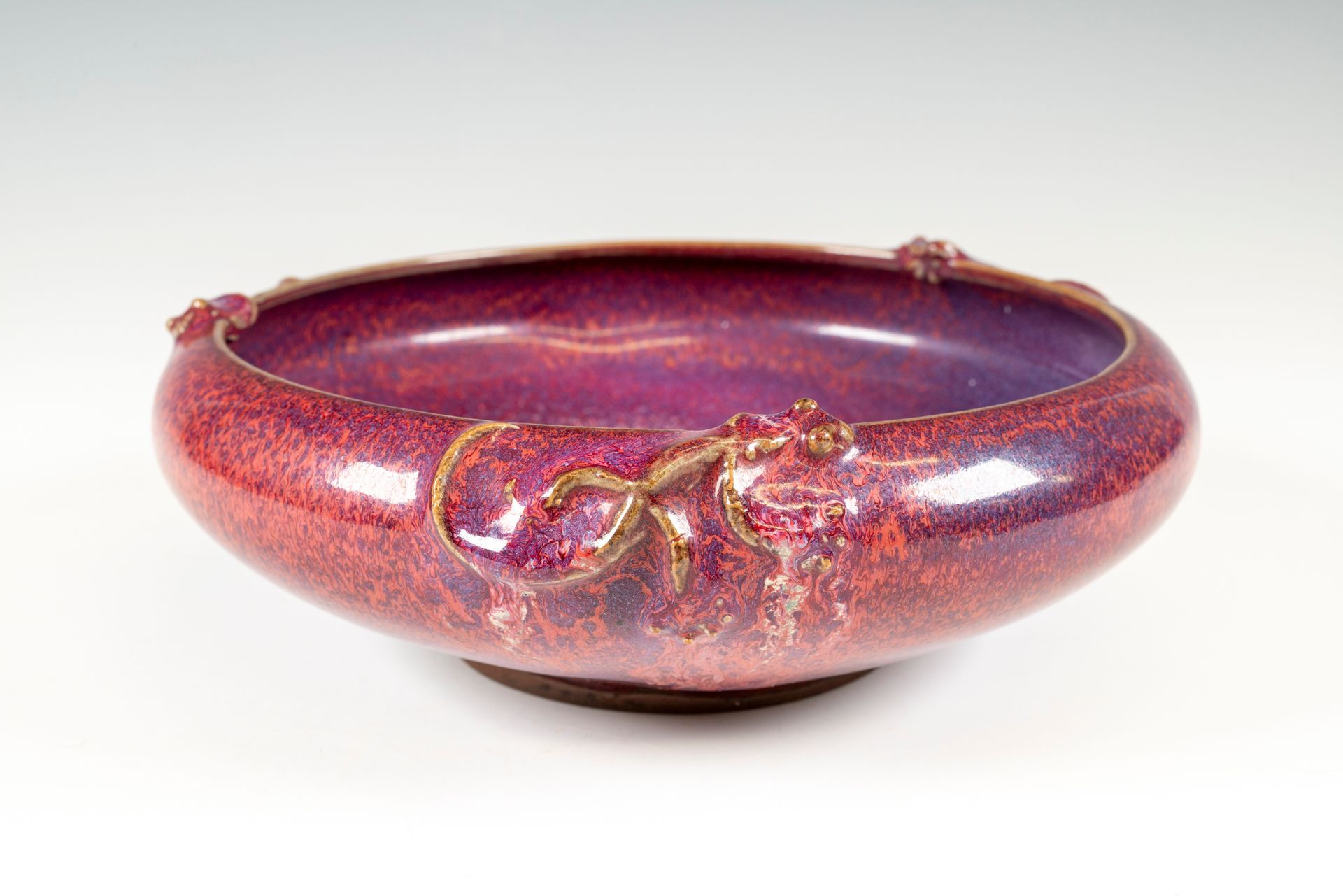
Northern Song Dynasty Jun Kiln Jun Ware Featuring Chi-Dragons Within Reddish-Purplish Brush Washers
This exquisite Jun ware from the Northern Song Dynasty features a round brush washer adorned with a remarkable three Chi-Dragons design peering over the rim, exhibiting a distinctive brownish slip with reddish and purplish hues. The piece is marked with an official seal on the base, indicative of its authenticity and historical significance. The dimensions of the brush washer are approximately
8 1/4 inches in diameter. ppjrs
(click image to enlarge)
Contact me for the Price


Jun Ware Vase with Dragon Handles from the Northern Song Dynasty Jun Kiln


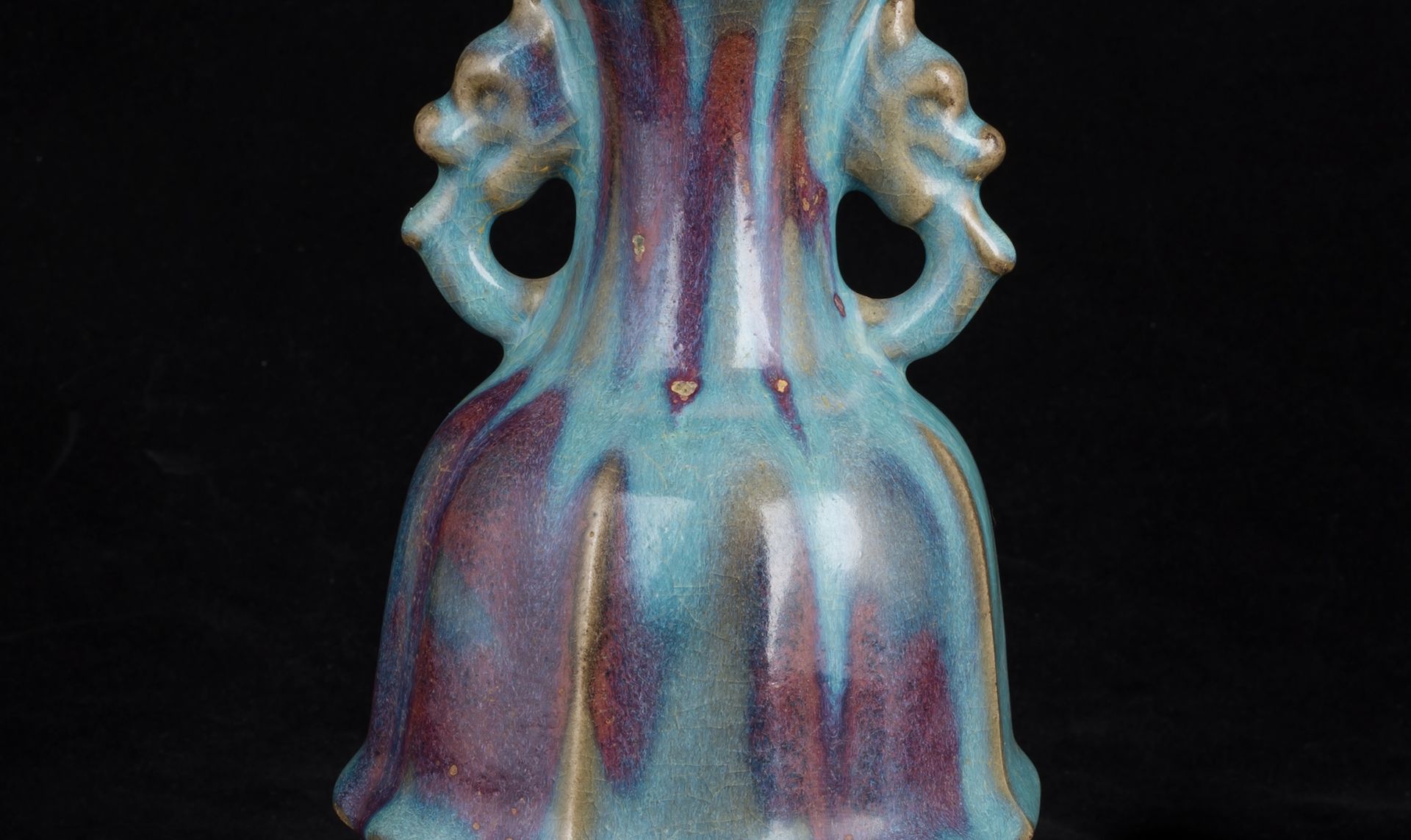

Yuan Dynasty Jun Bowl in Pale Bluish with Purple Accents with greenish tint
This Yuan Dynasty pale bluish Jun bowl features purplish splashes and a greenish tint on both the interior and the exterior of the rim. Additionally, there is a subtle splash of purple accentuating the edge of the rim. The bowl measures 3 3/16 inches in diameter. ppjrs
(click image to enlarge)
Contact me for the Price
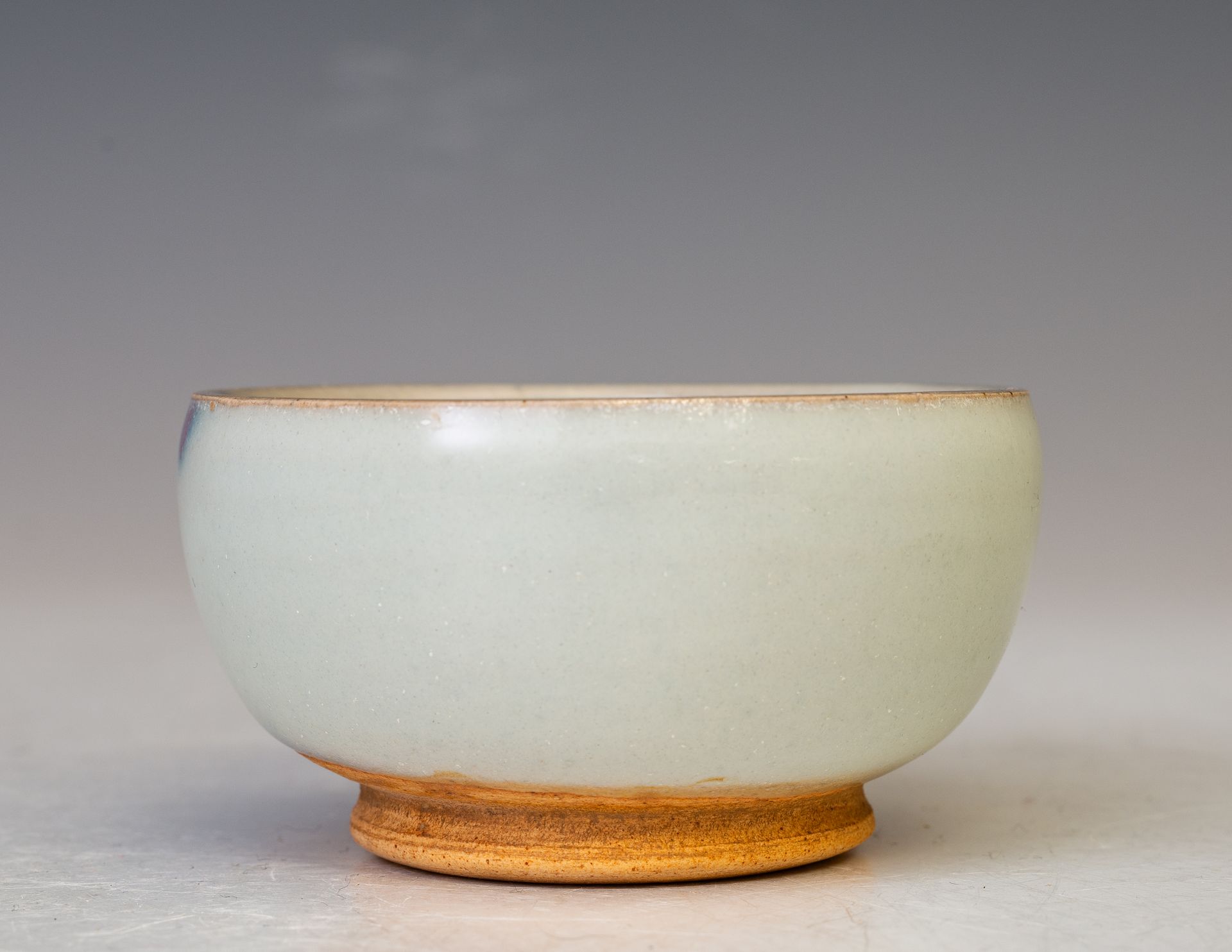


Jun Ware Incense Burner from the Song Dynasty: Formed in the Shape of Lotus Leaves with a Reddish Exterior and
Blue Interior
Song Dynasty Jun Kiln Jun Ware Incense Burner in the Form of Lotus Leaves features a distinctive exterior displaying a blend of brownish and reddish-purplish tones, complemented by a striking robin's egg blue interior. Notably, the piece exhibits worm track markings, indicative of its historical authenticity. The base is marked, enhancing its provenance. The dimensions of the incense burner are approximately 6 1/2 inches in diameter. ppjrs
(click image to enlarge)
Contact me for the Price


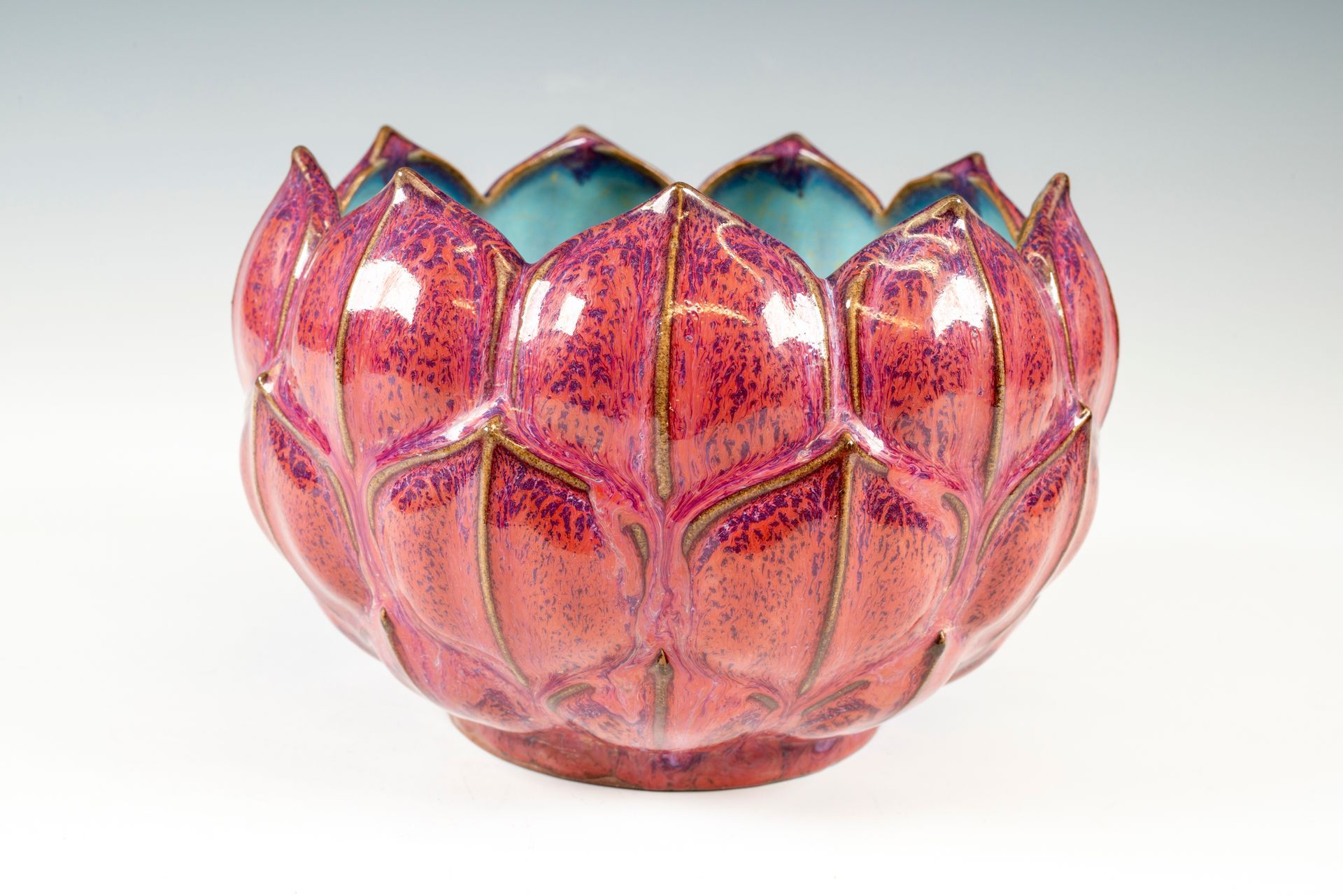


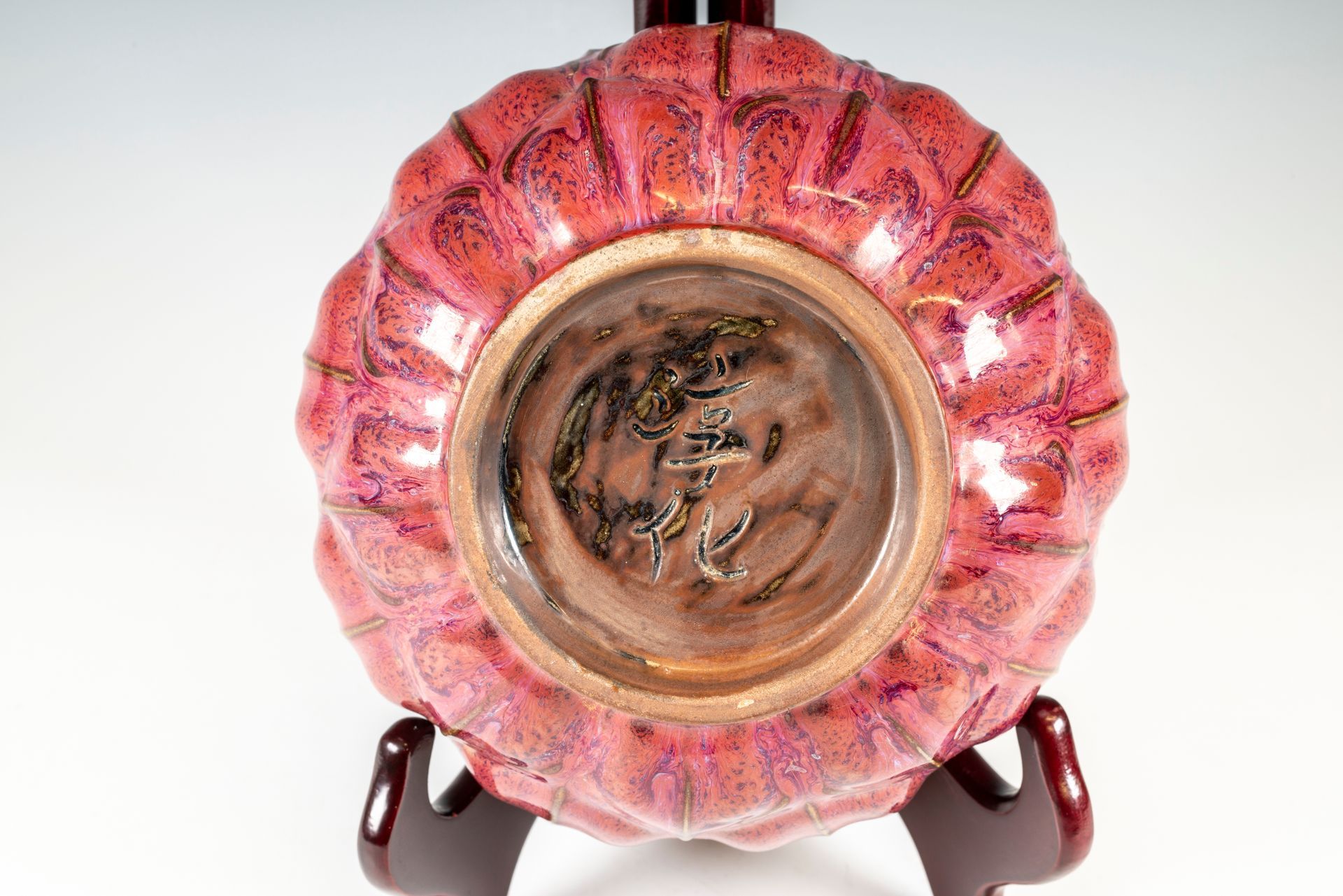

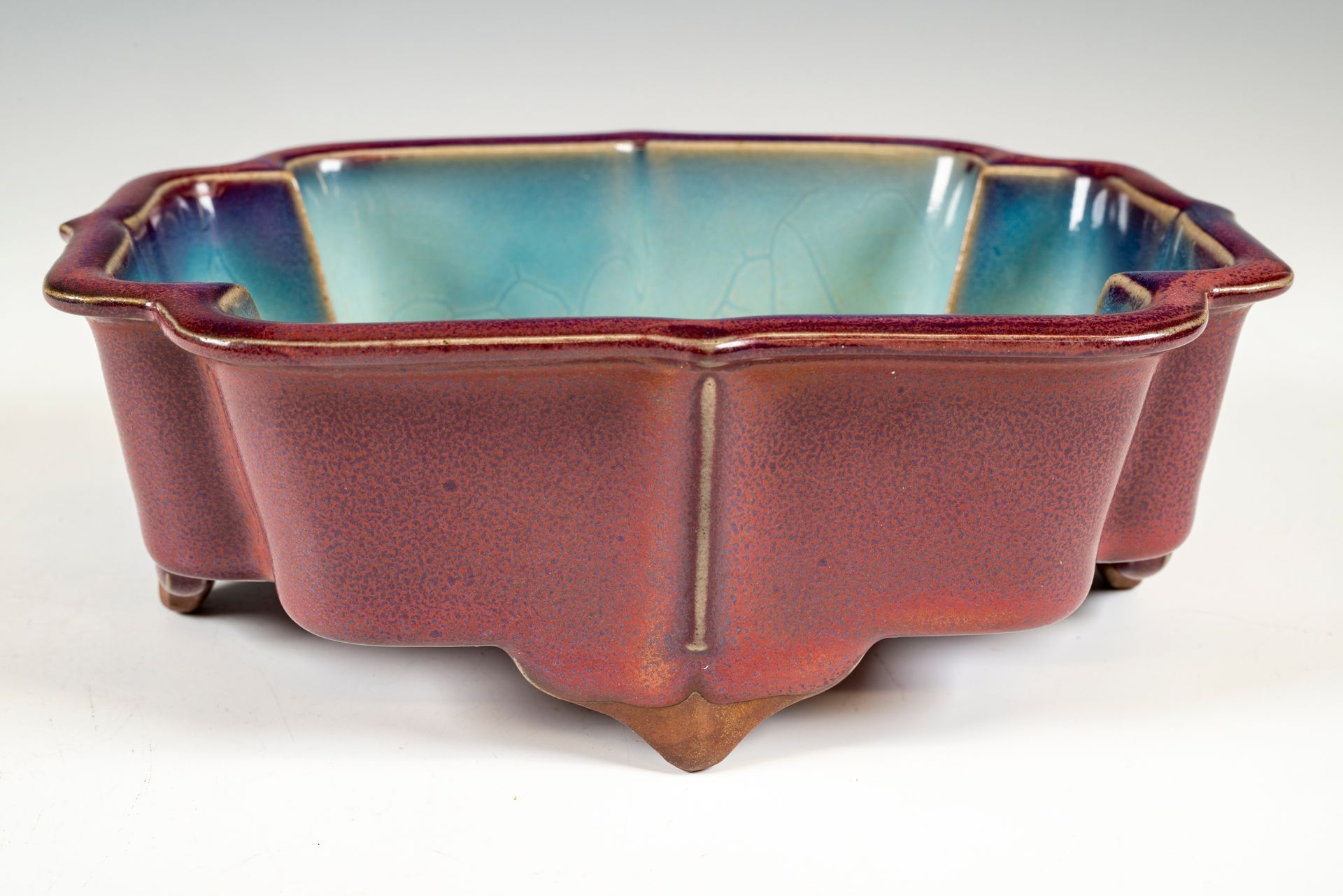
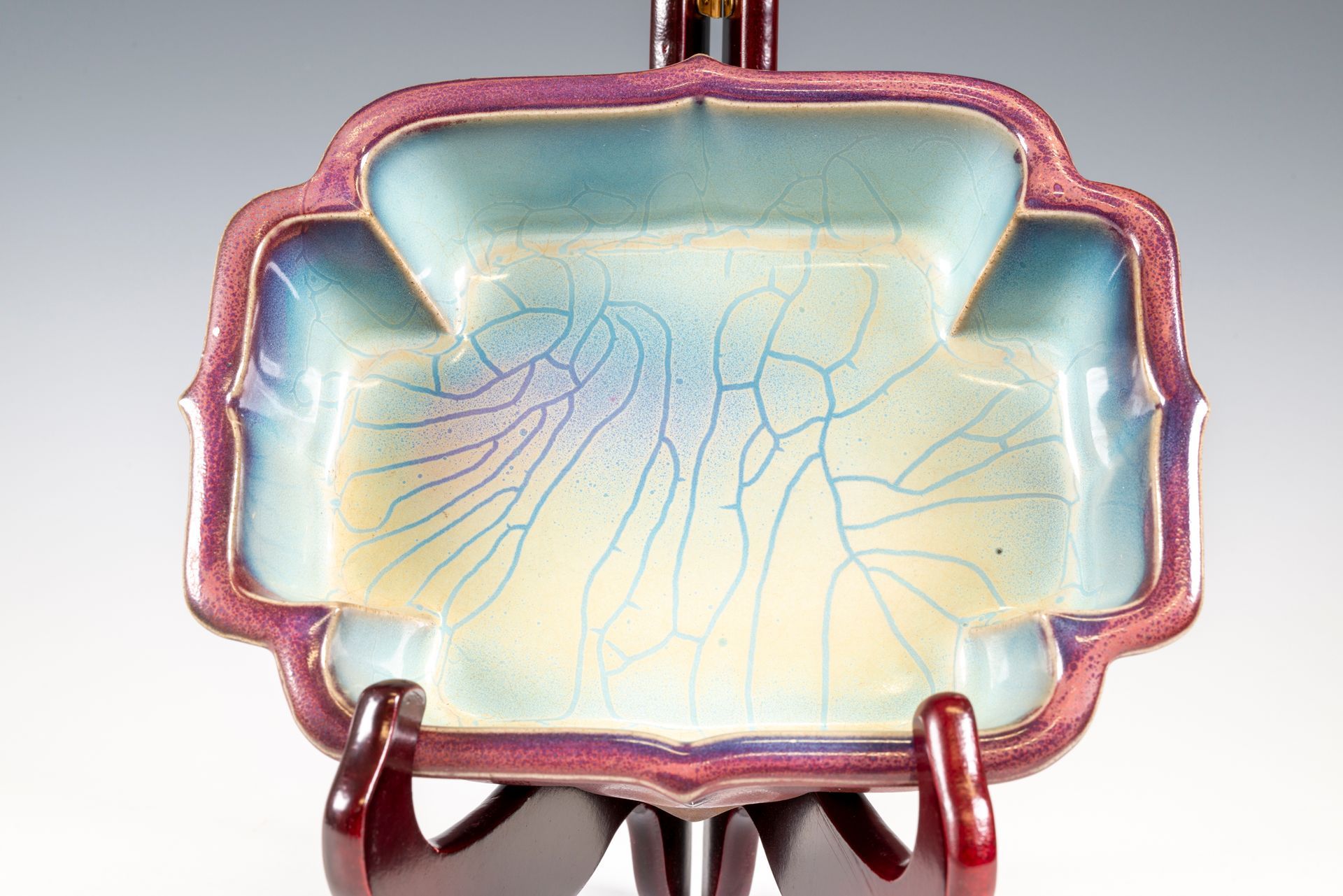
Song Dynasty Jun Ware Rimmed Flower Pot and Dish with Reddish Glaze and Blue Interior Featuring Worm Tracks
This item is a Song Dynasty Jun Ware flowerpot, characterized by its distinctive rim and a reddish glaze. The interior features a blue hue, complemented by worm track markings. Additionally, there are areas where the glaze has thinned, imparting a subtle mushroom tone along the edges. The piece stands at approximately 4.5 inches in height. ppjrs
(click image to enlarge)
Contact me for the Price


Expert Analysis of the Jun Ware Robin Egg Blue Meiping Vase from the Northern Song Dynasty Jun Kiln
Northern Song Dynasty Jun Kiln Jun ware Meiping vase, characterized by its exquisite robin egg blue glaze featuring delicate crackle effects and extensive splashes of purple. The vase stands at approximately
9.5 inches in height. ppjrs
(click image to enlarge)
Contact me for the Price




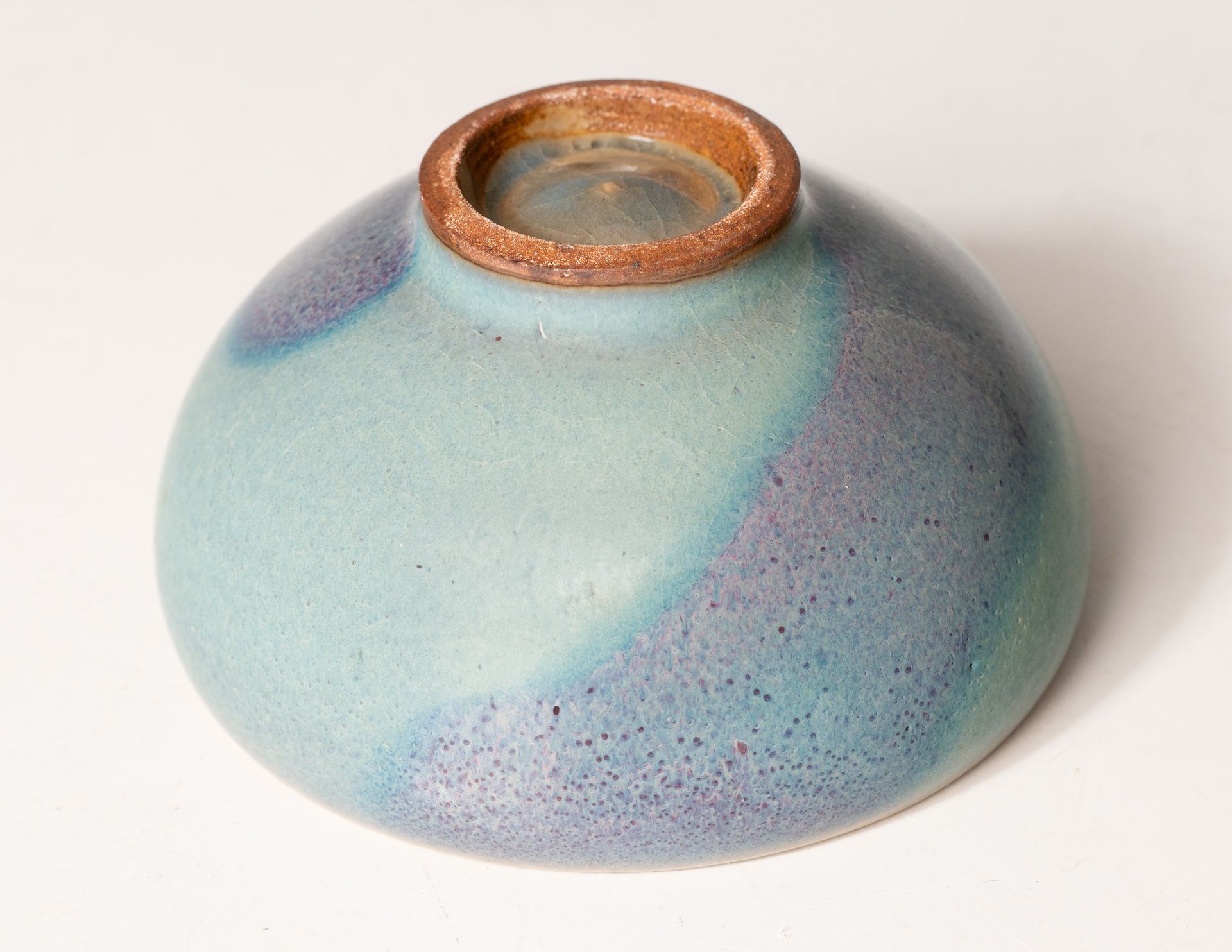
Jun Bluish Bubble Bowl and Purplish Splashes with slight greenish bluish tint from the Northern Song Dynasty
This exquisite pale blue bubble bowl, originating from the Northern Song Dynasty, features decorative splashes of a purplish hue on both the interior and exterior surfaces. The glaze exhibits a subtle greenish-blue tint, and where the glaze thins at the rim, it exhibits a delicate mushroom tone. The bowl measures 3 5/8 inches in diameter. ppjrs
(click image to enlarge)
Contact me for the Price


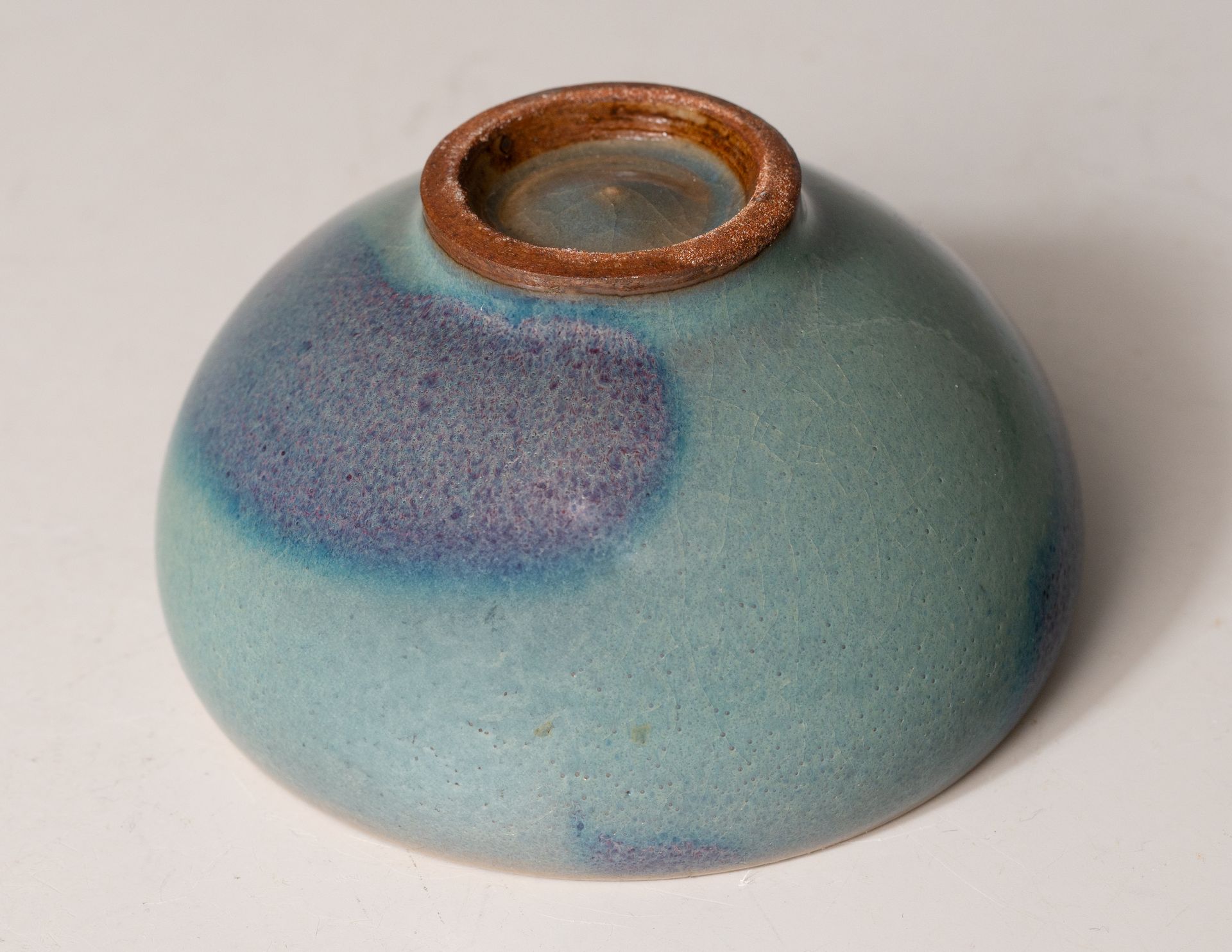
Incense Burner from the Jun Kiln of the Northern Song Dynasty: Three-Legged Design in Reddish-Purplish Hue
Northern Song Dynasty Jun Kiln Jun ware incense burner, featuring a three-legged design and adorned with a brownish slip. This piece showcases a striking reddish-purple glaze and is marked on the base. The dimensions are approximately 6 1/2 inches in diameter. ppjrs
(click image to enlarge)
Contact me for the Price


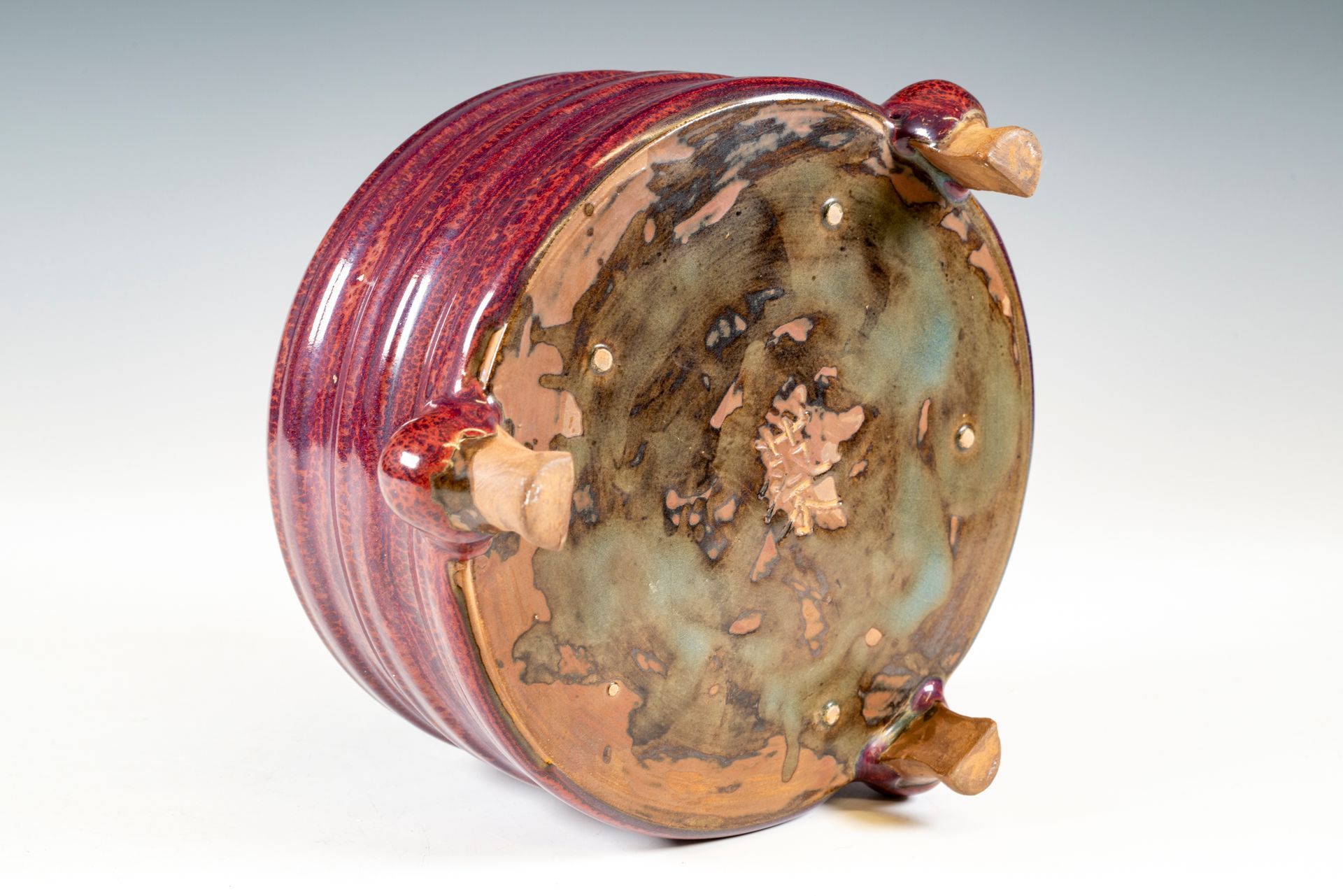
Song Dynasty Jun Kiln Jun Ware Square Brush Washer
This Jun ware square brush washer, originating from the Song Dynasty, features a distinctive brownish slip. Externally, it presents a purplish hue, while the interior showcases a captivating Robin Egg Blue, complemented by a subtle, faint crackle and marked with worm tracks on the base. The piece measures approximately 6 5/8 inches in diameter.
(click image to enlarge) ppjrs
Contact me for the Price


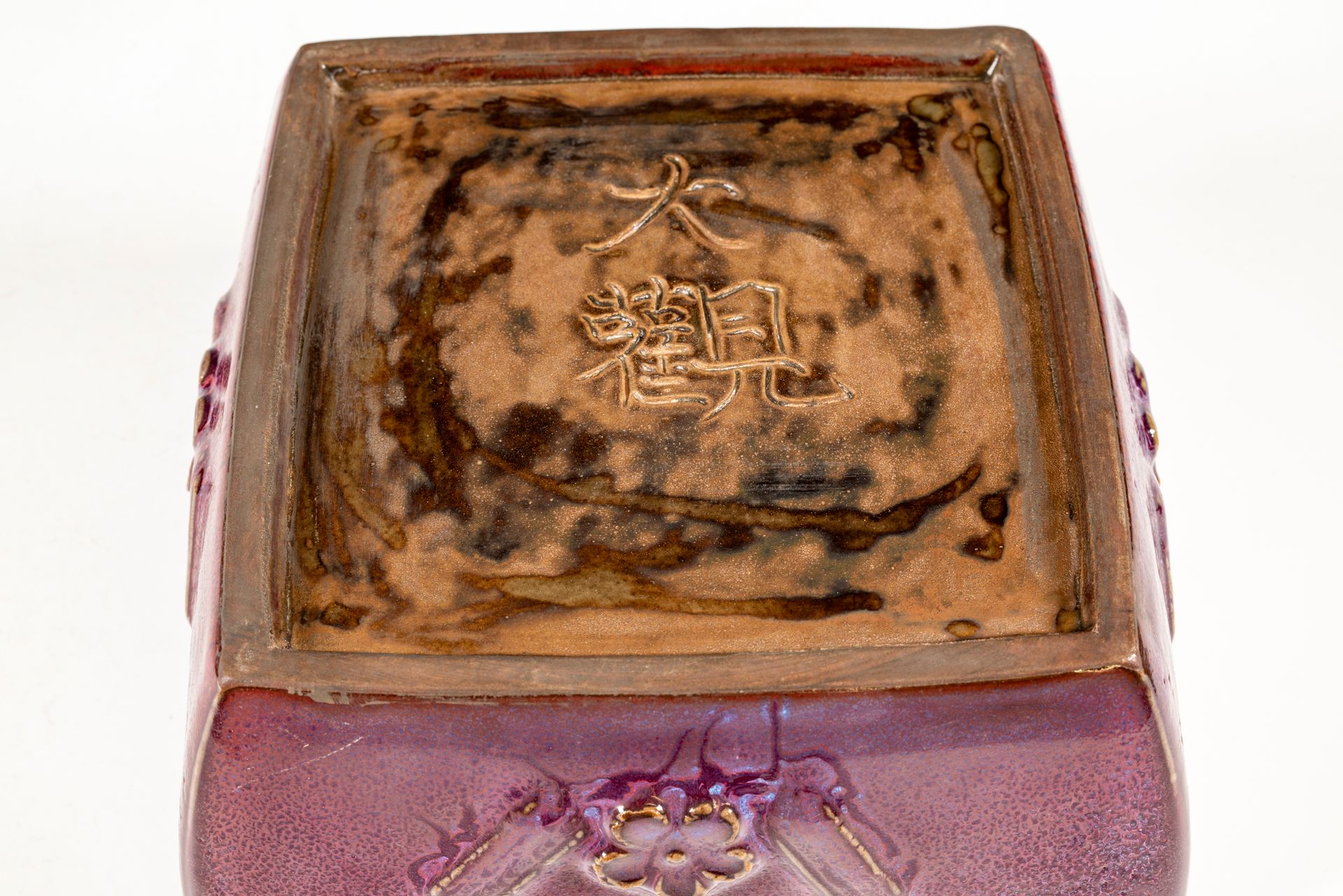
Large Pale Blue Jun Bowl with Purple Accents from the Southern Song Dynasty
**Southern Song Dynasty** This bowl exhibits a refined decorative motif characterized by purple splashes that adorn both the interior and exterior surfaces, contrasted against a pale blue background that seamlessly transitions to a subtle greyish tone at the rim. The diameter of the bowl measures 7 1/2 inches. ppjrs
(click image to enlarge)
Contact me for the Price


Jun Ware Vase from the Northern Song Dynasty Featuring an Impressed Tiger Head Design
This distinguished Jun ware vase from the Northern Song Dynasty exemplifies the artistry of the era. Featuring an impressive tiger head design and adorned with extensive purple splashes, the vase is characterized by an intricate network of fine crackle throughout its surface. The vase stands at approximately 9 inches in height, showcasing both aesthetic beauty and historical significance. ppjrs
(click image to enlarge)
Contact me for the Price


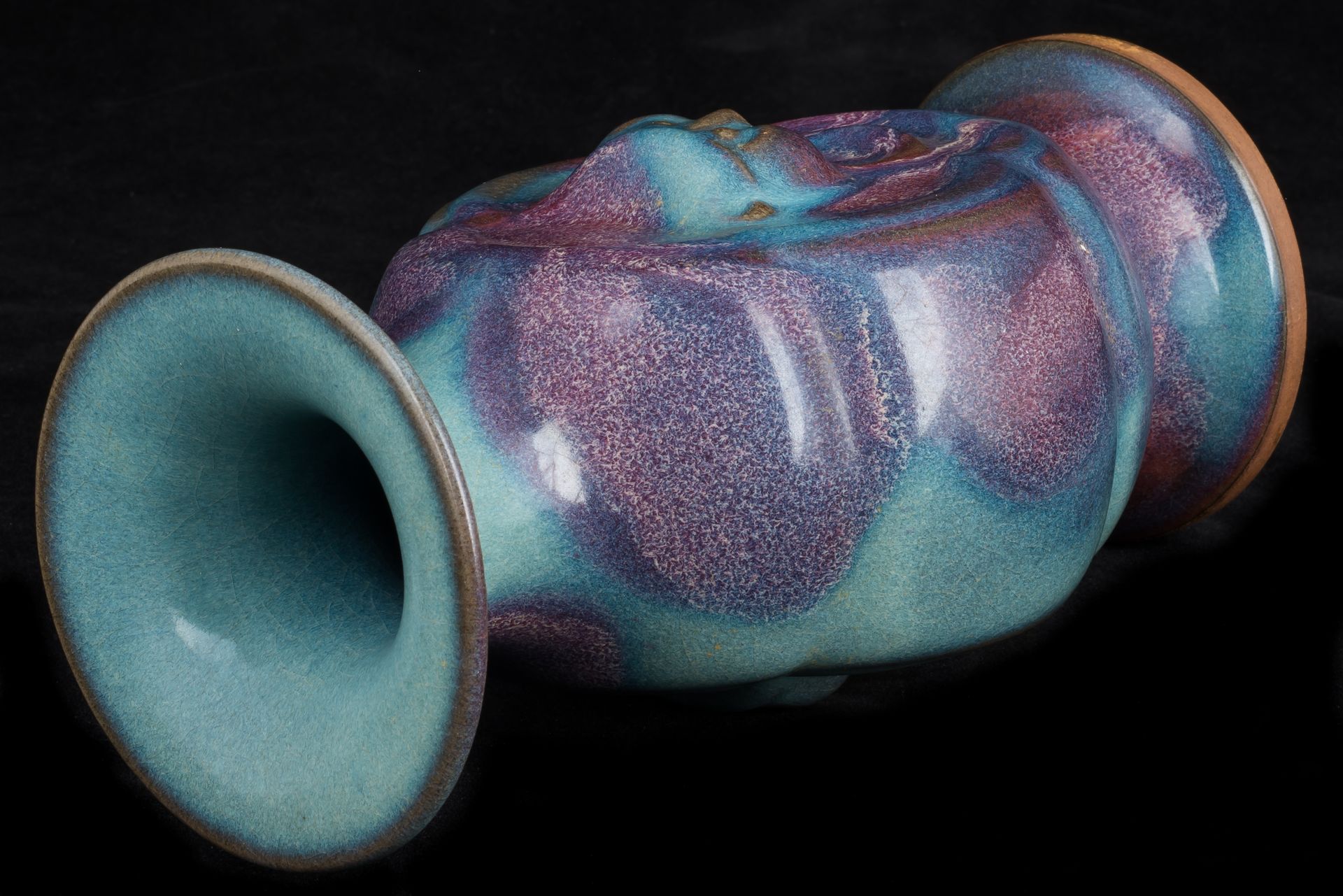


Jun Ware Rectangle Brush Washer from the Jun Kiln of the
Southern Song Dynasty
Southern Song Dynasty Jun Kiln Jun ware square brush washer featuring a brownish slip. The exterior displays a purplish hue, while the interior is characterized by a distinctive Robin Egg Blue. Notably, both the interior and exterior exhibit unique worm tracks. This piece measures approximately 6 1/2 inches in length. ppjrs
(click image to enlarge)
Contact me for the Price




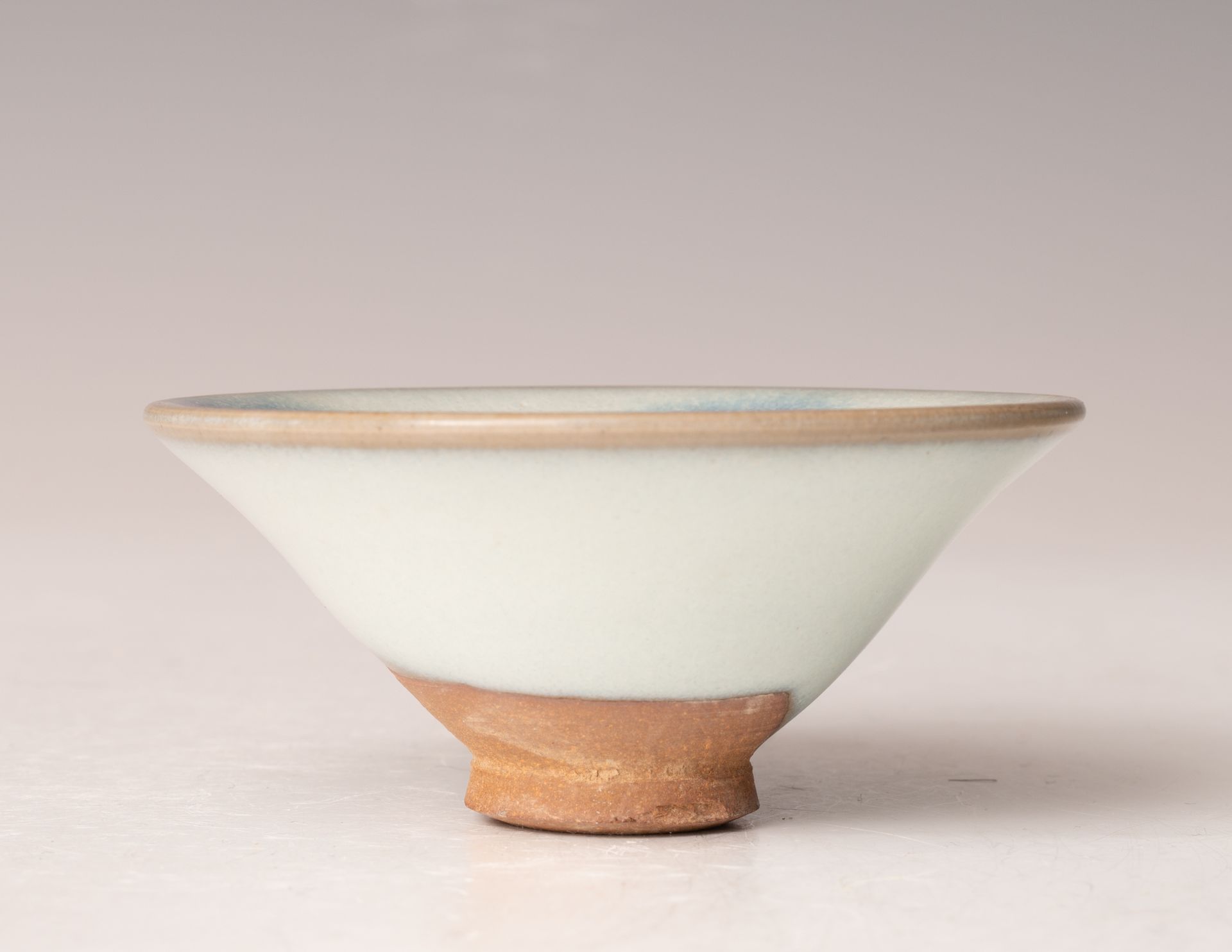
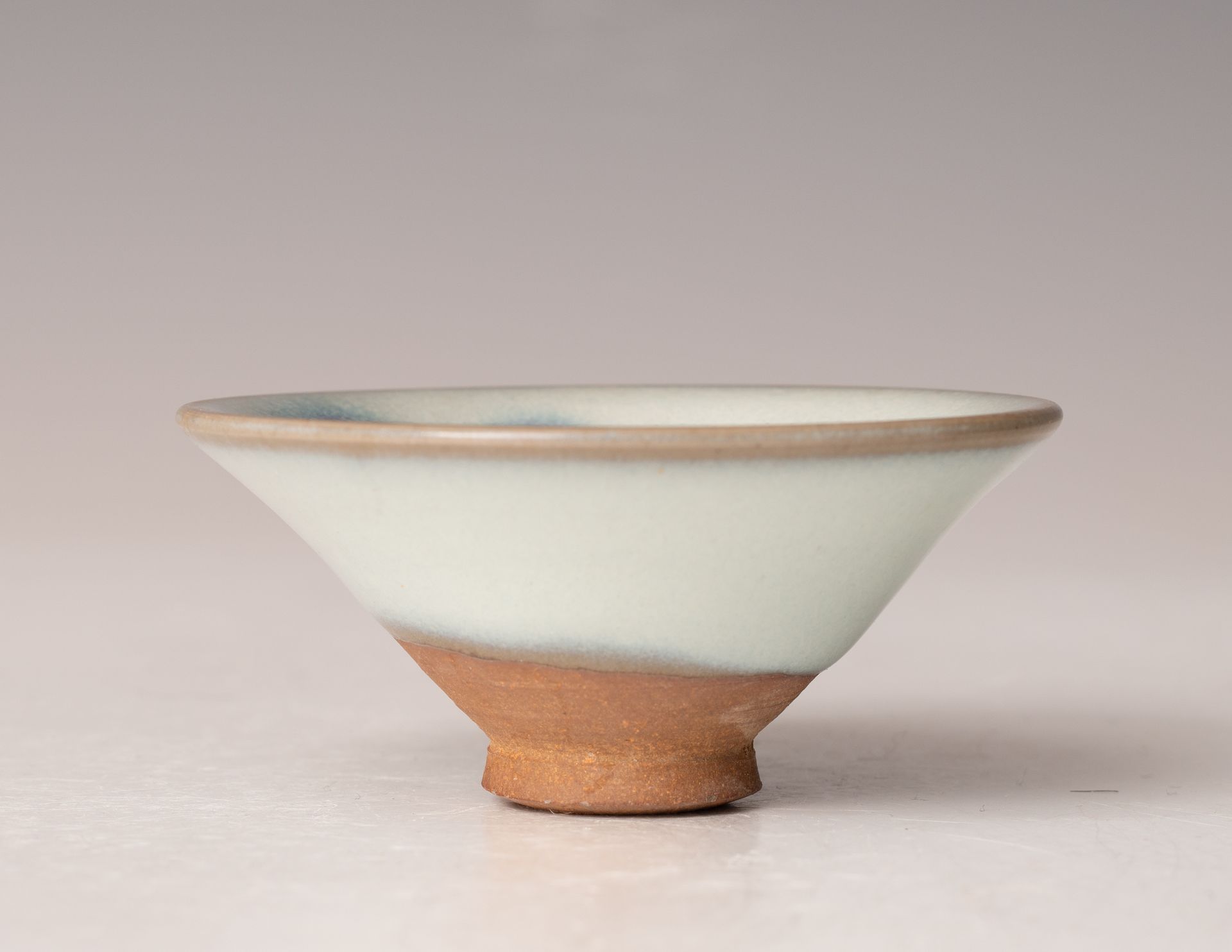
Jun Conical Bowl from the Yuan Dynasty: Pale Bluish-White Glaze
with Purple Splashes
This Yuan Dynasty conical bowl, characterized by its pale bluish-white glaze, features purplish splashes both within the interior and slightly at the rim. The glaze delicately transitions to a mushroom tone at the rim. The bowl has a diameter of 3.5 inches. ppjrs
(click image to enlarge)
Contact me for the Price



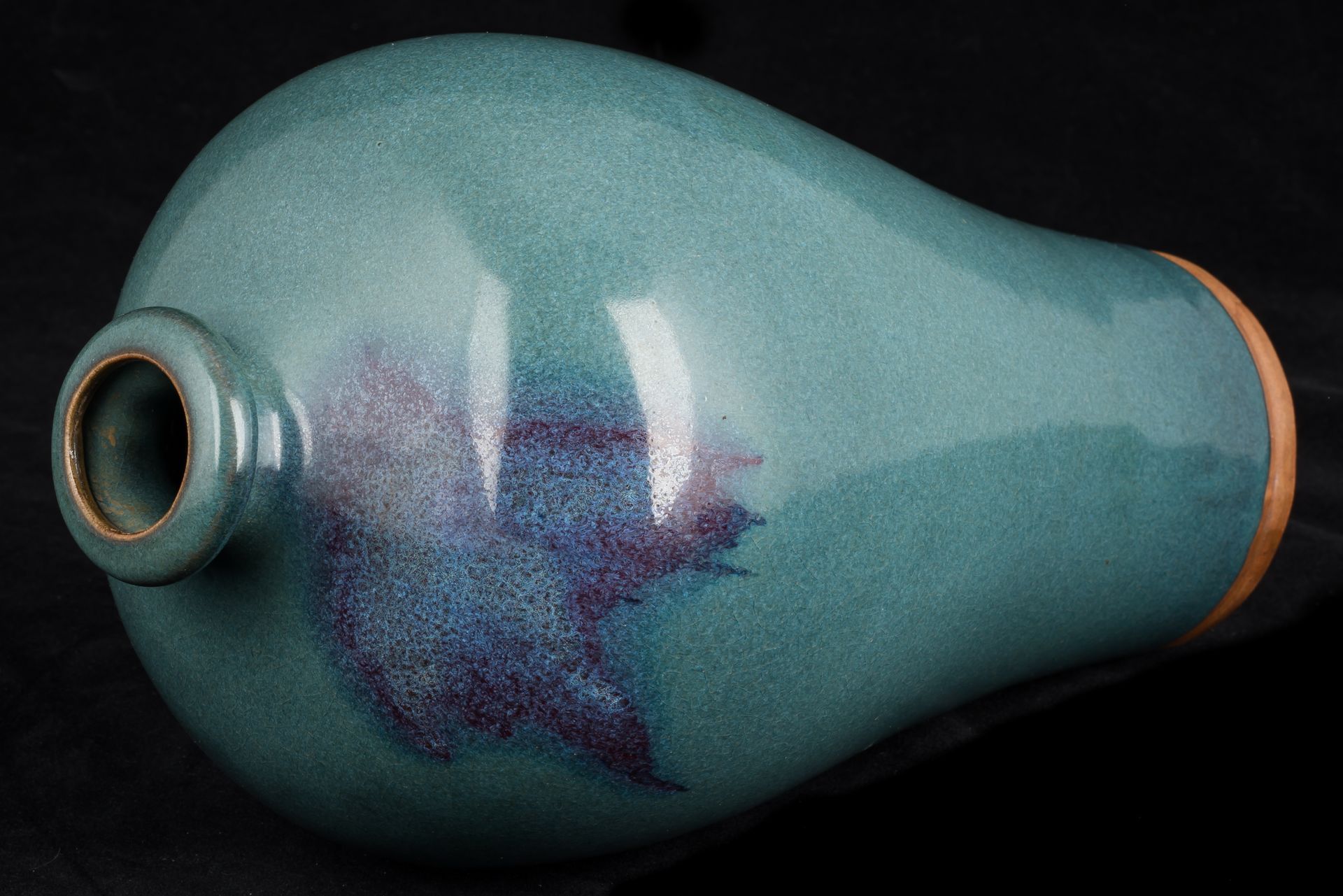
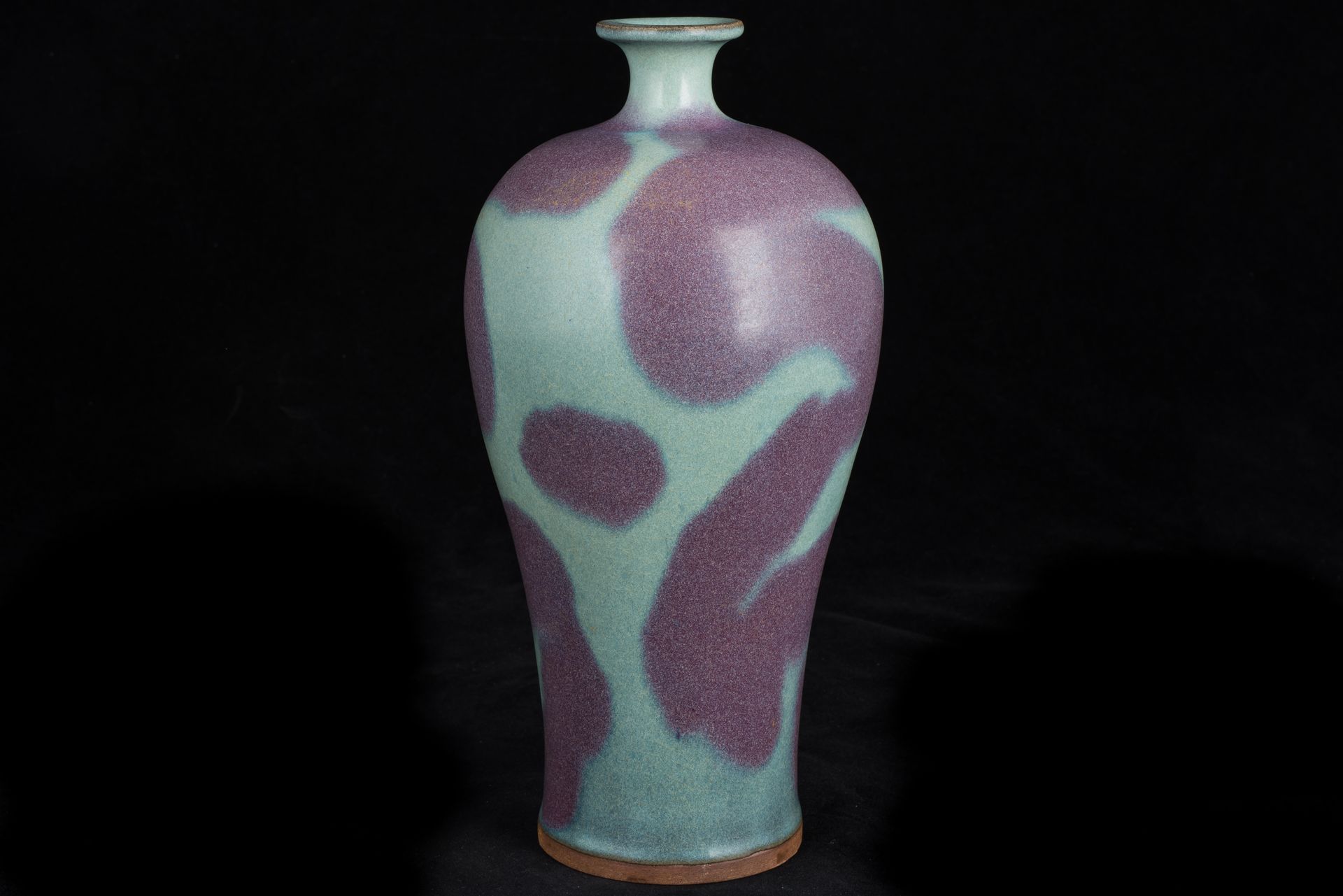
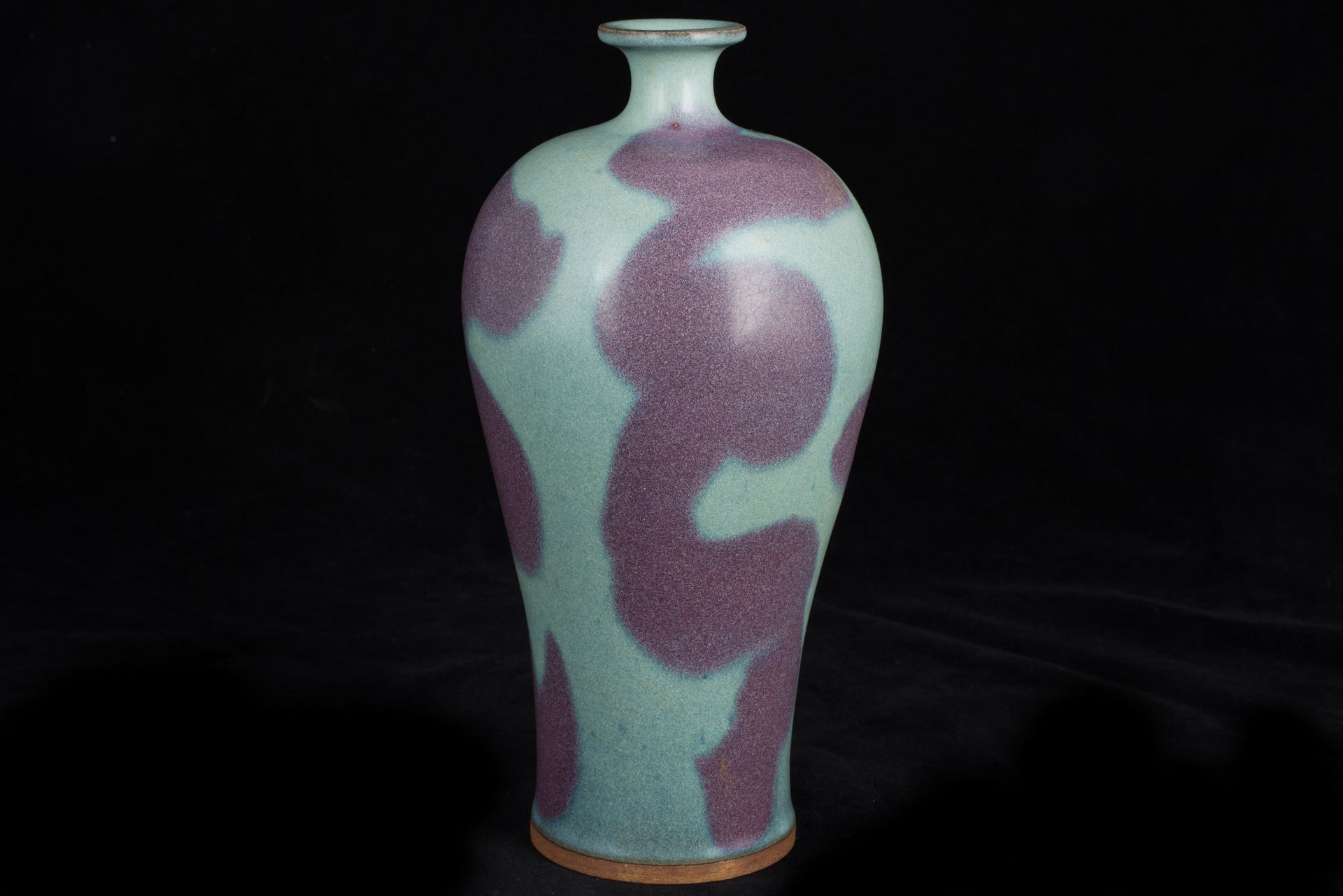
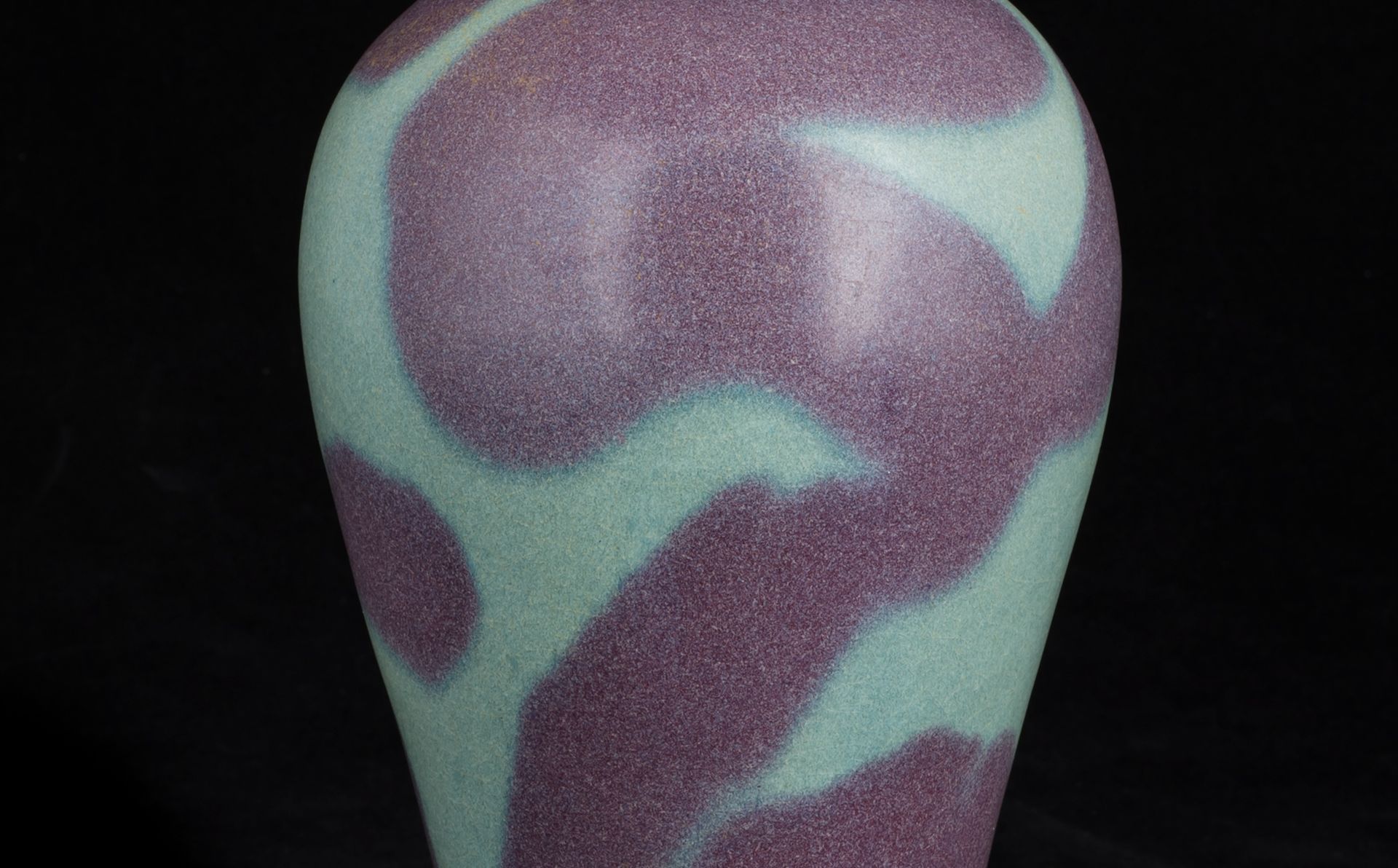
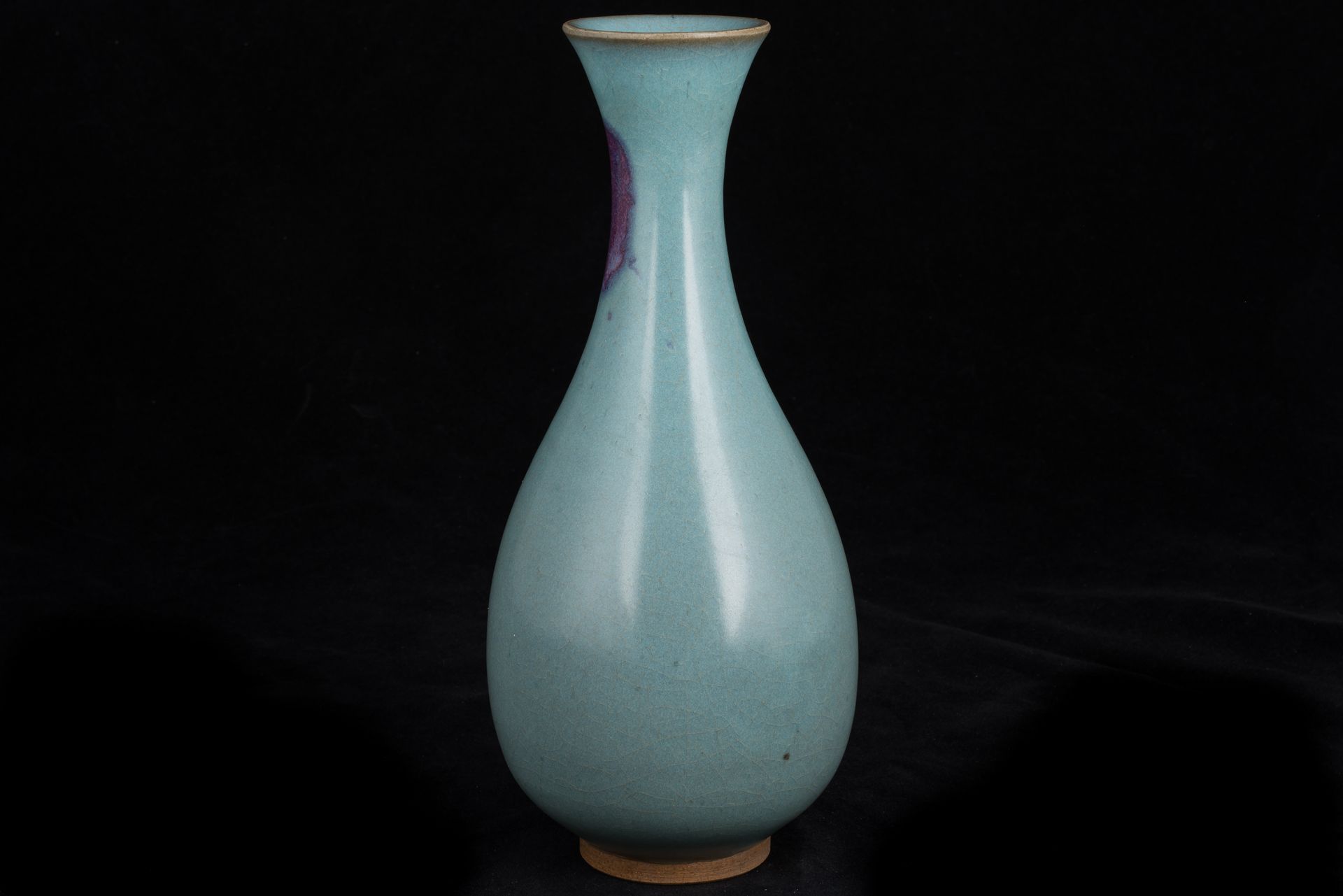
Jun Ware Robin Egg Blue Vase from the Northern Song Dynasty Jun Kiln
This exquisite vase from the Northern Song Dynasty, known as Jun ware, features a striking robin egg blue glaze accented by a singular splash of purple at the neck. The piece is characterized by a delicate crackle texture throughout its surface. It stands at an approximate height of 9 1/2 inches. ppjrs
(click image to enlarge)
Contact me for the Price




Navigate Chinese Masterpieces Site Just Select Pages Below
The Inaugural Ceramics Commissioned by the Emperor in Chinese History: Guaranteed 100% Authenticity from the Northern Song Dynasty's Official Imperial Royal Ru Kiln Porcelain Collection – An Unmatched Provenance of Authenticity.
For All Enquiries Please Contact AGENT : Venizelos G. Gavrilakis, President,VENIS STUDIOS
Email Venizelos@ChineseMasterPieces.com
tel:+971 50 683 5877
I began my collection in the 1970s, and in the 1990s, I focused on acquiring an exceptional array of artworks from private Chinese sources. These sources faced severe persecution for possessing collections that were ancestral heirlooms, predating the Communist era. Among my holdings is the Official Commissioned Imperial Royal Ru Kiln Collection, originating from the collection of Emperor Huizong of the Northern Song Dynasty.
This collection features unique pieces that stand unparalleled in significance, as many of these forms have been previously unseen. The condition of these works is pristine; they are certified 100% authentic, with verifiable characteristics including cuprite and malachite corrosion on the fire-gilded copper bands, which took approximately 900 years to develop. This corrosion is readily observable with the naked eye, as is the crushed agate within the glaze, which can be examined with a 20x loupe. Despite the proliferation of Ru ware across the internet, numerous auction houses continue to erroneously classify these original pieces as fakes, perpetuating misinformation. It is essential to note that only Commissioned Official Royal Imperial Ru wares are genuinely rare. These pieces are not widely available online, and no Royal Imperial Ru wares have ever been offered at auctions. Any skepticism about the authenticity of these wares can be dispelled by recognizing that it would be impossible for any contemporary kiln in China to replicate such masterpieces. Throughout history, the only kiln capable of producing works of this caliber was the Royal Ru Kiln during the Northern Song Dynasty under Emperor Huizong. The second commissioned wares, characterized by unglazed foot rings that were fired flat in the kiln, include the featured Cong vase, which showcases fire-gilded copper bands exhibiting the aforementioned corrosion. The authenticity of these pieces is evident in their cuprite and malachite corrosion, which is readily visible, as well as the crushed agate in the glaze, identifiable with a 20x loupe. Expertise is not a prerequisite for recognizing these facts. It is important to highlight that all second-commissioned wares lack markings and possess an off-white biscuit that turns brownish upon firing. These wares are distinguished by their luxurious, smooth glaze, free from crackle, and display unique features such as fire-gilded copper bands. In my estimation, these second-commissioned wares represent the finest celadon wares and the most significant wares in China’s historical legacy. Emperor Huizong of the Northern Song Dynasty reigned from 1082 to 1135.
Examine and Review the Information Provided Below Thoroughly
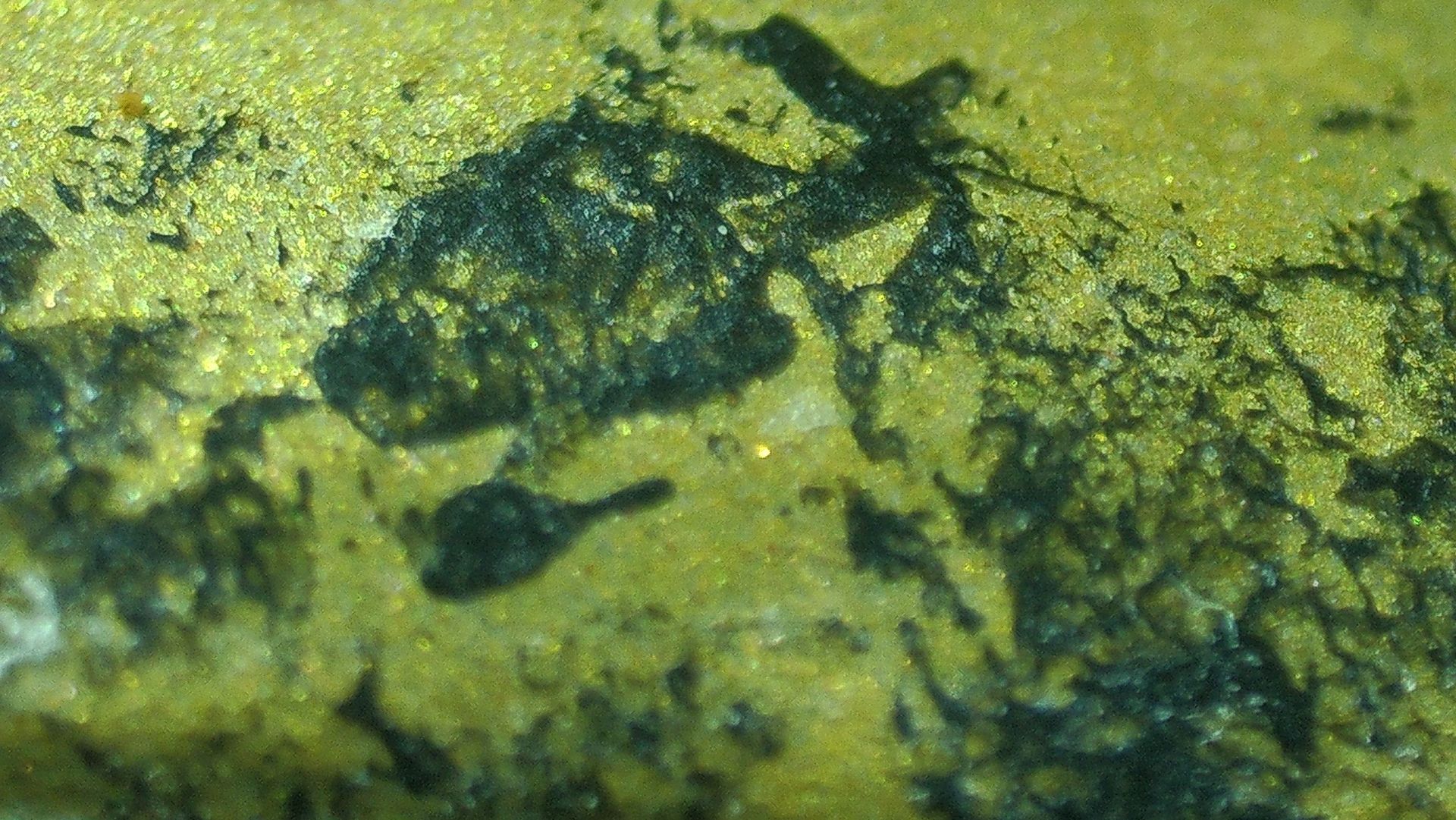
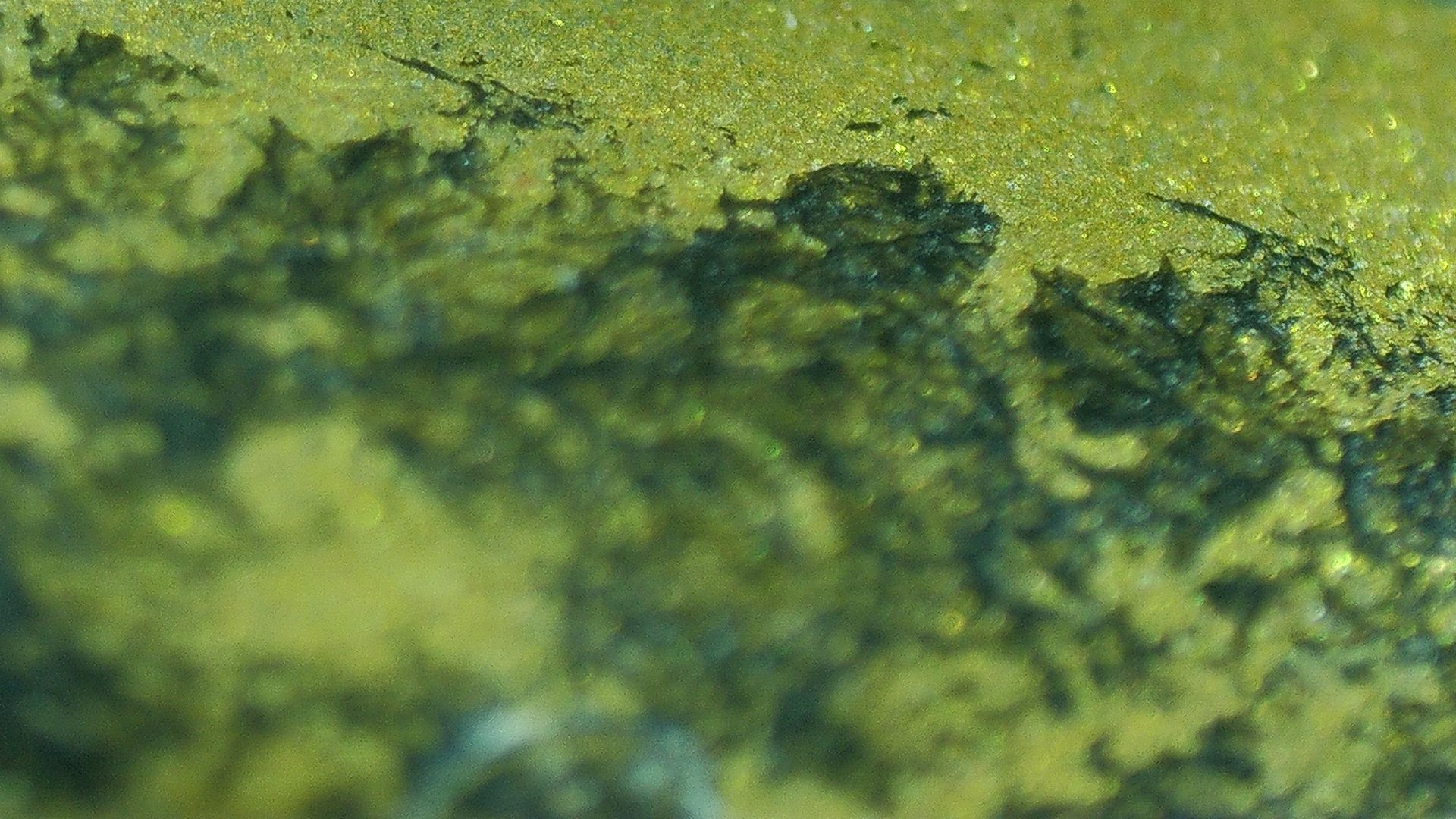
The following series of close-up photographs presents the Cuprite and Malachite corrosion observed on the RU WARE copper fire-gilded bands. It is important to note that fire gilding, a process involving the application of gold and mercury, has not been employed since the mid-19th century due to its associated health risks. The characteristic patina visible on these bands has developed over approximately 900 years, rendering it virtually impossible to replicate artificially (referenced from David Scott's "Copper and Bronze in Art," Chapter 3, page 106). The natural progression from metal to cuprite and subsequently to malachite is complex and challenging to reproduce in a laboratory setting. Indeed, most methodologies for generating artificial green patinas on copper alloys, such as those catalogued by Hughes and Rowe (1982), do not yield malachite formation over a cuprite substrate. As such, the identification of this specific type of corrosion, corroborated by analytical and metallographic investigations, serves as a strong indicator of an artifact's authenticity. Additionally, microscopic images reveal the presence of minute reflective particles of crushed agate incorporated into the RU WARE glaze. Such reflections can also be discerned with a 20x loupe, with further evidence available in the microscopic photographs adjacent to each artifact image. Notably, only the Imperial Ru Wares that were officially commissioned feature crushed agate in their glaze. Pieces sold by auction houses typically do not exhibit this characteristic, as agate was not utilized in merchant wares. The finest merchant wares, equipped with fire-gilded copper bands, were presented as tributes to the Emperor. Meanwhile, flawed merchant wares were sold at reduced prices to the general populace, and those with severe defects were often destroyed. During the reign of Emperor Huizong, significant efforts were made to establish the Ru Kiln as a premier production facility for his personal commissions and those of his court, effectively designating it as the Official Royal Kiln. He specifically mandated the inclusion of rare blue agate in the glazes of all commissioned wares. These official pieces are generally larger and exhibit distinctive styles, forms, and glazes, many of which remain unparalleled in contemporary collections. Archaeological findings have confirmed the location of the Ru Kiln associated with merchant wares predating Emperor Huizong's commissions; however, the site of the Official Royal Ru Kiln has yet to be located.
Following the incursion of the Jin Army into the Northern Song Dynasty, it is believed that many Imperial Royal Kiln artisans migrated southward, with approximately half joining the Imperial Guan Kilns and the other half working at the Longquan Kiln. This migration contributes to the stylistic similarities observed between the renowned second-commissioned Royal Ru Kiln wares and those produced at Longquan. Notably, however, Longquan wares lack the crushed agate incorporation that characterizes the official Ru Wares.
ppjrs
CLICK ON PHOTOS TO ENLARGE







View more
Below are 48 examples of Official Imperial Royal Ru Wares and Tribute Ru Ware Vases
Contact me for Price ppjrs





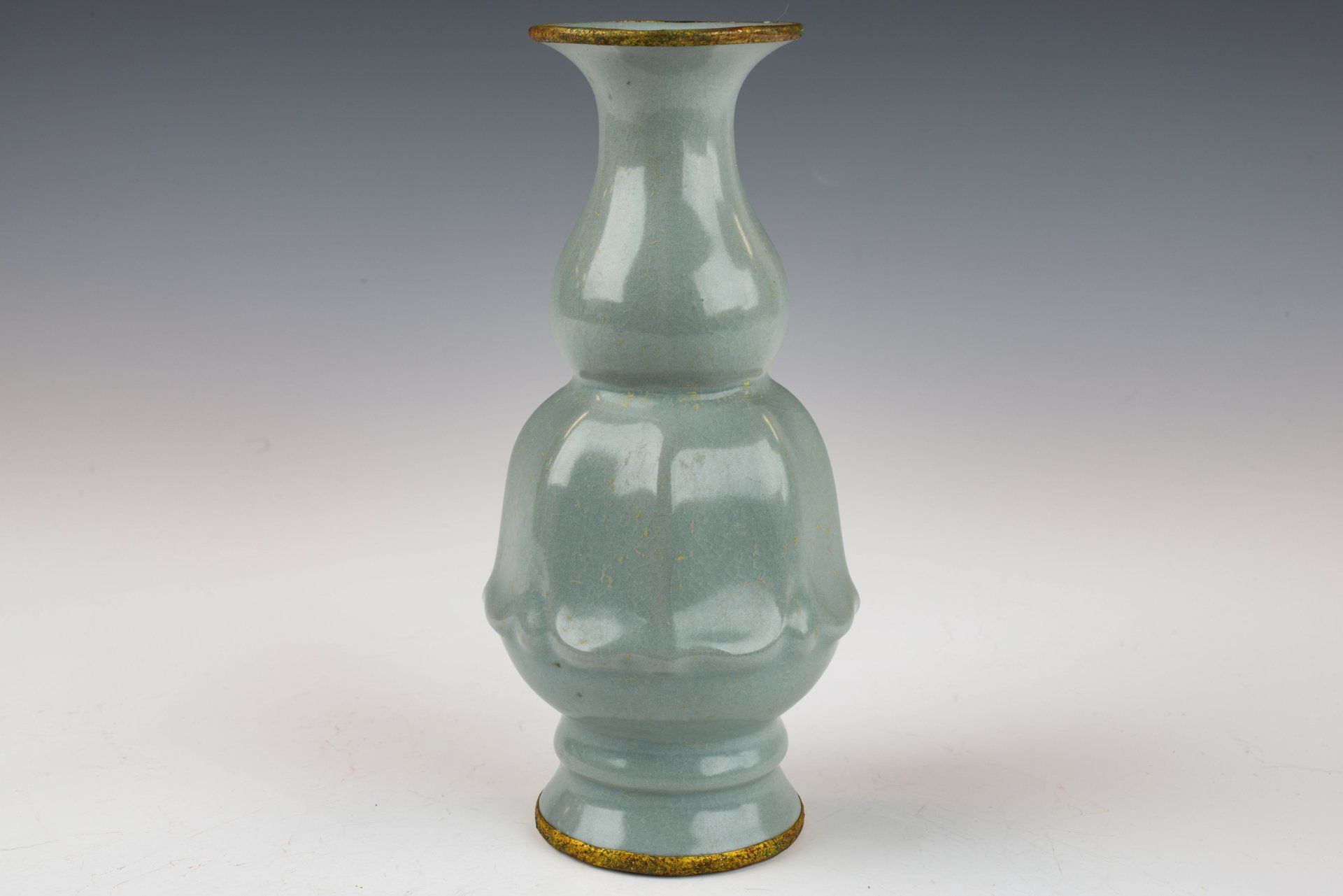


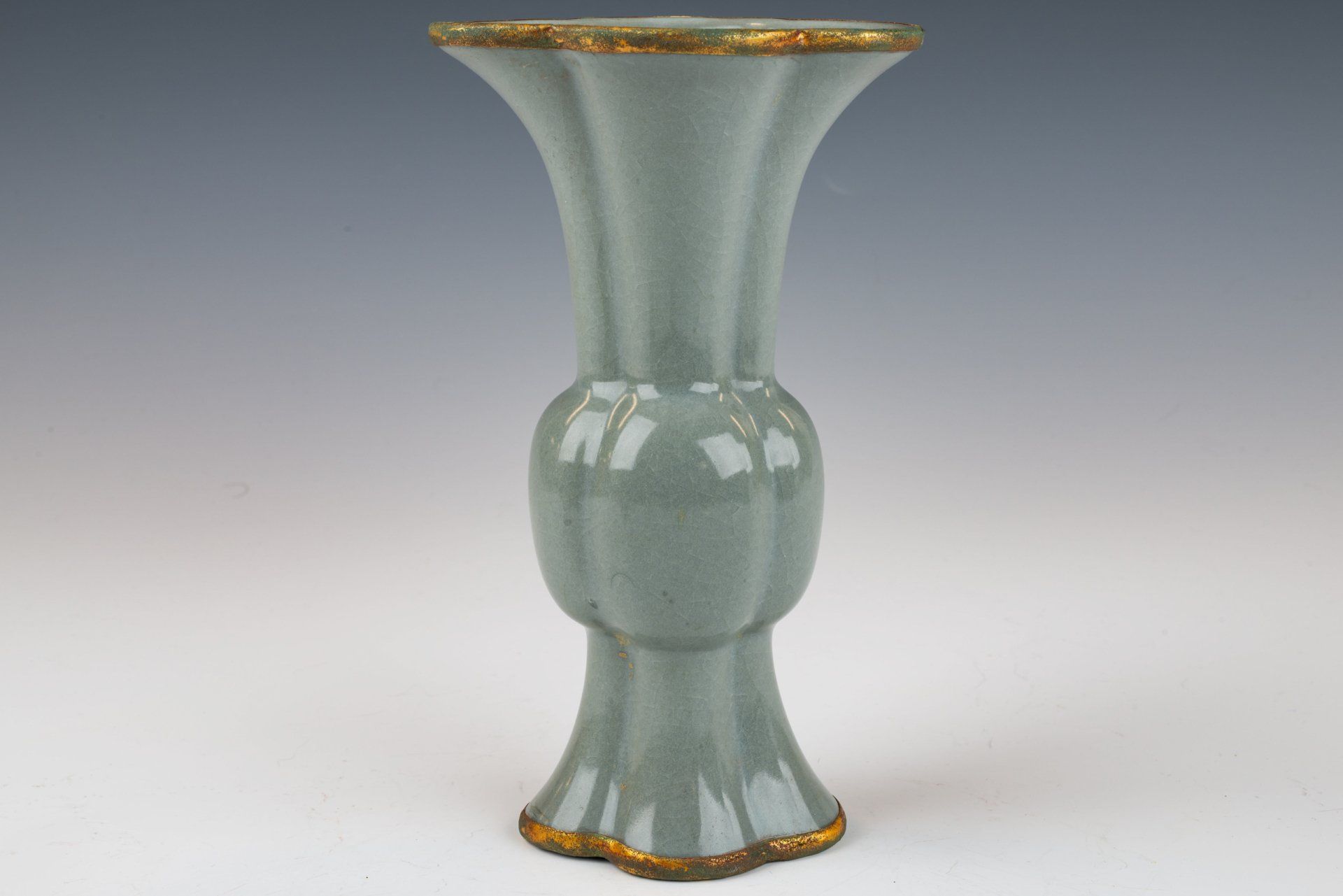


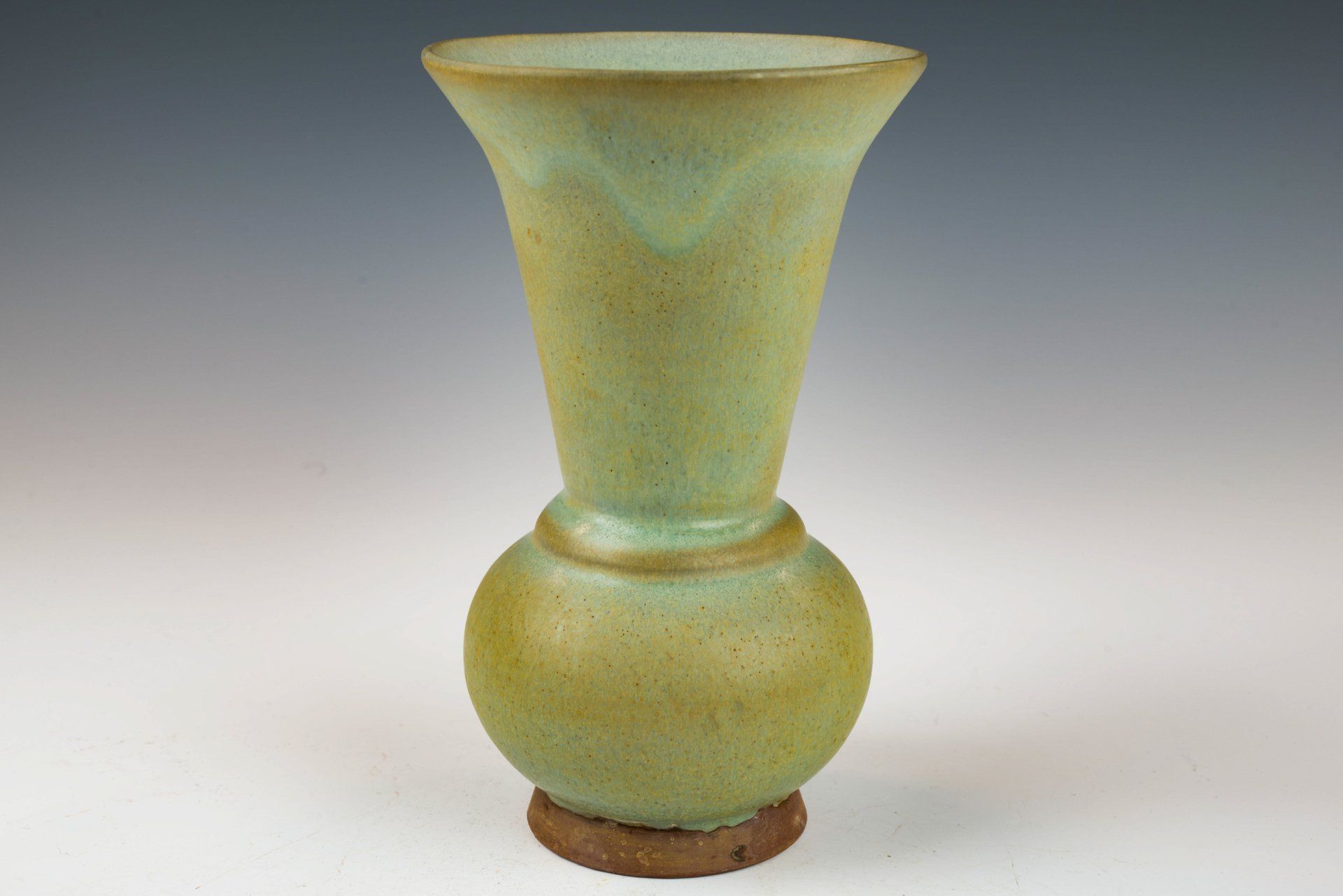


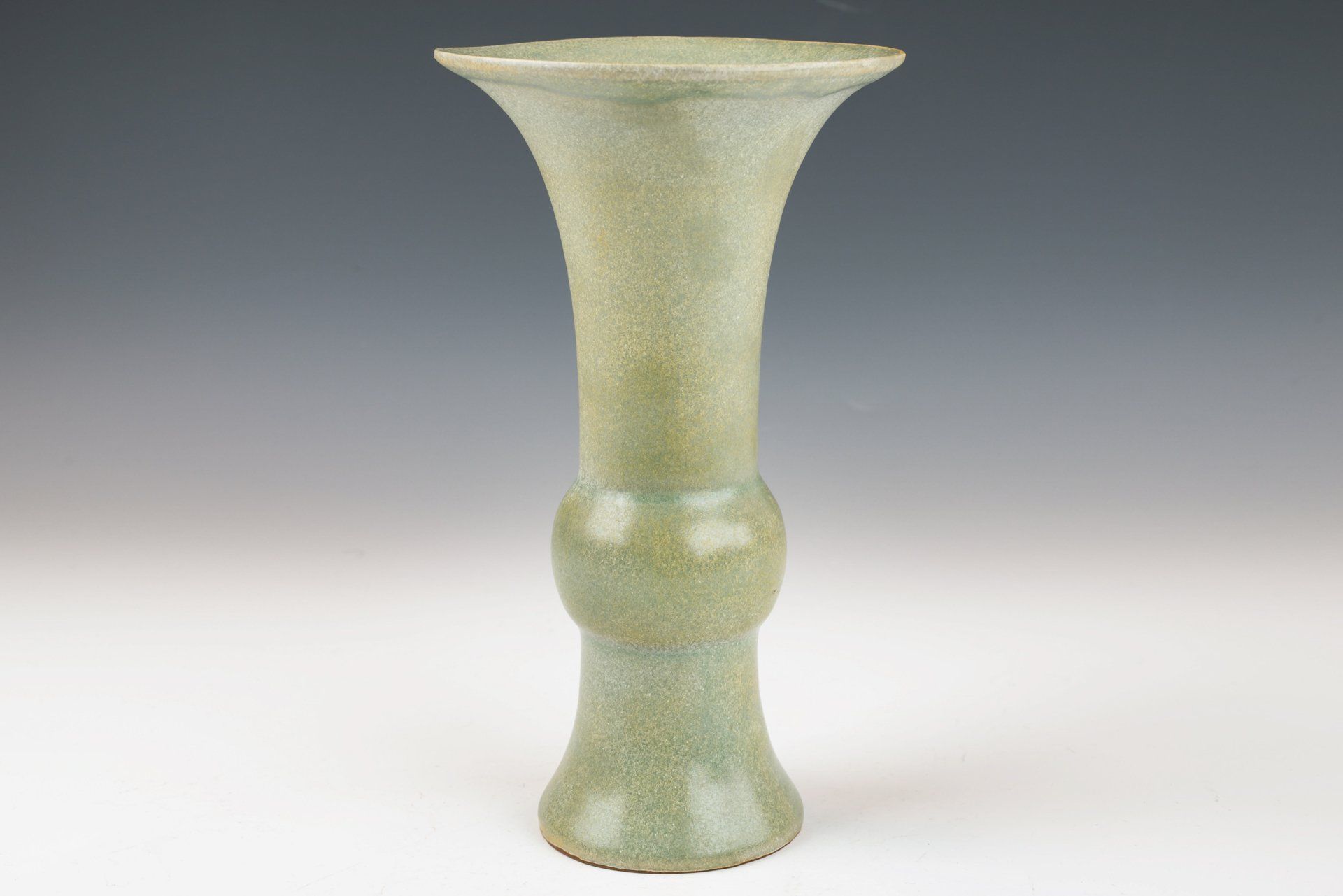


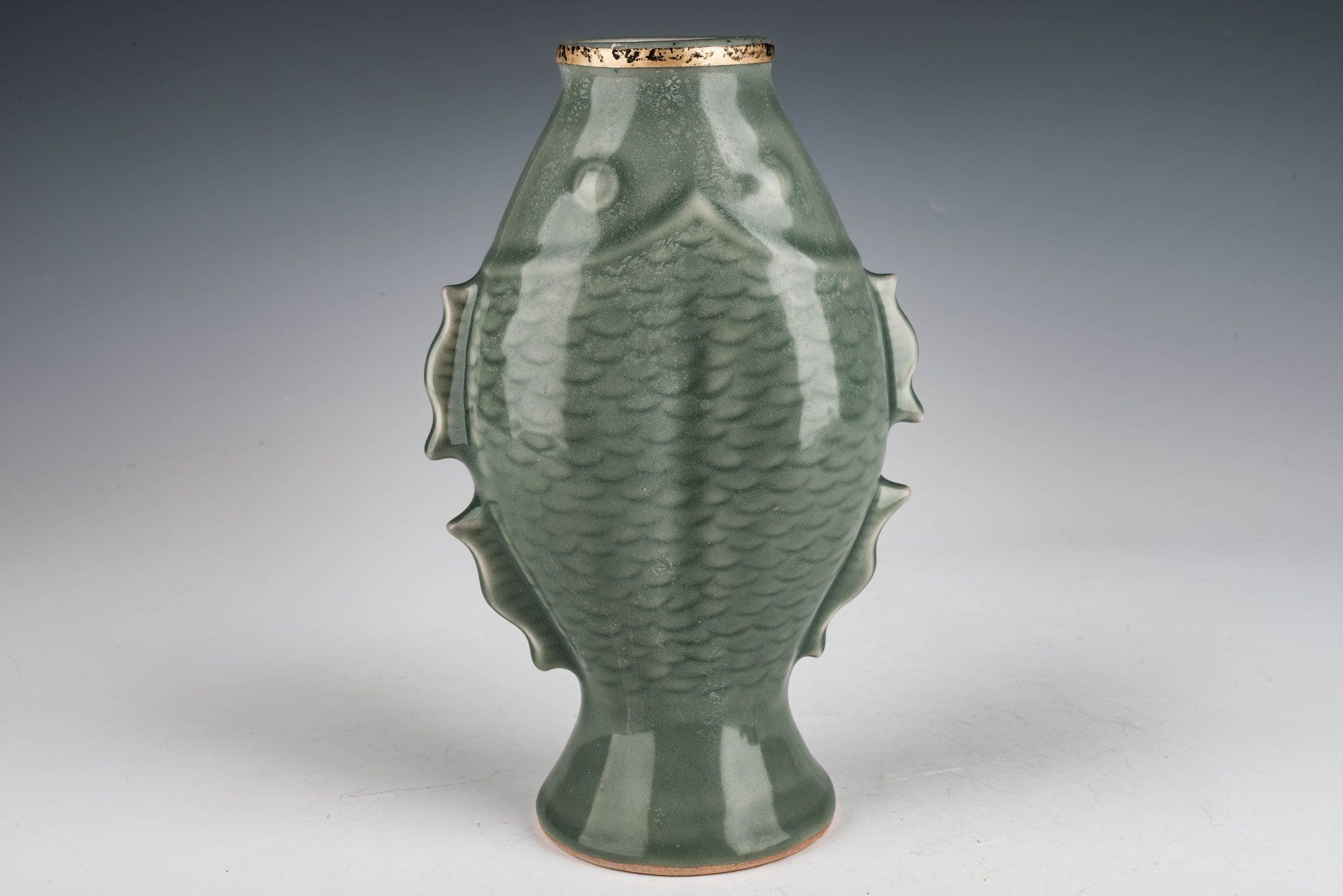

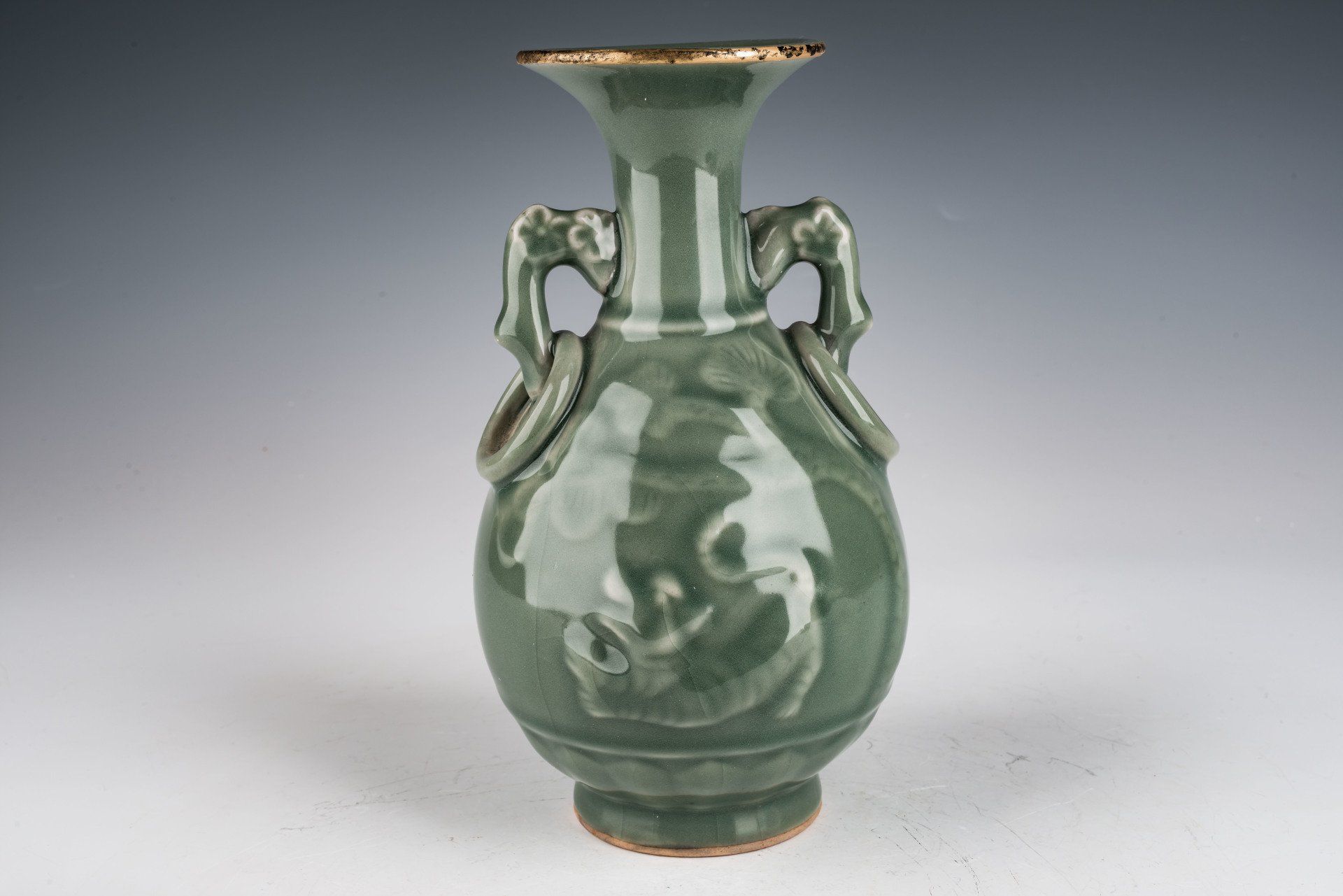


Understanding "Botryoidal Malachite" Patina
Formation of Fanlike Crystal Needles
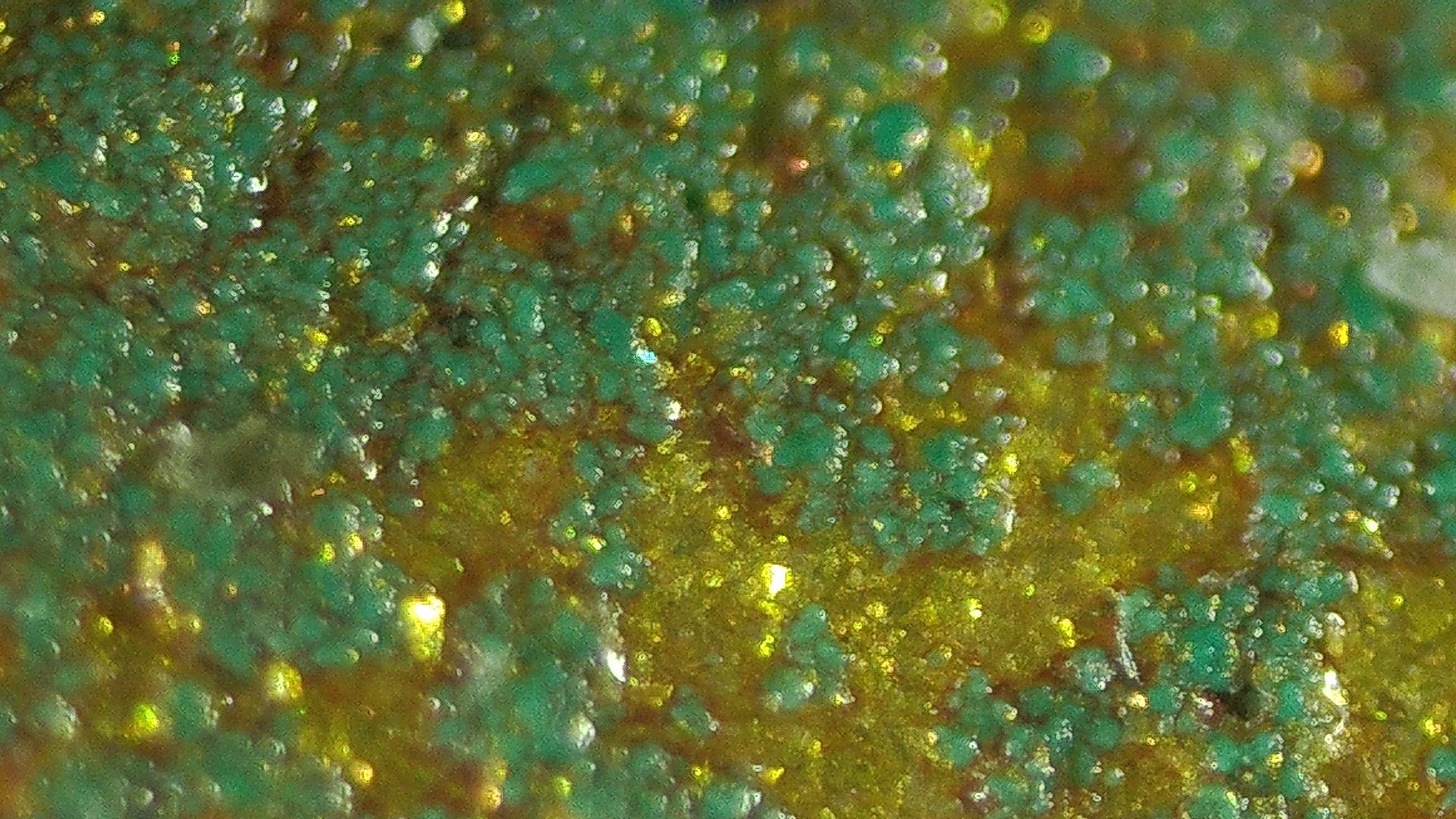
Most crystals simply begin to grow using available molecules. This results in discrete crystals whose sizes depend on available material. But malachite is different. It seldom forms discrete crystals of good size. Instead, scientists say, developing malachite crystals “split”, diverging into tiny needles, packed together in a fanlike arrangement.
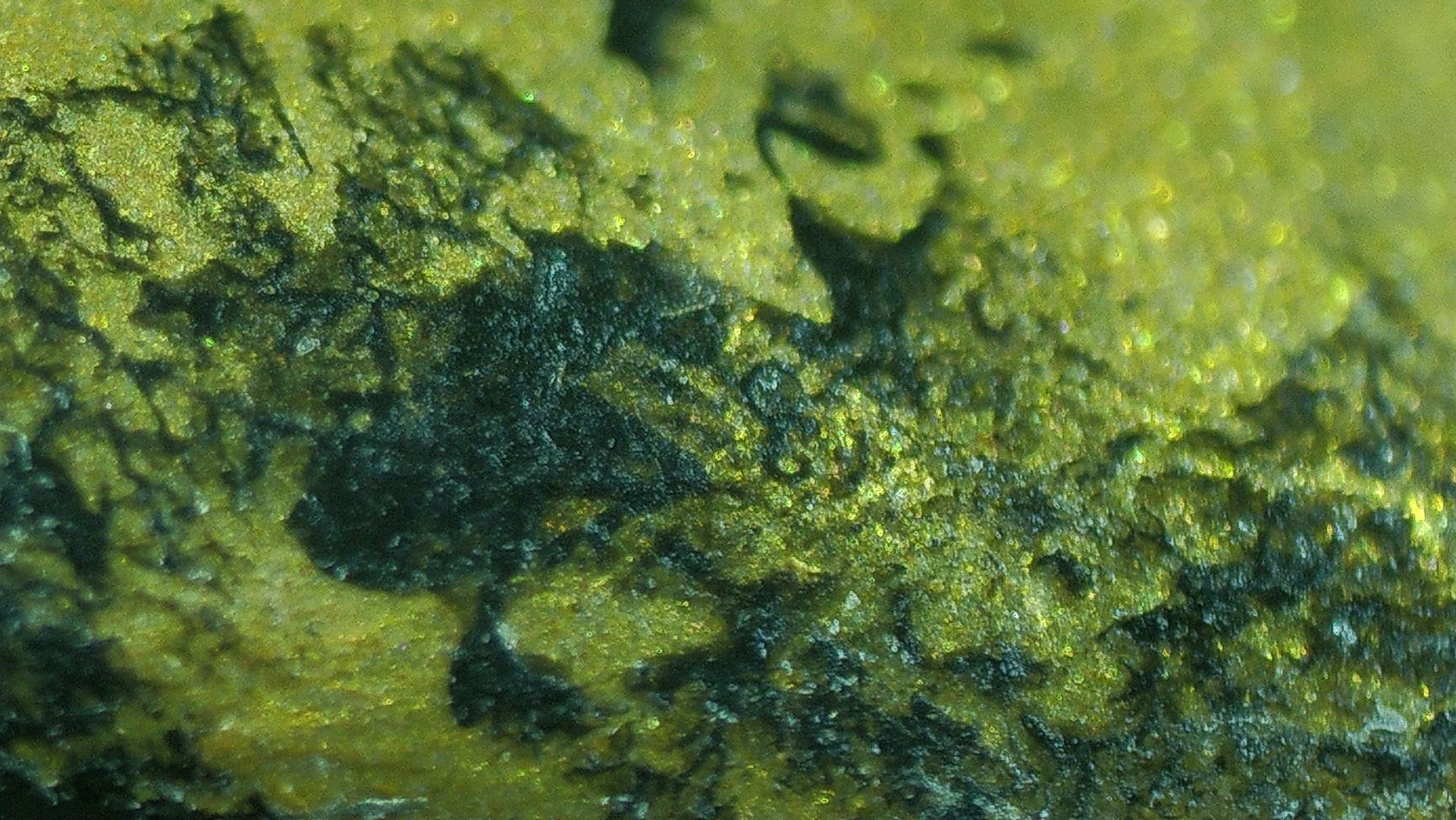
The fanlike malachite needles grow into tightly bonded spherules, which crowd together and bond, forming a solid mass. When the spherules stop growing and terminate, the top surface is rounded to some degree. The terms “botryoidal” (resembling a cluster of grapes) and “reniform” (kidney-shaped) are used to describe large to small undulating masses of spherules.
Author Bob Jones Holds the Carnegie Mineralogical Award, is a member of the Rockhound Hall of Fame, and has been writing for Rock & Gem since its inception. He lectures about minerals, and has written several books and video scripts.


This is a Microscopic photo of one of the Ru Ware Fire Gilded Copper Bands, shows the "Botryoidal Malachite Patina over the reddish Cuprite."This can not be Faked. (From the book Copper and bronze in art by David Scott) (chapter 3 page 106 Malachite in bronze patinas) (The natural transition of metal to cuprite to malachite is very difficult to replicate in the laboratory. In fact, most of the recipes for producing artificial green patinas on copper alloys, such as those compiled by Hughes and Rowe (1982), do not result in malachite formation over a cuprite layer. Consequently, the existence of this type of corrosion, supported by analytical and metallographic studies, is a good indication of the authenticity of an artifact.)



View more
WATCH
Click On Video Clip Proves Botryoidal Malachite Can't Be Faked! No one has ever faked this Botryoidal malachite patina only happens in nature. This Guaranties Authenticity Of This Imperial Royal Ru Ware Collection
Priceless Past WWW.pricelesspast.com
Link to Full Video https://youtu.be/5O-l6vY0dnc?si=FsHEJdKox0a1p0bH
An Analysis of Royal Imperial Ru Ware Commissioned and Collected by Emperor Huizong of the Song Dynasty During the Northern Song Period. ppjrs
Ancient Treasures: Ru Kiln Secrets Revealed!
Emperor Huizong reigned from 1100 to 1126, during which time he abdicated in favor of his son. He is renowned for his advocacy of Taoism and is celebrated for his exceptional talents in poetry, painting, calligraphy, and music. However, his Northern Song Empire ultimately succumbed to the advancing Jin armies, leading to his capture in 1127. Huizong died in captivity in 1135, having transitioned from the status of the world's wealthiest individual to that of a diminished man. After his death, his extensive collections were meticulously consolidated and preserved in large wooden crates, enduring through time.
Since China's opening in the 1990s, various historical collections have entered the marketplace. Notably, my collection of Imperial Ru ware originates from Emperor Huizong's personal assemblage. During his tenure, he commissioned the Ru Kiln to produce wares specifically for himself and his court, recognizing it as the foremost source of Imperial tribute wares. The tribute wares produced by the Ru Kiln during this era were distinguished by their remarkable quality, often devoid of defects. To further enhance their uniqueness, these wares incorporated a variety of colors and featured fire-gilded bands on the rims, occasionally on the bases. The gilding technique utilized gold and mercury, a method that has not been employed since the mid-1800s due to safety concerns. The intricacies of the fire gilded bands display complex corrosion patterns of cuprite and malachite, natural phenomena that are exceedingly difficult to replicate in laboratory settings. Established research underscores the challenges associated with the transformation from metal to cuprite to malachite, with most synthetic formulas failing to replicate malachite atop cuprite layers, thereby providing validation for the authenticity of such artifacts.
This innovation inspired other kilns to adopt similar techniques, incorporating fire-gilded bands in their tribute wares. Before the Ru Kiln attained its designation as the official Imperial kiln, its production primarily consisted of small wares that exhibited sporadic crackling and spur marks due to the firing process on stilts. Many of these pieces contained imperfections, resulting in the destruction of severely flawed items and the sale of lesser-quality wares to the public at reduced prices. Such flawed wares frequently appear in auctions conducted by Sotheby's and Christie's and are often showcased in museums housing Ru ware collections. Higher-quality pieces were sold at premium prices to affluent merchants. The finest wares were presented as tribute to Emperor Huizong, who received extravagant offerings from various kilns. Recognizing the demand for superior quality wares, Emperor Huizong designated the Ru Kiln as the first official Royal Imperial kiln in China.
His objective was to create wares that were distinctive and specifically intended for himself and his court. He sought pieces that echoed the historical celadon wares, aiming for a jade-like aesthetic reminiscent of Korean Koryo ceramics. After reviewing prototype pieces, he insisted on eliminating spur marks by firing the wares flat in the kiln with unglazed foot rings. Furthermore, he mandated the incorporation of rare blue crushed agate into the glaze, a feature unique to the official Royal Imperial wares commissioned by him. The initially commissioned wares displayed a grayish biscuit that transitioned to brown post-firing, with some pieces bearing inscriptions. These wares featured distinctive crack ice crackles. Emphasizing size and simplicity, these pieces were larger than previous tribute wares and showcased refined forms, such as trumpet-shaped mouths. Despite occasional flaws during the firing process, these Royal Imperial wares were exclusively designated for the Emperor and his court. As the official Imperial kiln, the Ru Kiln's focus was solely on producing wares for the Emperor and his court. Huizong appreciated the intrinsic beauty of these often flawed and simplistic pieces, recognizing their individuality akin to human character.
However, some of his advisors sought more visually appealing wares. Consequently, he tasked the Ru Kiln with creating the most exquisite celadon wares ever produced in China, emphasizing elegance and luxury in design. The second series of official Royal Imperial wares manifested in various celadon hues, adorned with rich glazes that seamlessly integrated rare blue crushed agate. Unlike the initial batch, these wares were meticulously crafted and largely free from prior defects, with exquisite forms and flat-fired unglazed foot rings. Selected special wares featured gilded copper or silver bands, enhancing their opulent appearance. Importantly, all second commissioned official Royal Imperial wares lacked specific markings. It must be emphasized that wares produced before the Ru Kiln’s designation as the official Imperial kiln do not contain agate in their glazes. Certain auction houses and museums mistakenly claim the presence of crushed agate in these earlier wares, fabricating narratives that assert its dissipation during the firing process. This assertion is fundamentally flawed, as agate requires excessively high temperatures for melting—far exceeding the maximum temperatures reached by Song dynasty kilns. Additionally, the practical difficulties associated with crushing agate into a fine powder contribute to the clear visibility of agate traces in authentic Royal Imperial Ru wares.
I have compiled a significant collection of Ru and Ju wares, artifacts that have remained largely concealed since the decline of the Northern Song Dynasty. The Qianlong Emperor's collection predominantly comprised flawed merchant wares developed before the Ru Kiln's establishment as the official Royal Imperial kiln. It is only since the 20th century and the reopening of China that many fine pieces, once obscured from view, have entered the marketplace. This narrative seeks to illuminate the complexities surrounding Ru and Ju Kiln wares in the context of Emperor Huizong's reign. For many years, scholars and collectors have relied on pieces from the Qianlong Emperor's collection; while aesthetically appealing, they do not accurately represent the authentic Royal Imperial Ru and Ju wares commissioned by Huizong for himself and his court.
In the aftermath of the Jin Army's incursion into the Northern Song Dynasty, workers from the Imperial Royal Kiln sought refuge in the southern region, with many likely contributing their skills to the Imperial Guan Kilns, while others joined the Longquan Kiln. Notably, this lineage accounts for the visual similarities observed between certain Longquan pieces and the second commissioned Royal Ru Kiln wares, although the Longquan products lack the characteristic crushed agate present in the latter's glazes.
Please examine all the information, photos, microscopic photos, that prove my conclusion.
The Ru-Wares Represent the First Commissioned Official Imperial Ceramics within China's Historical Context.
The first commissioned Royal Imperial Ru ware is thoroughly documented in historical texts, which indicate that Emperor Huizong instructed the Ru/ Ju Kiln to produce celadon wares characterized by modesty, understated elegance, and a deliberate simplicity that evokes a sense of antiquity. Notably, these initially commissioned Royal Imperial wares incorporated Rare Blue Crushed Agate into the glaze formulation. This can be discerned through the use of a 20x loupe, and microscopic photographs reveal the distinctive specks of agate found in each piece. The use of crushed agate is exclusive to the Official Royal Imperial Ru wares developed under Emperor Huizong's patronage. These early commissioned wares exhibit a variety of unique forms previously unseen, showcasing the remarkable skill and artistry of the Ru kiln artisans. The foot rings of all first official Ru wares remain unglazed. Additionally, each piece features a fine, cracked ice crackle in the glaze, with interior glazing also present. Many of these wares have marks inscribed on the bases, often inscribed, and the vases typically feature trumpet-shaped mouths, distinguished by their larger dimensions compared to merchant and tribute wares. The first commissioned Official Royal Imperial Ru wares are crafted from an ash-colored biscuit that transforms to brown upon firing. Furthermore, each piece exhibits the signature fine cracked ice crackle in the glaze, maintaining consistent interior glazing. Exclusively produced for the Emperor and his court, these wares reflect Emperor Huizong's appreciation for beauty in simplicity. He regarded each piece as an artwork, embracing any imperfections, which ultimately remained within the court as evidence of his vision's fulfillment. An illustrative close-up of a first commissioned Official Royal Imperial Ru vase depicts a droplet of glaze adhering to the foot ring, highlighting chips of Rare Blue Agate within the glaze. The accompanying ancient writings affirm the historical significance of these pieces as the legendary Official Royal Imperial wares commissioned by Emperor Huizong of the Song Dynasty. ppjrs
(click image to enlarge)


Ru Kiln Imperial Tribute Wares: Exceptional Artifacts Presented to Emperor Huizong of the Northern Song Dynasty, Featuring Right
Three Exemplary Tribute Vases.
Tribute ware is typically small, characterized by its fire-gilded copper bands, which exhibit corrosion patterns of cuprite and malachite. These distinctive features serve as reliable indicators of their age, often considered more authentic than thermoluminescence (TL) tests, earning the trust of experts in the field for authenticity verification. The production of tribute wares involves a glazing process that encompasses the entire surface. Notably, the pieces are fired on setters equipped with prongs to elevate the items above the kiln floor, resulting in spur marks on the base that are approximately the size and shape of sesame seeds. The glaze on tribute wares is smooth and showcases no inclusion of crushed agate in the glaze. It is important to note that the presence of crushed blue agate in the glaze is exclusive to Commissioned Official Royal Imperial wares. Typically, tribute wares feature either an off-white or ash-colored biscuit, representing the finest quality merchant wares that were adorned with fire-gilded copper bands and presented as tribute to Emperor Huizong. ppjrs
(click image to enlarge)


Sotheby's sold these two Flawed Northern Song Dynasty Ru Ware brush washers in Hong Kong. Now Christie's has sold a flawed Ru Ware Tea Bowl in Hong Kong. They should return the money

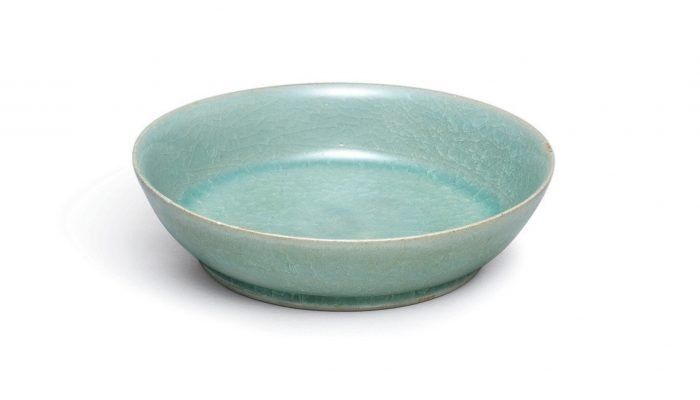
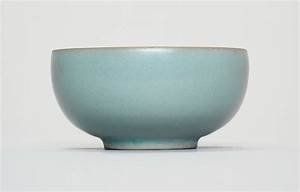


Second Commissioned Official Royal Imperial Ru-Wares Represent the Pinnacle of Celadon Production in China.
The Ru Kiln was commissioned to produce the exquisite second series of official Royal Imperial Celadon wares for Emperor Huizong and his court. These wares are characterized by their elegance, luxury, and aesthetic beauty, surpassing both merchant and tribute wares in refinement and size, while consistently showcasing a distinctive celadon hue. Notably, all pieces from this second series are infused with rare crushed blue agate within their glaze, an element observable through a 20x loupe, as evident in the microscopic photographs accompanying each piece. The use of crushed blue agate is exclusive to the Official Imperial Ru wares developed during Emperor Huizong’s reign. Furthermore, these second commissioned Royal Imperial wares exhibit a variety of unique forms that underscore the exceptional craftsmanship of the Ru kiln. The foot rings of these wares are unglazed and were intentionally fired flat within the kiln. Two vases feature fire gilding over copper bands exhibiting corrosion from cuprite and malachite, which serves as a reliable indicator of the artifact's age, more credible than thermoluminescence (TL) tests and widely acknowledged by experts to verify authenticity—an attribute that is impossible to replicate. It is important to note that all second-commissioned Royal Imperial wares are unmarked. They possess an off-white biscuit that transitions to a brownish tone post-firing. The wares exhibit a rich, smooth glaze with no crackling, while some pieces feature fire gilding over copper bands, and those without bands likewise maintain a flawless glaze. The vase displayed, adorned with a gilded silver band, shows minimal cracking, restricted to a few fine lines. The gilded silver band, exhibiting a darker celadon glaze enhanced with rare blue crushed agate, is visible under magnification. The fire gilding on silver bands has pores in the gild, allowing tarnish to seep through the pores, resulting in pronounced black corrosion on the bands. ppjrs
(click image to enlarge)


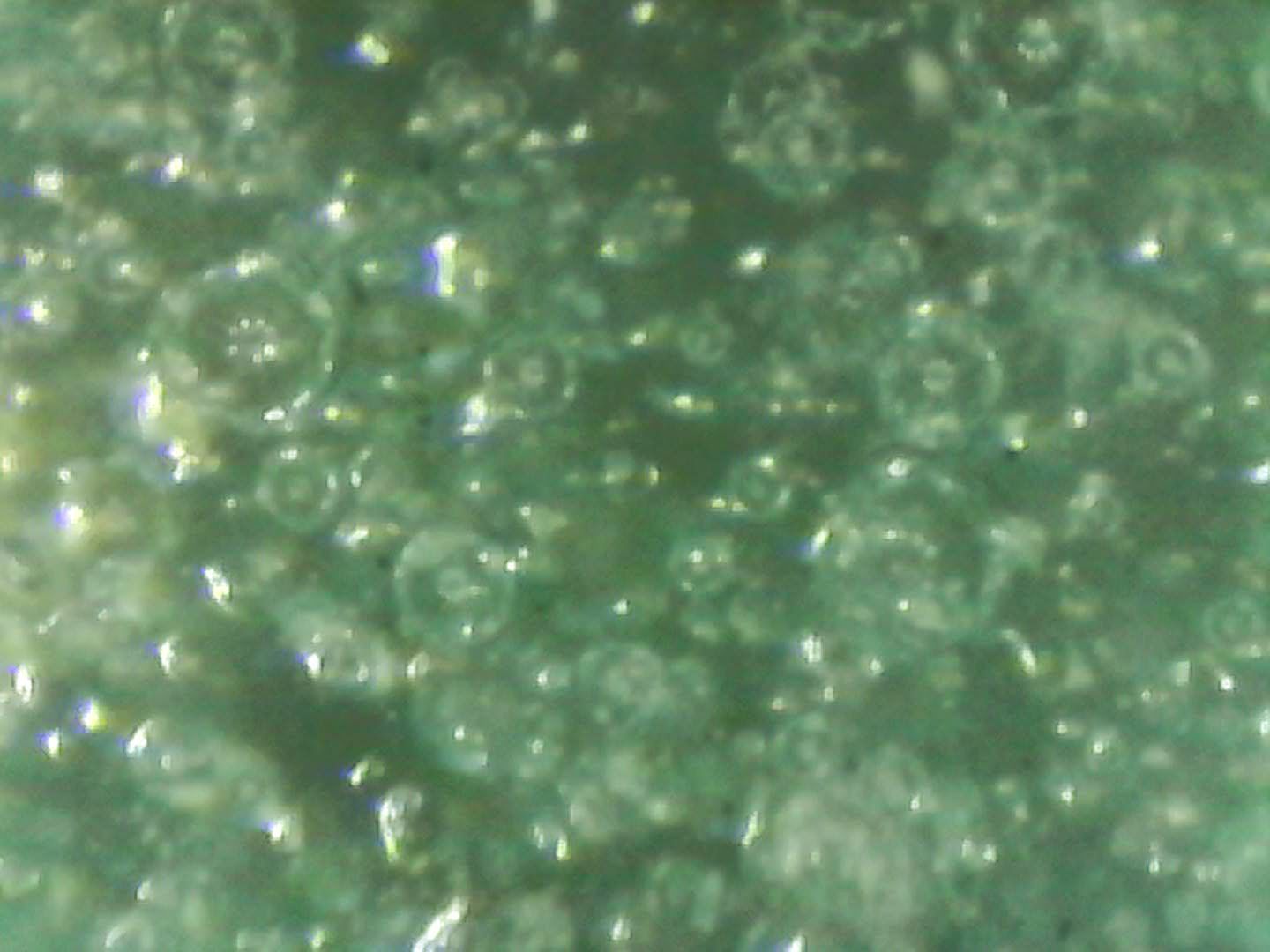
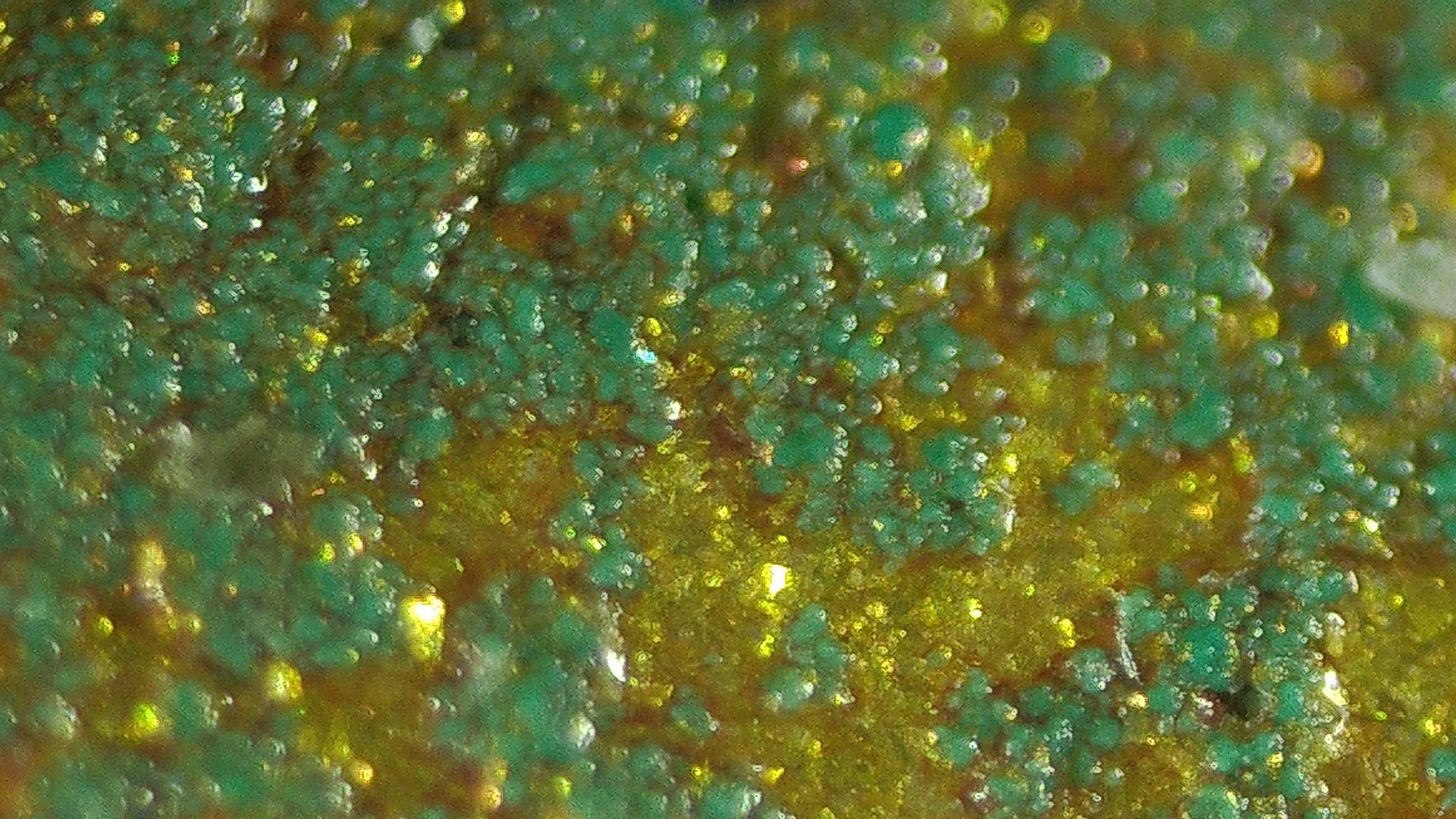


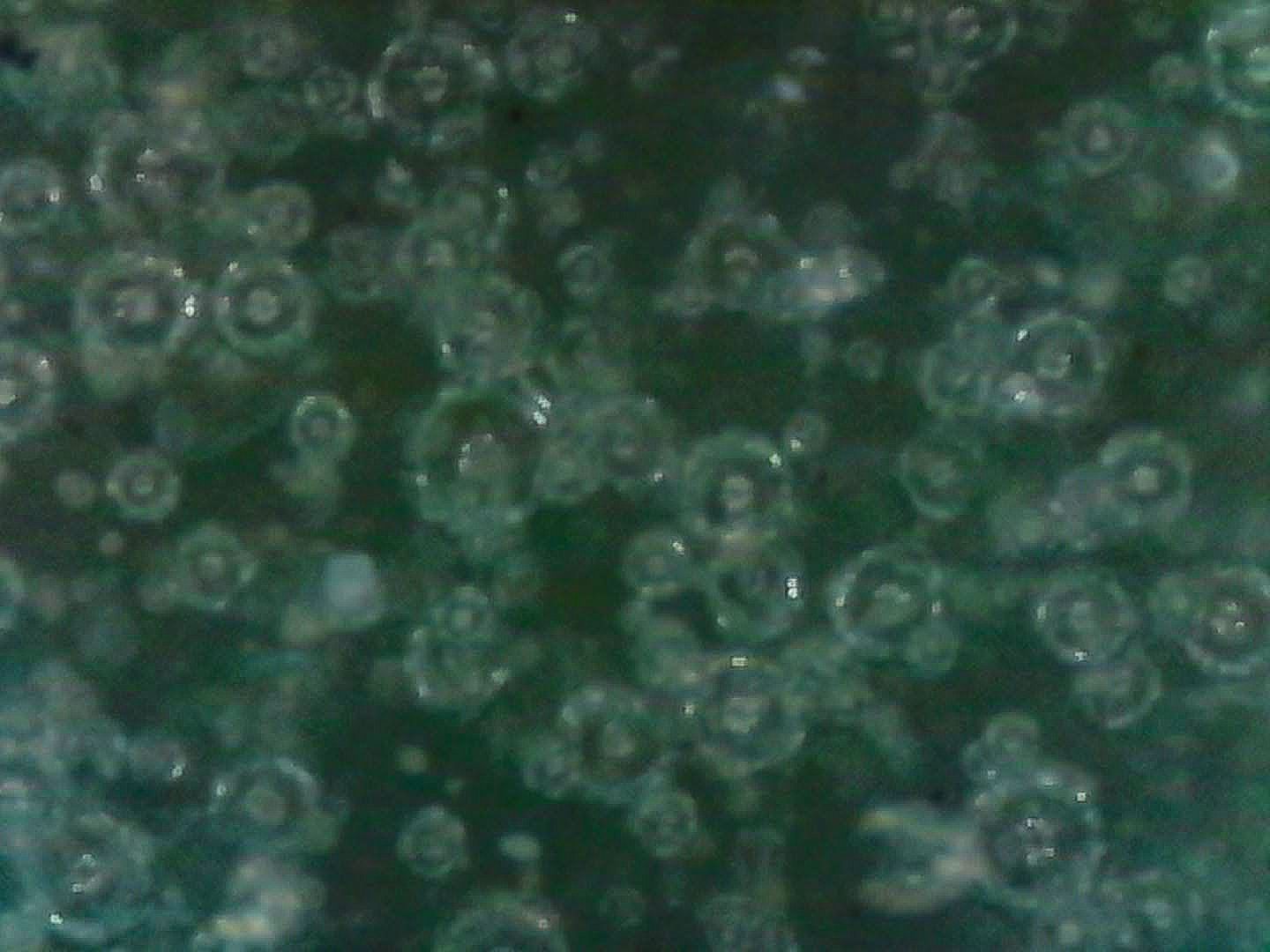


Ru-Kiln merchant wares are distinguished by their fine quality; however, they are primarily positioned in the market for affluent merchants, while items with imperfections are made available to the broader public at substantially lower prices.
The three Ru Kiln pieces displayed are examples of Merchant wares. Previously, the only known specimens of such wares were those collected by the Qianlong Emperor during the Qing Dynasty. However, following China's integration into the global market, numerous exquisite pieces and collections that had been concealed have now become accessible. Merchant wares are typically smaller than Commissioned Royal Imperial wares and exhibit complete glazing, including the foot ring. These items were fired using setters equipped with prongs, which elevated the pieces above the kiln floor. Consequently, they display spur marks that are approximately the size and shape of sesame seeds—distinctive traits that are exclusive to merchant and tribute wares. It is important to note that merchant wares lack the refinement of tribute wares, as the most exquisite examples were adorned with fire-gilded copper bands and presented to Emperor Huizong as tribute. ppjrs
(click image to enlarge)


Navigate Chinese Masterpieces Site Just Select Pages Below